The Tamesis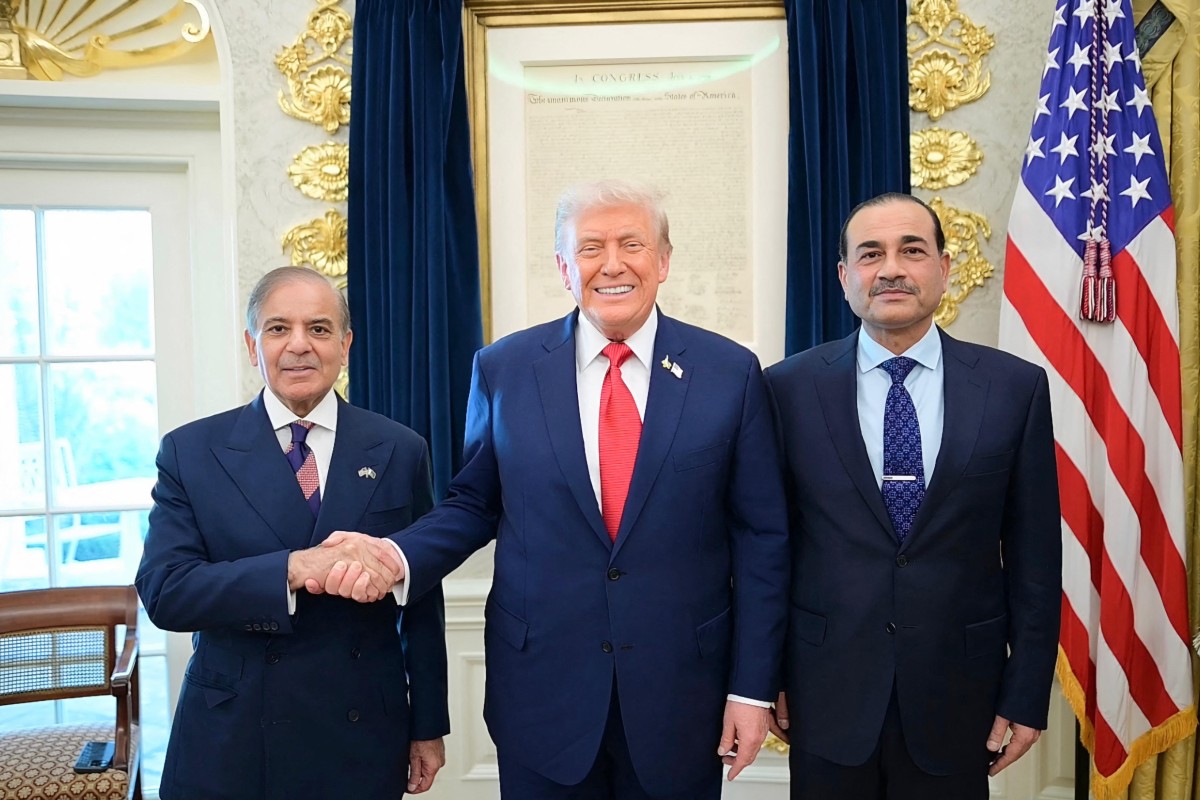
February 2, 2026
Islamabad – After the initial shock, the world appears ready to respond to the new challenges posed by President Trump. A key question revolves around a post-Trump scenario and how the United States will behave. Whoever wins, will it continue Trump’s approach, or review or reverse Trump-era policies?
European countries may seek to renegotiate their economic, political and strategic terms with the United States. Canada, India and Japan are likely to proceed more cautiously, while China is likely to focus on protecting and consolidating gains made under Trump’s policies.
In this situation, where will Pakistan go? Will the country return to where it was before Trump came to power, when its diplomacy was under pressure and it struggled to safeguard its geostrategic and geoeconomic interests?
The recently announced EU-India free trade framework and the general expansion of economic cooperation between Europe and India signal a broader realignment of Europe’s engagement with Asia. China also appears to be a relatively reliable economic partner, despite certain well-known political and economic caveats. When it comes to trade, Pakistan cannot compare with its neighbors China and India. Despite its status as a medium-sized country, its trade is constrained by its limited ability to meet international expectations as they develop.
Islamabad, for its part, is trying to align with China’s strategic and economic priorities while also trying to remain relevant on issues of concern to Washington — especially in a regional environment where India has clear diplomatic and economic advantages. It’s a dual balancing act that reflects Pakistan’s long-standing dilemma: managing its strategic dependence on Beijing while trying to avoid diplomatic marginalization in the United States.
But Islamabad did gain significant diplomatic capital after President Trump publicly acknowledged its role in the war on terror, as evidenced by his address to Congress and subsequent engagement with Pakistani leaders — a momentum that was bolstered by Pakistan’s participation in the Peace Council, which seeks to expand defense cooperation with countries in West Asia and Africa.
Over the years, the estimated value of these defense-related activities has been in the billions of dollars. However, the long-term sustainability of these engagements will depend on the stability and political alliances in the region.
A new strategic equation has since emerged that views Pakistan as an important defense ally along with Saudi Arabia and Türkiye, with partner countries expanded to include Azerbaijan, Egypt and Sudan. Even a fractured Libya is involved in this expanding outreach, as recent high-level military operations underscore. Taken together, these developments indicate that Pakistan’s external posture is changing—from passive diplomacy to selective strategic alliances. But whether this shift can translate into lasting geopolitical influence remains open to question.
A complication that arises in all of this is that this situation appears to be endorsed by President Trump, which creates the impression that Pakistan is an important ally of the United States in West Asia, especially regarding the Gaza peace plan and the escalation of tensions with Iran.
Although Israel is neither a formal nor informal partner in the defense framework of Saudi Arabia, Türkiye and Pakistan, their strategic interests do not necessarily conflict. In fact, this aspect is the most subtle of the arrangement. Pakistan has consciously refrained from signaling any such alignment due to domestic considerations and its stance on Iran. Regarding the latter, Pakistan does not support military aggression but cannot serve as the kind of functional partner that the Iranian regime needs during a crisis.
Internally, Pakistan’s regime has largely smoothed out potential fault lines that might have generated resistance to its policies in West Asia and managed religiously inspired actors with considerable skill. However, internal resistance persists in other forms, which may pose challenges for Pakistan, although the consequences may be primarily domestic and political rather than international.
India, by contrast, has managed a strategic rebound despite facing difficulties with the United States over tariff disputes, pending negotiations and Trump’s repeated claims for mediation and ceasefires in last year’s standoff with Pakistan. New Delhi has adopted an alternative engagement strategy, targeting countries unsettled by Trump’s tariffs, geopolitical and hegemonic policies. Crucially, India has expanded its external engagement without making major compromises: its engagement with the EU has not weakened its relationship with Russia, nor has it closed the door on economic cooperation with China.
As a medium-sized country, Pakistan has a weak economy, deteriorating internal security indicators, long-term political instability, and limited strategic options. By aligning itself closely with the defense equation endorsed by Trump, it risks jeopardizing its relationship with China. This could become Pakistan’s toughest challenge after Trump’s withdrawal. The post-Trump phase will test Pakistan’s diplomatic and political leadership, particularly its ability to restore trust with Beijing to levels around 2018 unless it adopts a more calibrated and balanced approach to managing its relationship with the United States.
For now, Pakistan is likely to continue to benefit from short-term diplomatic visibility. However, if alternative strategic options are not fostered, its policy space will become even narrower, ultimately leaving Islamabad no choice but to align more closely with the US- and Saudi-led geopolitical framework in West Asia, particularly on sensitive issues such as future engagement with Israel and its stance on Iran.
That shift could happen sooner, depending on the trajectory of President Trump’s moves toward Iran and his peace commission initiative. To deal with this situation, Pakistan may need a multifaceted plan, which may include a new neighborhood policy aimed at reducing regional tensions and safeguarding long-term geoeconomic interests.
Muhammad Amir Rana is a security analyst. He is the Director of the Pakistan Institute of Peace (PIPS), Islamabad, Pakistan.