The Tamesis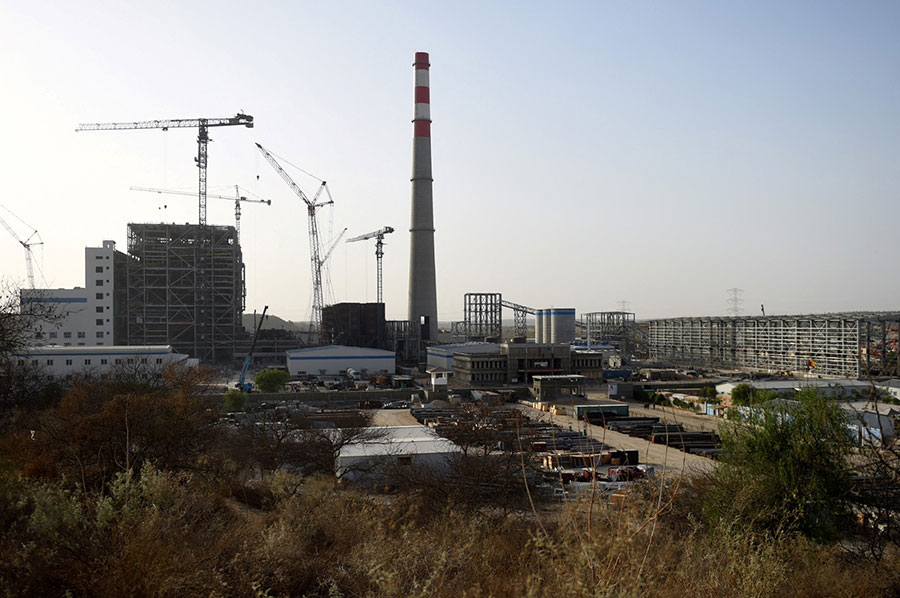
Islamabad – Last year, Pakistan found itself in the absurd position of paying a fine to avoid taking delivery of liquefied natural gas (LNG) cargoes it was contractually committed to buying.
The country, structurally dependent on imported energy, is negotiating to divert dozens of scheduled shipments as domestic demand collapses. When resale arrangements are struck, downside risks remain in Islamabad while upside gains go elsewhere.
That’s pretty good luck. This is the inevitable result of signing rigid contracts without adequate demand modeling or currency risk management. For three decades, the same story has been repeated across fuels and technology.
Price cannot fix institutional incompetence
The energy debate in Pakistan often points to one of two explanations for persistent dysfunction: external shocks (fuel prices, exchange rates, floods) or outright theft and corruption. Both contain truth. Neither explains why the same structural problems arise no matter who is in power or which fuel is being discussed.
The real answer is institutional incompetence, which is not an insult but a diagnosis.
Consider the chaos of generating capacity. Pakistan currently has an installed capacity of over 46,000MW. Peak demand rarely exceeds 30,000MW. Off-peak period? It can drop below 10,000MW. Utilization hovers around 35%.
However, we pay nearly Rs 1.9 trillion in capacity payments every year.
These are not numbers calculated by technical error. They reflect a negotiating framework that is backed by sovereign guarantees guaranteeing dollar index returns but without sufficiently robust demand forecasts or hedging mechanisms. When demand growth slows and the rupee depreciates, fixed debt remains. Consumers absorb the costs.
This happens when planning is conducted in isolation from macroeconomic realities. This mismatch is structural.
Circular debt is often viewed as a financial problem that requires a financial solution. The government regularly announces settlement packages backed by guarantees and bank borrowings to clear arrears and stabilize liquidity.
None of these work. Debt currently stands between 1.6 and 2.6 trillion rupees, depending on how it is measured, and continues to climb as underlying behavior has not changed.
Distribution companies recently posted quarterly losses of over Rs 17,000 crore, citing technical inefficiencies, outright theft and lackluster recovery. Tariff adjustments were delayed for political reasons. Performance enforcement remains inconsistent.
Financial restructuring without governance reforms will only shift obligations. Interest keeps compounding. The arrears were restored.
This episode of Solar Net Metering tells you all about reactive governance. Rooftop solar installations proliferated when electricity prices soared and supplies became unreliable. Households and firms behave exactly as economics textbooks predict: they respond to price signals.
The policy response has been to slash repo rates (in some cases from Rs 26 per unit to Rs 11 per unit) to protect the revenues of distribution companies.
A confident system would welcome distributed generation as part of the energy transition. It will prioritize reducing line losses (still staggering), modernizing billing and improving enforcement before realigning incentives.
Instead, our situation suddenly reversed. A sudden reversal would create uncertainty, raising the cost of financing in an already capital-starved economy.
The core problem is this: Every actor in Pakistan’s energy system responds rationally to perverse incentives, and the sum of these rational responses creates a crisis.
Generators receive guaranteed returns whether dispatched or not. Operational enforcement of distribution companies is weak. The government manages tariffs through political timing rather than cost recovery. Faced with high prices and unreliable service, consumers lost trust and compliance deteriorated. Regulators have limited operational autonomy.
No need for villains. It’s just misaligned incentives that have exacerbated the situation over decades.
This explains why the crisis persists despite sharp increases in tariffs. Prices alone cannot stabilize a system whose institutional structure rewards wrongdoing.
Powers over energy policy are dispersed across multiple ministries, departments and regulators, with overlapping responsibilities. Tariff decisions remain politically sensitive. Subsidy commitments are delayed in fiscal transfers. External reform frameworks, often attached to International Monetary Fund (IMF) programs, may drive adjustments, but without internal ownership, reforms become incidental rather than embedded.
At the same time, Pakistan’s heavy reliance on imported fuel exposes it to exchange rate shocks, but foreign exchange risk management remains beyond planning. At the same time, domestic resources (hydro, wind, solar) have yet to be integrated into a coherent diversification strategy.
The energy crisis is not technological; this is political
The country has generational assets, infrastructure and technical talent. What it lacks is the institutional capacity to align planning, contracting, regulation, enforcement and fiscal discipline with economic reality.
Solving this problem doesn’t require a miracle. It requires tedious, politically expensive, incremental work.
Comprehensive planning that links gas and electricity decisions to actual demand forecasts and is updated regularly. Emphasis on flexibility and a clear procurement framework to hedge currency risks. Distribution reform focuses on enforceable performance standards and measurement integrity. Regulatory autonomy allows for timely, non-politicized tariff adjustments. Transparent subsidy accounting so arrears are not disguised as policy.
Without institutional redesign, every injection of capital and contract renegotiation will be just a temporary patch on a structurally fragile system. Pakistan does not need another bailout package or another circular debt solution. It requires institutions that can make a difference.
At its core, the energy crisis is a governance failure: if there was the political will to prioritize long-term functionality over short-term gain, the energy crisis would be persistent, predictable, and entirely solvable.
Until then, we’ll continue to sign contracts we can’t fulfill, build capacity we can’t use, and wonder why the lights keep going out.
The author is a PhD researcher at Sunway University, Malaysia and Senior Officer (Policy and Capacity Building) of WWF-Pakistan. He works on energy policy, the renewable energy transition and climate governance.