The Tamesis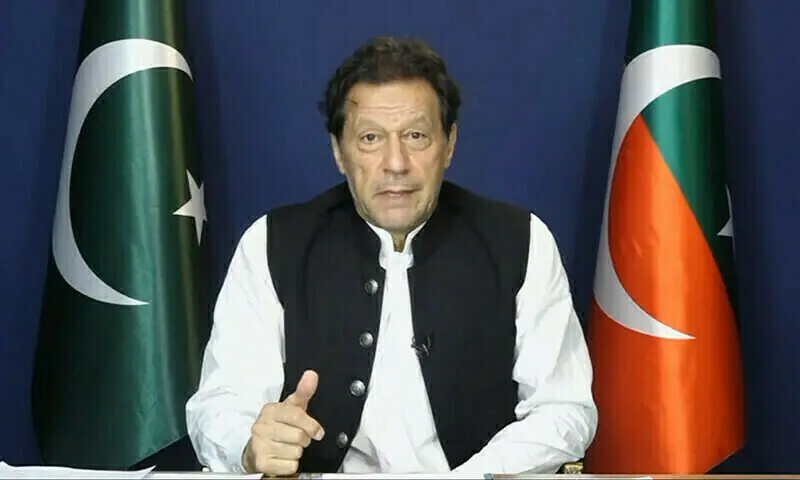
February 13, 2026
Islamabad – The SC also directed that Imran be allowed to talk to his children. Ordered to undergo eye examination and telephone examination by Monday, February 16th.
The directive came as a two-judge bench headed by Chief Justice of Pakistan Yahya Afridi and headed by Justice Shahid Bilal Hassan resumed hearing of the case regarding the PTI founder’s living conditions in Adiala jail.
On the evening of January 24, Imran underwent a medical procedure at the Pakistan Institute of Medical Sciences (Pims) in Islamabad – news that was confirmed days later, apparently without the knowledge of the family.
CJP Afridi noted: “Imran’s health issue is of paramount importance”, adding that “intervention is necessary”.
“We want to know the government’s stance on his (Imran’s) health,” the top judge said. Attorney General Mansoor Usman Awan of Pakistan confirmed at the meeting that providing medical facilities is the responsibility of the state.
“If the prisoners are not satisfied, the state will take measures,” Governor Awan added.
CJP Afridi later noted that Imran’s “issue of talking to children on the phone is also important”.
“We trust the government. The government is in a good mood today,” he said.
PTI lawyer Salman Safdar, who was appointed as amicus curiae and met Imran at Adiala jail in Rawalpindi on Tuesday, has submitted a seven-page report to the apex committee on Imran’s living conditions in jail.
In his report, see dawn, Safdar quoted Imran as saying that “despite treatment, including injections, he only has 15 percent vision left in his right eye.”
Imran told Safdar that about “three to four months ago, until October 2025, he achieved normal 6 x 6 vision in both eyes”. He then began to experience persistent symptoms of blurred and hazy vision, which he reported to the then warden multiple times, but “prison authorities took no action.”
The report reads: “[Imran] He then suddenly became completely blind in his right eye and Dr Mohammad Arif, an ophthalmologist at Pims Hospital, was called to examine him, he said.
“according to [Imran]he was diagnosed with a severely damaging blood clot and, despite treatment, including injections, was left with only 15% vision in his right eye. “
Adding to Imran’s claims, Safdar said he had “personally observed that the petitioner was clearly disturbed and deeply distressed by the loss of vision and lack of timely, professional medical intervention”.
“Throughout the entire interview, the complainant’s eyes continued to water and he repeatedly wiped his eyes with a tissue, reflecting physical discomfort,” the lawyer recalled.
However, during the hearing, the Supreme Council rejected the request to examine the condition of Imran’s eyes in the presence of Imran’s family members.
On the request to provide some books to the PTI founder, AGP Awan said it would be done after consulting an ophthalmologist.
CJP Afridi recalled that the Supreme Standards Committee received reports from the superintendents of Safdar and Adiala jails, saying: “Most of the things in both the reports were similar – the place is good and the facilities are good.”
Noting that the issue of Imran’s meeting with his family was pending before the Islamabad High Court (IHC), the top judge said it would be appropriate for the relevant court to decide on it.
“Eye condition worsens and cannot see a private doctor”
The report details Safdar’s meeting with Imran, cell conditions, facilities and amenities provided for the former prime minister, a description of his residence, and the process by which lawyers arrived at the jail.
Safdar further quoted Imran as saying that “regular and regular blood tests” were not conducted.
The former prime minister said that while his personal doctors, Dr Faisal Sultan and Dr Asim Yusuf, had previously been allowed to visit, “despite repeated requests and the deteriorating eye condition, no visits were allowed during the relevant period”.
“[Imran] “For nearly three months, the only treatment was eye drops, but there was no improvement and the vision in the right eye was severely damaged,” Safdar said.
Imran also claimed that “even though he is 73 years old and needs to see a dentist, no dentist has examined or treated him over the past two years despite repeated requests”.
According to Safdar, Imran told him that he had “suffered a rapid and severe loss of vision over the past three months while living and detained under the ‘care and custody’ of prison director Abdul Ghafoor Anjum”.
Safdar was told: “This concern of his was neither taken seriously nor addressed by the relevant prison authorities.” Upon enquiry, prison staff informed the lawyer that Anjum had been transferred on January 16, 2026 and was replaced by Sajid Baig.
Safdar said that upon enquiry, the prison superintendent told him that Imran is currently under the care of Dr. Arif of Pims and the prison doctor on duty records the vital signs of the PTI founder three times a day.
A day earlier, Safdar on Tuesday denied making any statement on Imran’s health and made it clear that if anything was blamed on him in this regard, it was “misinformation and misinformation”.
On Tuesday, the day Safdar met Imran, he reportedly told the media that the jailed PTI founder was in good condition and appeared to be healthy.
The Supreme Council ordered that Safdar be allowed to meet Imran after a judge rejected senior PTI leader Latif Khosa’s request for an immediate meeting but issued notices to all parties.
Imran’s son says direct consequences of ‘medical neglect, solitary confinement’
In an article published on X, Imran’s son Kasim Khan called the development a direct result of “solitary confinement, medical neglect.”
“We were informed that my father, Imran Khan, had lost most of the vision in his right eye, with reports that he only had 15 percent left,” Qasim said.
“This is a direct result of 922 days of solitary confinement, medical neglect (refusal of blood tests) and deliberate denial of proper treatment in prison,” Qasim stressed. He insisted that “responsibility lies solely with the regime in power, the Army Chief of Staff and the puppets who enabled this cruel act.”
He said Imran’s “deterioration in physical condition occurred under their orders, surveillance and responsibility”.
“They manipulated and twisted the justice system in order to place my father in solitary confinement,” he added.
Qasim claimed that he and his brother Suleiman “continue to be denied visas to visit their father due to his deteriorating health condition”.
“History will record this injustice,” he said, calling on “human rights institutions, legal institutions and democracies to confront this persecution and ensure that those responsible face consequences”.
Meanwhile, Information Minister Attaullah Talal said claims “spread” by the jailed former prime minister’s family based on the report were “totally untenable”.
He said in a post on
“Reports on daily living and dietary plans have removed all ambiguity. He has access to all facilities and he has more privileges than any other prisoner,” he added.
Diagnosis and treatment
Meanwhile, a medical report dated February 6 signed by Pims Executive Director Prof Dr Rana Imran Sikander and addressed to the Adiala Jail administration has also been submitted to the SC.
Reports indicate that Dr Sikander was instructed by the Prime Minister’s Office to inform prison staff about Imran’s health condition.
Dr Sikander said Imran “reported decreased vision in his right eye” but did not specify when.
He added: “A qualified ophthalmologist from Pims, Islamabad conducted a comprehensive eye assessment at Adiala Jail [sic]including slit lamp examination, fundoscopy, intraocular pressure measurement, necessary laboratory tests and retinal OCT (optical coherence tomography).
“Based on his assessment, right central retinal vein occlusion was diagnosed and follow-up treatment in hospital was recommended.”
Recalling Imran’s treatment on the night of January 24, doctors said the former prime minister was “brought to Pimms for the recommended surgery on Saturday/Sunday evening”.
“At the hospital, we explained the treatment plan, the need for intravitreal injection of anti-VGEF, to the patient in detail. Therefore, informed consent was obtained from the patient before the procedure,” said Dr. Sikander.
He reiterated that the surgery was performed in the operating theater under standard sterile protocols and monitoring, adding that it was “smoothly completed in approximately 20 minutes.”
In his report, Safdar said Dr Sikander’s notes, which were provided to him by Imran’s family, did not “contain the full details of the incident”.
“It also fails to identify qualified ophthalmologists who conduct the tests and administer the treatments,” he stressed.