The Tamesis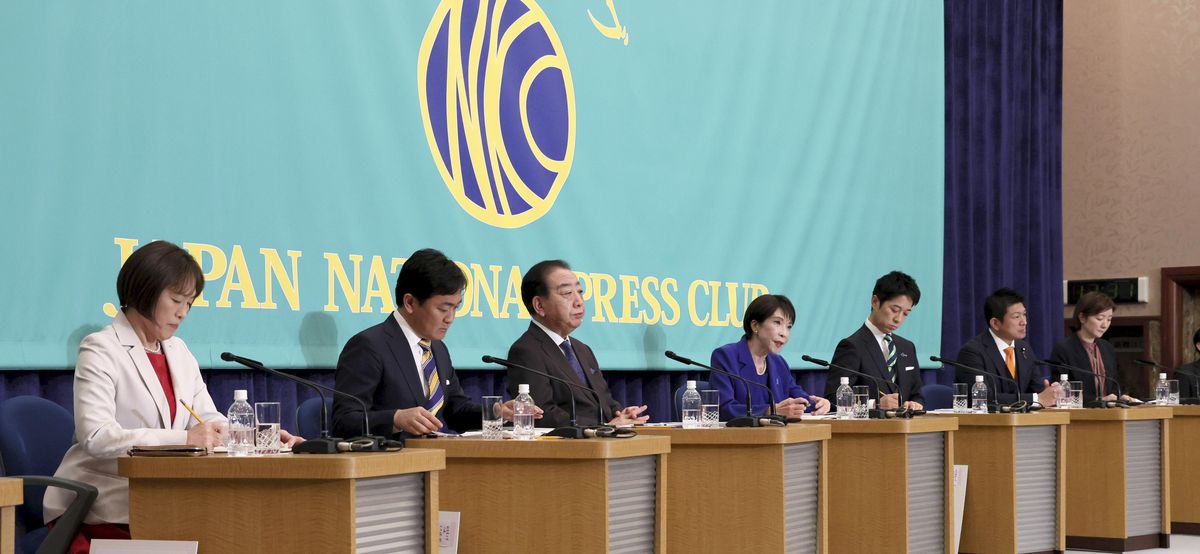
February 4, 2026
London/Brussels – Many overseas media outlets criticized Japan’s major political parties for their pledge to cut consumption taxes during their campaign for the House of Representatives election scheduled for February 8.
Foreign media are worried that as the government’s social security expenditures increase, Japan will lose huge amounts of revenue and the country’s financial situation will worsen.
Commentators have compared the tax cuts to the turmoil triggered by then British Prime Minister Truss, whose massive tax cuts depressed government bond prices, stock prices and the value of the pound.
“Japanese Prime Minister Sanae Takaichi’s plan to temporarily reduce food excise taxes to zero is undoubtedly a bad idea and a rather nakedly political idea,” one analyst wrote in Bloomberg.
The article directly criticized the Liberal Democratic Party and the Reform Party for jointly promising to accelerate discussions on abolishing the food consumption tax within two years.
The rationale is that if the food consumption tax rate is reduced to zero, government tax revenue is expected to decrease by approximately 5 trillion yen per year.
The article suggested that the pledge was simply a policy proposal aimed at winning the election.
It also urged Japan to invest in areas such as artificial intelligence, semiconductors and defense spending.
“If Japan has an extra 5 trillion yen (expected to cut costs), it can use it more effectively rather than as temporary political favors.”
As for the opposition parties, the centrist Reform Alliance has pledged to reduce food excise taxes to zero “permanently”, while the People’s Democratic Party has vowed to reduce the tax rate on all goods and services from 10% to 5% under certain conditions.
The French “Echo” stated that since Japan’s outstanding government debt accounts for 230% of the country’s gross domestic product, it is necessary to maintain the consumption tax as a stable source of revenue.
The newspaper said that even if the Liberal Democratic Party’s tax cut plan is realized, it will have zero boost to GDP in the second year.
Although the Liberal Democratic Party and the Japan Industrial Party plan to cut food consumption taxes within two years, reinstating the tax is expected to face opposition from the public, which sees it as a de facto tax increase.
As a result, people are questioning whether the government can actually restore food tax rates.
The “Echo” article predicts that no Japanese government will have the courage to reinstate the food consumption tax.
In Japan, long-term interest rates have been rising amid concerns that the country’s fiscal position will worsen.
The Belgian newspaper “De Standaard” believes that the first year of high school will face a similar situation to Tras.