The Tamesis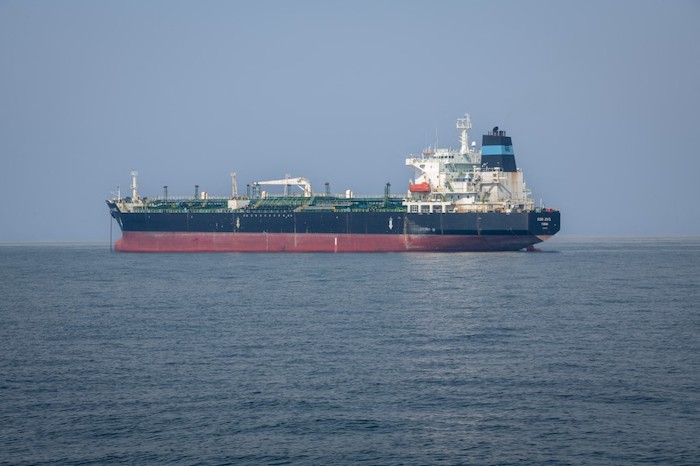
Iran vowed on Tuesday not to export a single liter of oil from the Gulf while its war with the United States and Israel continues, a stark rebuke to President Donald Trump’s boasts of an imminent end to the conflict.
Trump’s argument that the war would be “over soon” helped reverse Monday’s surge in oil prices. Oil prices have been surging since Iran attacked shipping and closed the Strait of Hormuz in response to a U.S. and Israeli attack that killed its top leader.
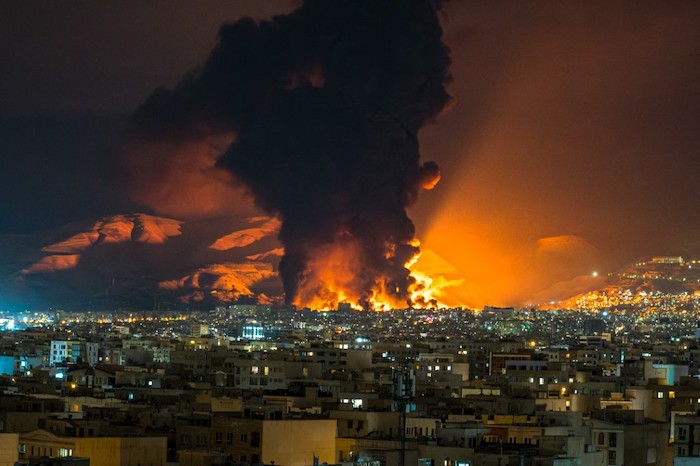
Oil prices also rose after attacks on Iranian oil depots and attacks on oil infrastructure in Saudi Arabia and Bahrain.
See also: As oil prices top $100 a barrel, Asian leaders rush to limit impact of war
After Trump’s remarks, European natural gas prices opened down 15%, Asian stock markets recovered from Monday’s plunge, and European stocks opened higher. But concerns remain high.
Qatar, which has suspended liquefied natural gas exports, sending European energy prices soaring, said Iranian attacks on its civilian infrastructure were continuing and the Israeli military announced a new wave of attacks on Tehran.
“The longer the disruption lasts, the more catastrophic the consequences will be for world oil markets and the impact on the global economy,” Amin H. Nasser, president and chief executive of Saudi oil giant Aramco, told reporters. “The restoration of shipping in the Strait of Hormuz is absolutely critical.”
Egypt increased fuel costs by 3% and Pakistan said it would provide naval escort for commercial shipping. France has sent warships to the area.
Iran’s Revolutionary Guards mocked Trump’s efforts to mitigate the economic impact of the war, warning: “Iran’s armed forces… will not allow the export of a single liter of oil from the region to the hostile party and its partners until further notice.”
“We will decide the end of the war,” the Islamic Revolutionary Guard Corps, seen as close to Iran’s new Supreme Leader Ayatollah Khamenei, said in a statement carried by Iranian media.
Stocks rise, Brent falls 7%
Asian stocks rose and oil prices fell on Tuesday after President Donald Trump suggested the U.S.-Israeli war with Iran could end sooner than thought.
Stocks in Paris and London rose about 2%, while European natural gas prices fell 15%, helping to ease concerns about another surge in global inflation.
Brent North Sea crude, the international oil benchmark, plunged more than 7% to around $92 a barrel after trading close to $120.
Russ Mold, investment director at AJ Bell, said: “The fall in oil prices helped US stocks stage an impressive rebound into positive territory on Monday – a trend that has continued in Asia and is now being repeated in Europe.”
South Korea’s Kospi rose 5% and the Nikkei rose 2.9%
All Asian markets were higher, with Seoul gaining more than 5% and Tokyo gaining 2.9%.
Progress has also been made in Hong Kong, Shanghai, Sydney, Singapore, Bangkok, Mumbai, Taipei, Manila and Jakarta.
“This remains a volatile market and if the headlines worsen, or the war escalates, then we could see prices reverse again,” said Kathleen Brooks, director of research at trading group XTB.
As the crisis in the crude-rich Middle East enters its second week, Trump said the campaign was well beyond his initial timeline of about a month.
“It’s going to be over soon, and if it starts again, they’re going to be hit harder,” he told a news conference in Florida on Monday.
Iran responded by vowing to block Gulf oil exports and claiming that they, not the United States, would “determine the end of the war.”
‘Lack of certainty’
Still, Trump’s comments turned the tables Oil prices soared the day beforeThe index has surged since Iran’s attack on shipping closed the strategic Strait of Hormuz in response to a U.S.-Israeli attack that killed its top leader.
Oil prices surged following attacks on Iranian oil depots and attacks on oil infrastructure in Saudi Arabia and Bahrain.
“The market is in a highly speculative mode due to the lack of any certainty about what the next few days will hold, let alone [what] It’ll be like that for a few weeks,” Molder said.
“In this case … Trump’s comments about the imminent end of the war with Iran have been captured,” he added.
The US president also said he would temporarily Exemption from some oil-related sanctionsafter confirming talks with Russian President Vladimir Putin.
Investors’ attention is focused on the Strait of Hormuz, through which nearly 20% of the world’s oil is typically transported from the Gulf to world markets.
According to shipping experts, about 10 ships in or near the strait have come under attack since Iran all but blocked the strait in retaliation for U.S. and Israeli attacks.
French President Emmanuel Macron said France and its allies were reopening the strait on a “purely defensive” mission aimed at escorting ships “after the most intense phase of the conflict is over.”
Key data around 1110 GMT
North Sea Brent crude oil: fell 7.1% to $91.83 a barrel
West Texas Intermediate crude oil: fell 6.4% to $88.67 a barrel
SEOUL – Kospi: up 5.4% to 5,532.59 (close)
TOKYO – Nikkei 225: up 2.9% to 54,248.39 (close)
Hong Kong – Hang Seng Index: up 2.2% to 25,959.90 (close)
Shanghai – Composite Index: up 0.7% to 4,123.14 (close)
USD/JPY: fell to 157.74 yen from 157.85 yen.
- AFP By Jim Pollard Additional editing
See also:
China beats U.S. again in global patent battle, Huawei maintains lead
Middle East crisis pushes up oil prices, rout intensifies in Asian markets
War with Iran could hit some of Asia’s biggest economies hard
Asian markets tumble, oil prices rise as Iran war fears grow
BNP wins Bangladesh election, former leader’s son to become prime minister
India delays talks, China says ‘cancel tariffs’ after US ruling
China exploits Trump’s ‘uncertainty’ to dominate global trade
Iranian ‘ghost tanker’ delivers jet fuel to Myanmar air force