The Tamesis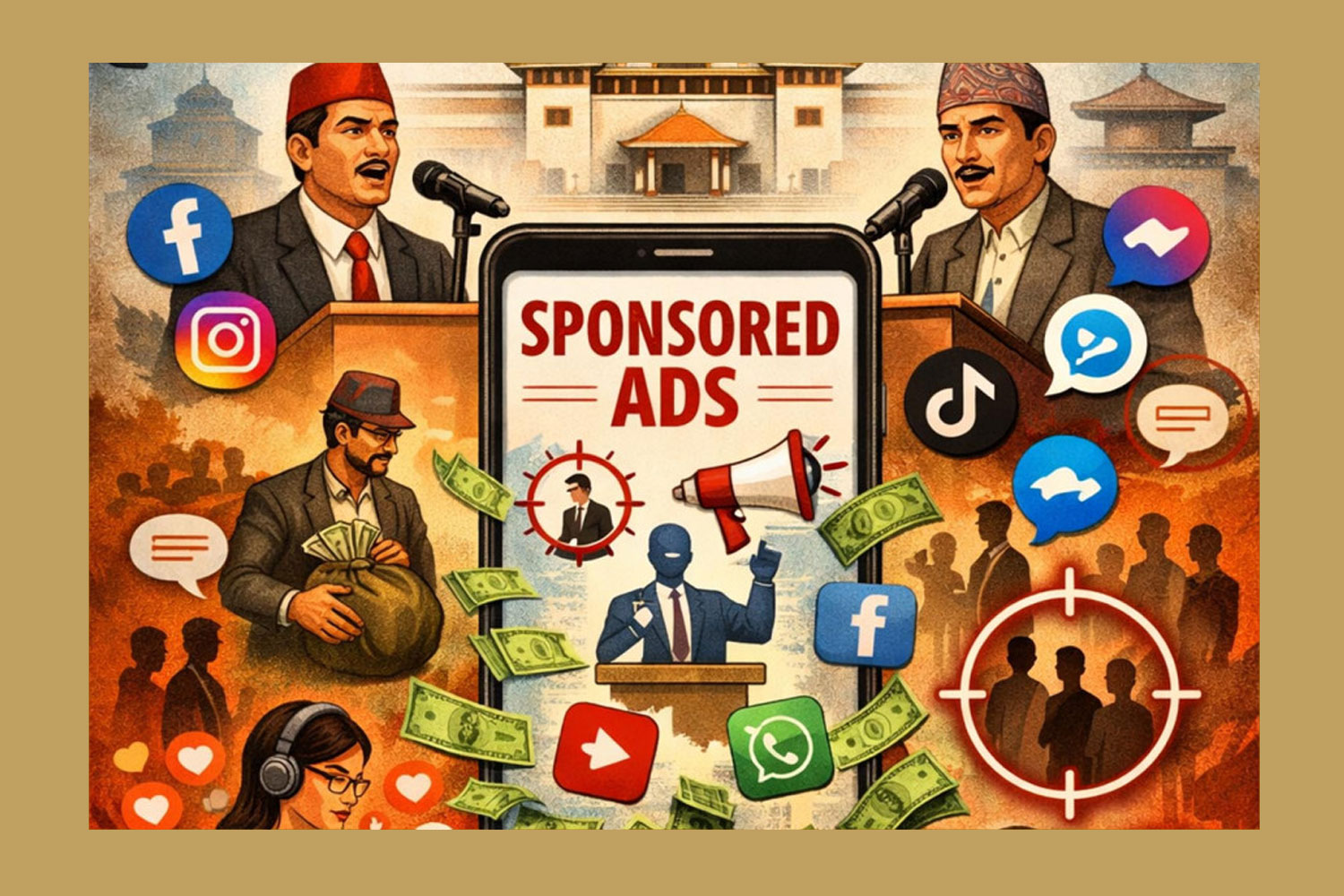
kathmandu – Political parties and candidates have stepped up their social media campaigns, with spending surging on Facebook, Instagram, WhatsApp, Threads and Messenger.
Data from October 20 to January 11 shows that the Rastriya Pariwartan Party spent the most on Facebook ads. After merging with Ujyalo Nepal on January 15, the party promoted content through its homepage, a page called Gen-Z United Movement, and pages of its regional chapters.
Other active accounts include Gatisheel Loktantrik Party, Birendra Bahadur Basnet Secretariat, Shree Gurung, Ujyalo Nepal Official, Sunil Kumar Sharma, RSP Coverage, Bhupendra Rai and Manish Kumar Sah. They all publish ongoing sponsored content on the Meta platform, targeting voters in specific constituencies.
In terms of numbers, in the past three months, 39 pieces of sponsored content were posted by the Gatisheel Party’s Facebook page, 30 by the Okhaldhunga chapter of the Rastriya Pariwartan Party, 24 by the party’s page, and 18 by the Gen-Z United Movement. Even after the merger, the Rastriya Pariwartan party continued to publish sponsored content in the past seven days.
The party, founded in November and led by Rajesh Portel, who lost a leg to the Gen Z movement, has spent $1,199 on its homepage alone in the past three months. Other chapters also contributed. Okhaldhunga spent $240, Gen-Z United spent $427, Panchthar chapter spent $100, etc., taking the total expenditure to $2,360 (approximately Rs. 346,576.86).
After merging with Kulman Ghising’s Ujjaro Nepal Party, the party now appears on Facebook as Ujjara Nepal Party – UNP. Ugialo had previously abandoned his alliance with the National People’s Party and worked with the National People’s Party to update the proportional representation list.
A Facebook page called “Ujyalo Nepal Official” spent $464 on digital promotion in the past 90 days, building a strong online presence. Following the merger, spending is expected to rise further. In the past 30 days, Ujyalo’s Makwanpur chapter spent less than $100 on an ad, according to Meta Ad Library.
The Gatisheel Loktantrik Party was the second largest spender, spending $1,116 on 39 ads in the past three months. Its activities include promoting tourism and agricultural self-reliance. In the past 30 days alone, the party has spent $142 on advertising.
Birendra Bahadur Basnet also used the party’s official page and his secretariat page for election-focused campaigning. Basnet spent $630 on 16 sponsored content projects over three months, according to his Secretariat page, while another ad costing less than $100 lacked the legally required disclaimer.
Shree Gurung, who ran independently from Kathmandu-5 in 2022, is now a founding member of Ujyalo Nepal and actively invests in digital promotion. In the past 90 days, he spent $489 on 11 ads. In the previous election, he spent about $5,968 on social media and finished third with 2,761 votes. He again competed from Kathmandu – 5.
A Facebook page called “Referendum Nepal,” which bills itself as a nonpartisan initiative to promote voter literacy, spent $417 on a single ad from Nov. 21 to Nov. 23. The ad graphically explains online registration for Voter ID and is designed to inform voters how to complete the process online.
Sunil Kumar Sharma of the Nepali Congress Party, a medical entrepreneur from Morang-3, spent $289 on three ads in the past 90 days. A page called RSP Coverage Yugesh cost $230, although its content appeared to focus on promoting specific candidates rather than general party coverage.
Meta’s data from January 11 to 17 showed a slight decline in spending. This week, the Rastriya Pariwartan Party spent $330 on ads without disclaimers for candidates Ganesh Karki and Prem Kumar Tamang. Facebook ads of Nepal Communist Party (NCP) leader Jhalanath Khanal and Rastriya Prajatantra Party chief Rajendra Lingden are also visible.
Kanal announced he would not run in the March 5 election, leaving the constituency open to younger candidates. Pushpamani Kharel, RK Singh Parag’s Secretariat, Ammar Pariyar Arya and Deepak Karna have smaller expenditures. Sunil Kumar Sharma, Manraj Gurung and Shree Gurung spent very little and so did Sita Dhungana and Kamal Koirala.
Most ads are served without the legally required disclaimers. The Electoral Commission has announced tighter monitoring of social media advertising this year. With the ability to target specific constituencies, social groups and genders, even small expenditures can have a significant impact.
The commission is working with Meta and TikTok in the 2022 local elections to regulate political advertising, track spending and content transparency. Facebook’s ad library has since included Nepal, providing the public with spend and content details. Similar collaborations are underway this year to curb misinformation, false content and hate speech.
The number of social media ads is expected to surge as nominations for direct elections are filed. Political parties and candidates may increase their budgets. Technology expert Dovan Rai says digital marketing campaigns exhibit both ethical and unethical tendencies. Rai said social media has democratized electoral campaigning, providing broader and cheaper opportunities for participation than traditional door-to-door campaigning.
“Some candidates hire third parties to generate fake reviews, buy likes or create fake accounts,” Rai said. “This can create an artificial sense of support and influence voters. Organized campaigns can also be used to defame opponents and spread negative information.”
Rai expressed concern about online harassment against female and transgender candidates. Campaigns often focus on personal lives or gender rather than political issues, aiming to reduce credibility. Financially stronger candidates can expand their visibility through paid advertising, which the electoral commission must track within spending limits, he said.