The Tamesis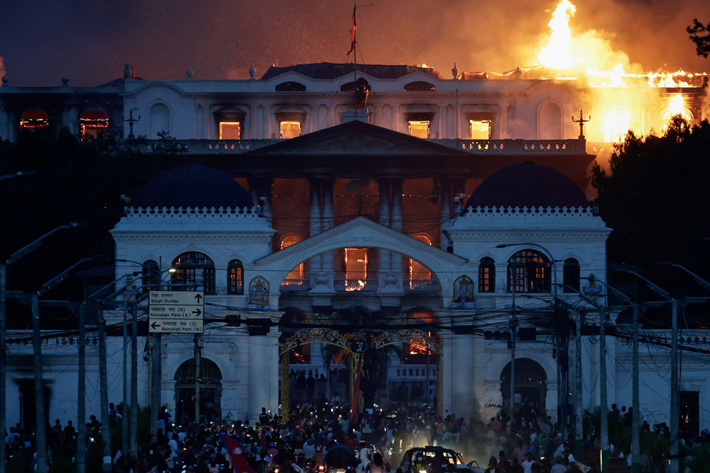
As Nepal heads to its first polls after a deadly round of protests last year, voters are facing an “onslaught” of artificial intelligence-generated content that experts say is “manipulated or outright fake.”
The poll, due to be held on Thursday, follows protests in September 2025 by tech-savvy young people angry about job shortages and blatant corruption by an aging political elite.
The protests were sparked by the government’s decision to regulate social media, which briefly banned at least 26 platforms, including Facebook, Instagram, YouTube and X.
ALSO WATCH AF: Asian markets tumble, oil prices rise as Iran war worries grow
At least 77 people died In two days of riots, Parliament was set on fire and the government of four-term Prime Minister KP Sharma Oli collapsed.
Activists used the group chat app Discord to propose interim leaders, and days later they chose 73-year-old former chief justice Sushila Karki, who was appointed to lead the country through the elections.
Social media once again plays a key role as voters look for new leaders.
political agenda
Parties across the political divide are using social media to push their agendas and engage voters, especially young people, who include large numbers of people registering to vote for the first time.
Loyal supporters of the ousted Marxist party shared AI-generated images purporting to be drone shots of large rallies, which were then forwarded by senior leaders and have more than half a million supporters.
Analysis by TechPana, Nepal’s online fact-checking expert, found that the images were created using OpenAI’s ChatGPT, while police said fewer than 5,000 people were at the actual event.
Another AI-generated video circulating on TikTok purportedly shows Nepali Congress leader Gagan Thapa urging voters to support a rival party. The platform has removed the video.
In neighboring India, posts calling for the restoration of Nepal’s deposed Hindu monarchy are circulating on social media, researcher Niravuddin said.
She told AFP that this “ideological push” online – in this case “amplified by Hindu far-right supporters in India” – contrasted with “domestic demands for stronger democratic institutions”.
“The competition to spread misinformation”
The electoral commission said there was widespread use of hate speech and deepfake content, including videos created using off-the-shelf artificial intelligence tools designed to show candidates insulting opponents or using obscene language.
“This is a worrying issue,” said Suman Ghimire, European Commission information officer.
He added that more than 600 cases had been referred to the authorities, of which about 150 had been handled by the police.
In one case, police detained a pro-royalist supporter, Durga Prasai, for social media posts that allegedly intimidated potential voters.
The electoral commission can impose fines or ban candidates from running, but experts say the scale of online disinformation and hate speech outweighs any effective response.
“Candidates and people close to political parties are not only competing to win but also to spread misinformation,” said Basanta Basnet, editor-in-chief of Onlinekhabar, a news website that works with FactCheck Nepal to verify posts.
The organization warned that “misinformation encourages citizens to make poor decisions” which in turn could undermine the “foundations of democracy”.
threats to democracy
Kathmandu-based technology policy researcher Samik Kharel described a “digital battlefield” on the eve of the landmark vote, warning that Nepal lacks the expertise to monitor the onslaught of machine-generated content.
“It’s even difficult for experts to tell what’s real and what’s fake,” Karel told AFP.
He said about 80% of Nepal’s internet traffic is through social media platforms.
But “in a country with low digital literacy, people believe what they see,” said Deepak Adhikari, editor of the independent Nepal Checkup team.
Internet analytics website DataReportal estimates that more than 56% of Nepal’s 30 million people are online, including 14.8 million Facebook users and about 4.3 million Instagram users. According to the Nepal Internet Service Providers Association, approximately 2.2 million people use TikTok.
“Disinformation remains a top concern that could undermine the integrity of the electoral process,” said Ammaarah Nilafdeen of the National Center for the Study of Organized Hate.
“Nepal… is grappling with the huge threat disinformation poses to society and democracy as a whole.”
- Vishakha Saxena, AFP Further editing
Also read:
Vietnam quickly passes Southeast Asia’s first artificial intelligence law
Altman admits ‘urgent’ need for AI regulation at India summit
4,000 CEOs say AI has no impact: Study spurs massive sell-off
Researchers say artificial intelligence doesn’t make work easier, it just makes it harder
China and U.S. opt out of global commitment to military use of artificial intelligence
DeepSeek researchers are pessimistic about AI’s impact on humanity
The ‘Big Short’ is betting $1 billion that the ‘AI bubble’ will burst
Senior analyst warns that artificial intelligence is ‘virtually useless’