The Tamesis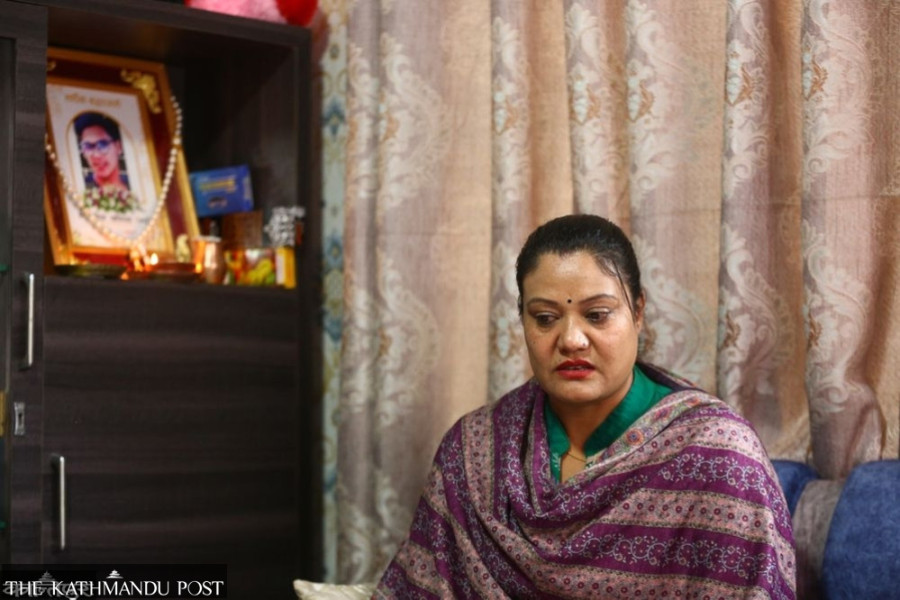
March 18, 2026
kathmandu – Rachana Khatiwada is busy fielding congratulatory calls from relatives and well-wishers. Yet she found herself unable to feel happy.
She is the mother of 23-year-old Rasik Khatiwada, a native of Kavre who was killed during the Gen Z movement on September 8 last year. On Sunday, Rachana’s name appeared in the Proportional Representation (PR) list of the House of Representatives representing the Rashtriya Swayamsevak Sangh (RSP). While relatives called and sent messages to celebrate, Rachana’s tears flowed uncontrollably.
“No matter where I go, my little son will never come back,” she said with emotion. “I don’t feel happy.”
Rachana is the only lawmaker representing the families of those killed in September’s protests. While the RSP included Prakash Bohara and Pawan Shahi, who were injured during the Gen Z movement, in the closed list, they were not given seats. Instead, Rachana now carries what she calls a heavy responsibility.
“Now I will have the opportunity to speak on the House floor,” she said.
Her son Rasik took to the streets of Baneshwar demanding justice and good governance. According to Rachana, the state responded to the protesters with bullets. Lasik and his colleagues died there.
Rachana continues to protest against those she calls the “murderers” of her children. “I will also speak out against them in Parliament. I will fight until the end of my life to get justice for these sons,” she said.
Before September 8, Rachana lived a very different life. She was a housewife and had no interest in national politics. For more than two decades, she and her husband ran a small grocery store to support their daughter Rasila and son Rasik. Rashila is in Australia, and Rashik is on his way to join her there.
On the day of the protest, Rasik joined the demonstration without finishing his meal. His mother spent the day waiting for his return. At night, the son who promised to come back to make tea for his mother never came back.
Since then, Rachana has been seeking justice for her son. She staged sit-ins outside the state administrative headquarters at Sinhadurbar and the prime minister’s official residence, Baruwa Tower.
“Our voices have been suppressed. We made 14 demands to the government, but the most critical issues were never addressed,” she said. “We want justice, but they can’t provide it.”
Rasik has been waiting for an Australian visa. By the time they arrived, he had passed away. When Rachana visited her Teku home in October, she said the visa had been obtained a few weeks ago.
Rasik’s father Purushottam still lights a lamp every morning next to a picture of his son wearing a garland. When he heard that the visa had arrived, he wiped his eyes and said to the black and white portrait: “Son, your visa has finally arrived.”
The family spent many days and nights grieving. When Rabi Lamichane, chairman of the RSP, visited the family of martyr Babarmahal, he heard Rachana’s story.
“He had seen my video. He even cried after listening to me speak,” she recalled.
The RSP remained in contact with her after that meeting and discussed putting her name on the PR list. Eventually, her name was included under the Khas-Arya female tribe.
“I never thought I would be a member of Parliament,” she said. “I am a victim. I want justice and I fight for it. I will continue that fight even now.”
Rachana said she hoped the RSS leaders, including Ramichani and senior leader Balendra Shah, would prioritize the issues of the martyrs’ families.
Until recently, she was a mother fighting a personal battle for justice. Now, she represents the collective voice of families who have lost loved ones and those who are still hurting.
“My son’s friends and relatives are still walking with bullets,” she said. “There are a lot of tears shed by families like mine. For them, my voice must be heard in the House.”