The Tamesis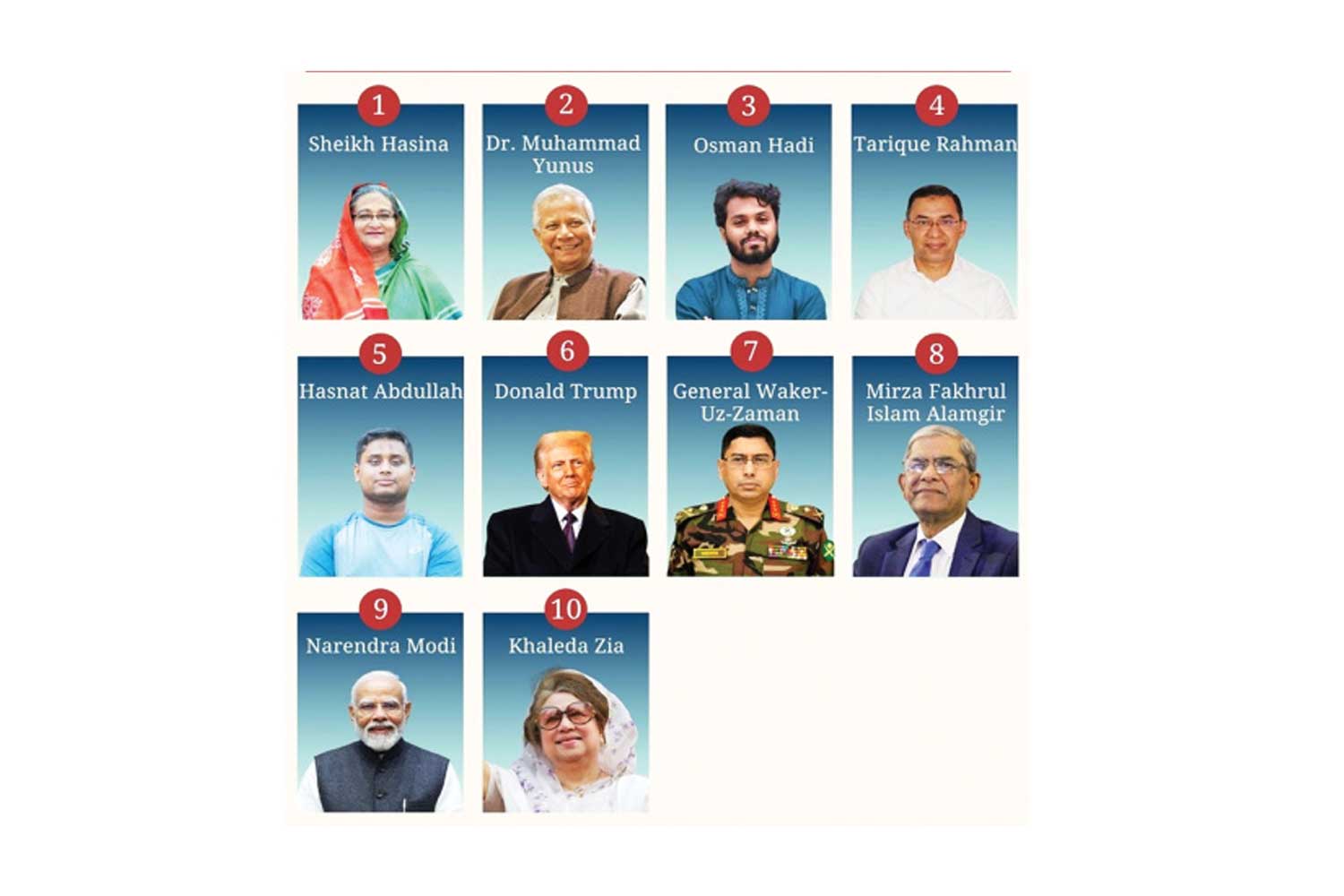
February 2, 2026
Dhaka – In 2025, fact-checkers recorded a 30% surge in false or misleading content compared to the previous year, marking a sharp rise in volume and sophistication.
The nature of disinformation has also changed. Analysis by fact-checking group Dismislab showed that two-thirds of fact-checks involved political narratives, half of which were spread through video and one-tenth were generated by artificial intelligence, pointing to the increasing use of technology to spread disinformation.
In its 2025 Annual Review, Dismislab analyzed headlines from more than 4,000 different fact-checking reports published in 2025 and compiled a list of the top ten individuals who most often appeared in disinformation headlines.
Ousted Prime Minister Sheikh Hasina topped the list, with her name appearing in 274 fact-checking headlines. A large portion of this misinformation involves her old videos, photos, and statements being circulated as “recent.” Another major clue centers on rumors of Sheikh Hasina’s return to power.
Dr. Muhammad Yunus, chief adviser to the interim government, came in second, appearing in 150 fact-checking headlines. Most of these false claims involved portraying his government as unstable and illegitimate. False news continues to circulate, claiming that “Yunus has resigned” or will resign, and that the military has given him a “deadline” to resign.
Other politicians affected by disinformation include now-slain Inqilab Moncho leader Sharif Osman Bin Hadi, BNP president Tarique Rahman, National Civic Party (NCP) leader Hasnat Abdullah Abdullah, US President Donald Trump, Bangladesh Army Chief Waker-Uz-Zaman, BNP Secretary-General Mirza Fakhrul Islam Alamgir, Indian Prime Minister Narendra Modi and late BNP chairperson and former Prime Minister Khaleda Zia.
The application of artificial intelligence in disinformation
Of all the different instances of misinformation that were fact-checked in 2025, 10%, or 417 cases, were created using artificial intelligence. In other words, 1 in 10 misinformation involved AI-generated content on nearly every topic, including politics, disasters, and international conflicts.
The use of artificial intelligence in political misinformation is particularly compelling. For example, on December 25, multiple AI-generated images circulated claiming that Tariq Rahman had returned to the country, showing him at the airport with his family or stepping off a plane and touching the soil of Bangladesh.
Additionally, an AI-generated video has also been circulated claiming to show Sheikh Hasina delivering a speech in the Indian Parliament. Elsewhere, images were shared purportedly showing students holding placards reading “We want Hasina” or graffiti with similar slogans on walls.
political misinformation
Throughout the year, politics-related misinformation continued to spread and was fact-checked in greater numbers than any other topic. In every quarter, politics ranks first among all other issue-based disinformation.
However, trading volumes are highest between September and December as the election approaches. While an average of about 200 pieces of political misinformation are fact-checked each month, that number more than doubled to 408 in December.
One of the main reasons for the increase in political disinformation since September has been student government elections at public universities across the country. In the following months, false information began to circulate about the timing and methods of national parliamentary elections and party nominations.
The killing of Osman Hadi and the illness and subsequent death of Khaleda Zia last December were two major drivers of political disinformation.
At least 55 cases of election-related disinformation were discovered in just one month after the dates for the parliamentary elections and referendum were announced, most of which revolved around various political alliances and fabricated findings.
Overall, the trend of spreading fear and anxiety about law and order in the country continues. The analysis showed that at least 90 fact-checking reports had headlines related to rape, more than 100 focused on murder or killings, and 45 involved cases of abuse or torture.
In the religious category, false information about attacks or persecution of Hindus or other minority communities in Bangladesh circulated throughout the year.
By 2025, nearly 52% of disinformation will be spread via video, including old, irrelevant, and AI-generated clips. Graphics accounted for 21% of all misinformation fact-checked.
Fabricated quotes from various political party leaders and activists, government advisers, or law enforcement officials were circulated via photo cards. Among them, 74% were spread by impersonating well-known media.