The Tamesis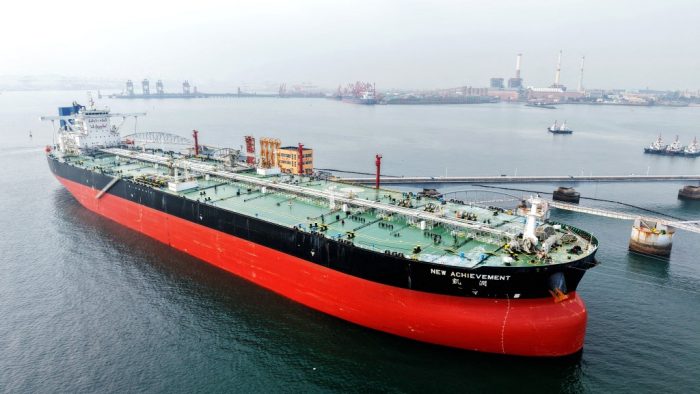
Oil prices rose on Thursday while most stock markets in Asia and the rest of the world fell.
A brutal Israeli attack that killed hundreds of people in Beirut and was strongly condemned by Iranian and European leaders appears to be a major source of concern for investors and the reason why hundreds of oil tankers remain stuck in the Strait of Hormuz.
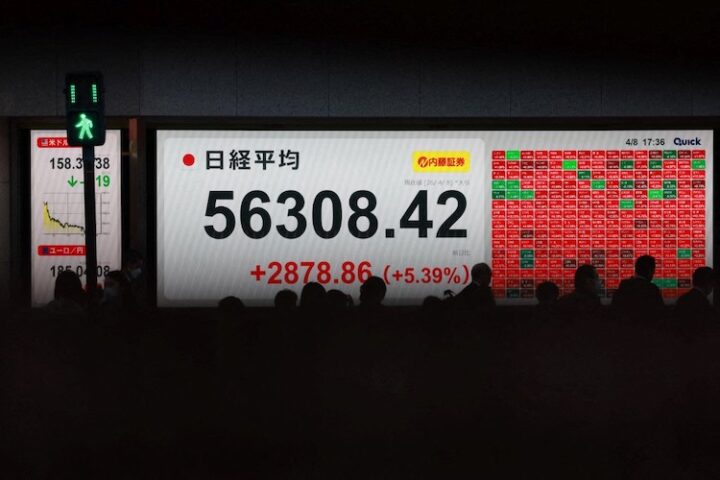
Global stock markets surged on Wednesday Oil and gas prices plummet Two weeks after U.S. President Donald Trump declared a ceasefire in the Middle East war, Iran said it would reopen waterways that carry a fifth of the world’s oil and gas.
See also: Energy crisis caused by Iran war leads to renewables boom, IEA says
But the ceasefire remains in doubt, largely because of continued Israeli attacks on Iran-backed Lebanese Hezbollah.
West Texas Intermediate crude, the main U.S. oil contract, rebounded 5% on Thursday to nearly $100 a barrel as international calls for an extension to the ceasefire followed a massive Israeli attack in Lebanon that killed nearly 300 people.
There have been conflicting diplomatic signals over whether the fighting in Lebanon is included in the U.S.-Iran truce – with Washington saying it is not included and Israel making clear it has no intention of delaying.
Aarin Chiekrie, equity analyst at Hargreaves Lansdown, said: “Oil prices are likely to remain volatile until all parties reach a more permanent agreement.”
The dollar regained some ground on its safe-haven status as concerns about a fragile truce spread.
“Even if the ceasefire holds, it will take some time for the region’s energy exports to return to more normalized levels, so the impact on growth and inflation remains difficult to determine,” said Anthony Keitel of RBC Blue Bay Asset Management.
“It should also be noted that infrastructure in some major energy exporting countries has been severely damaged,” he said.
Guterres: Israel poses serious risk
Hezbollah said on Thursday it had fired rockets into Israel in response to Israeli “violations”, while UN Secretary-General Antonio Guterres warned that Israeli attacks on Lebanon posed a “serious risk” to the ceasefire agreement.
Major European stock markets were in the red in midday trading after stocks fell across much of Asia.
As of the close, Tokyo’s Nikkei fell 0.7%, Hong Kong’s Hang Seng fell 0.5%, and Mumbai’s BSE Sensex fell 1.2%.
“While progress on a more lasting solution to problems in the Middle East will dominate short-term market movements, in the long term it is profitability that will drive stock prices higher,” Kikri said ahead of the first-quarter earnings season.
Since the conflict began on February 28, some companies have begun reminding markets of the impact of the war on their earnings in the January-March period.
The most widely traded oil contract fell about 15% on Wednesday to around $95 a barrel, after more than a month of conflict that killed thousands and hammered global markets.
Key data around 1100 GMT
North Sea Brent crude: up 4.0% at $98.57 a barrel
West Texas Intermediate crude oil: up 5.5% to $99.59 a barrel
LONDON – FTSE 100: down 0.3% to 10,575.51
PARIS – CAC 40: down 0.9% to 8,191.61.
FRANKFURT – DAX: fell 1.3% to 23,768.55.
TOKYO – Nikkei 225: down 0.7% to 55,895.32 (close).
Hong Kong – Hang Seng Index: down 0.5% to 25,752.40 (close).
Shanghai – Composite Index: fell 0.7% to 3,966.17 (closed).
USD/JPY: rose from 158.35 yen to 159.07 yen
- AFP Additional editing and input by Jim Pollard
See also:
Australia and China reach energy security deal as Iran war intensifies
Asia ‘worst hit by energy crisis’ due to Iran war
The Gulf War intensifies, large Chinese ships sail through the strait, and oil prices rise again
India’s demand for wood, coal poor as gas prices soar due to Iran war
War with Iran could hit some of Asia’s biggest economies hard
India races to secure supplies as new attacks threaten ‘energy war’
Iran war sends gas prices soaring, Asia ramps up coal power generation
Carney leads trade shift away from US, China, India, Australia