The Tamesis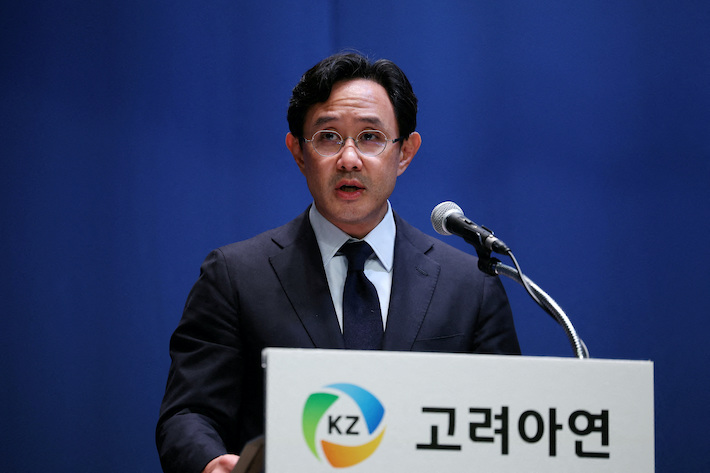
A South Korean court on Wednesday rejected a challenge by Korea Zinc’s two largest shareholders to block the zinc refiner’s plan to issue new shares to fund a $7.4 billion U.S. smelter.
The ruling cleared the way for the project, sending Korea Zinc shares up 5%, but had a negative impact on MBK Partners and YoungPoong, which opposed the plan. YoungPoong’s shares fell 10.5%.
Last week, Korea Zinc, the world’s largest refined zinc producer, said it would build a $7.4 billion Tennessee critical minerals refinery This will be funded primarily by the U.S. government. The move is aimed at reducing U.S. dependence on Chinese chips, electronics and weapons materials.
See also: Japan prepares to test mining ‘rare earth mud’ from deep seabed
Under the plan, Korea Zinc will sell $1.9 billion worth of shares to a joint venture controlled by the U.S. government and an unnamed U.S. strategic investor, which will control about 10% of the Korean company.
In a statement, Korea Zinc thanked the court for the ruling, adding that it will continue to advance its U.S. smelter project and work to increase company and shareholder value.
“We will also seek to contribute to the national economy and South Korea’s economic security as a key player in the critical minerals supply chain,” it said.
Concerns about dilution
Private equity firm MBK Partners and conglomerate YoungPoong, which together own about 46% of Korea Zinc, said they were disappointed with the court’s decision and reiterated concerns about potential shareholder dilution and the fairness of investment terms.
“Despite this outcome, YoungPoong and MBK Partners continue to intend to support the U.S. smelter project in order to deliver a true ‘win-win’ outcome for the U.S., the Korean zinc industry and the broader Korean economy,” the pair said in a statement.
Korea Zinc said in a regulatory filing that the Seoul Central Court determined that the transaction was intended to support the U.S.-led restructuring of global critical mineral supply chains, deepen South Korea-U.S. cooperation and ensure stable global demand.
The document states that the U.S. government sought an equity stake in the joint venture to ensure the success of the project, concluding that direct investment or subsidies alone would not be sufficient.
Governance experts say the main beneficiary of the U.S. smelter deal will be Korea Zinc Chairman Yun B Choi, who has been locked in a control battle with MBK and YoungPoong since October. Issuing shares to potential allies could tip the balance of power in Choi’s favor.
South Korea Zinc said the U.S. smelter project is in line with Washington’s push to diversify mineral supply chains, as it aims to build a foundation for growth by gaining an early foothold in the U.S., the world’s largest critical minerals market.
Shares in Korea Zinc and YoungPoong were down 2.7% and 10.4% respectively as of 0529 GMT, while the benchmark KOSPI was down 0.2%.
LGES sells Ohio plant to Honda
Meanwhile, in other Korean-U.S. news, South Korea’s LG Energy Solutions (LGES) said on Wednesday that its subsidiary is selling a factory in Ohio, U.S., and assets worth $2.86 billion to American Honda Development and Manufacturing Co.
LG Energy Solutions said in a regulatory filing that the planned deal, which does not include land and equipment, is intended to “enhance the joint venture’s operational efficiency.”
In 2022, Honda Motor and LGES announced that they would build a US$4.4 billion joint venture battery factory in Ohio.
The South Korean battery maker does not plan to dissolve its battery factory joint venture or reduce its stake, but plans to sell assets to better run the factory, a person familiar with the matter said.
The person added that the joint factory is expected to start production next year.
Honda did not immediately respond to a request for comment.
The decision was made a week later LGES says Ford terminates EV battery supply deal It is worth approximately 9.6 trillion won.
Last week, Ford said it would take a $19.5 billion writedown and scrap several electric vehicle models, a dramatic example of the industry’s retreat from battery-powered models due to Trump administration policies and weak demand for electric vehicles.
Battery maker SK On ended its U.S. joint venture with Ford this month amid slowing demand for electric vehicles, and other South Korean companies have repurposed production lines to make batteries for energy storage systems in facilities such as data centers.
- Reuters Additional editing by Jim Pollard
See also: