The Tamesis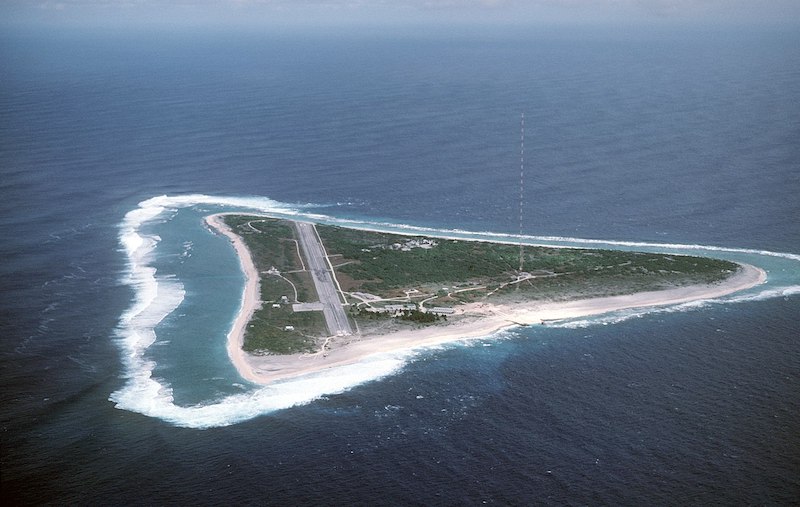
Japan said on Tuesday it would begin trial mining of mud rich in rare earth elements and manganese in the deep sea near Minamitorishima, its easternmost and most remote island.
The latest news comes as no surprise, as the investigative team reported last year that more than 230 million tons of manganese nodules discovered in Nantori Seais a small island located 1,900 kilometers (1,180 miles) southeast of Tokyo.
Manganese is not a rare earth element (REE). It is abundant but classified as a critical mineral because, like rare earth elements, cobalt and lithium, it plays an important role in steelmaking, batteries and other technologies.
See also: Vanke seeks short-term extension to delay debt restructuring
The head of the government-backed project said it will run from January 11 to February 14. The operation will mark the world’s first attempt to continuously lift rare earth mud from a vessel to the surface from a depth of approximately 6,000 meters.
Tokyo, like its Western allies, is seeking to ensure a steady supply of critical minerals as China, a major supplier of rare earths, tightens export controls.
“One of our missions is to build a domestic rare earth supply chain to ensure [a] Sho Ishii, director of the National Innovation Marine Development Platform Project of the Japanese Cabinet Office, told reporters.
The Japanese government is advancing a national project as part of broader efforts to strengthen maritime and economic security.

Environmental impact needs to be monitored
The test project from January to February will focus on connecting the deep-sea mining system and confirming its ability to lift 350 tons of rare earth mud per day. Throughout the operation, environmental impacts will be monitored both on board and on the seabed.
No production targets have been set yet, but if successful, full-scale mining trials will begin in February 2027.
About 40 billion yen ($256 million) has been spent on the government-funded project since 2018, but the estimated reserve amount has not been disclosed, Ishii said.
Ishii also said that while their scientific research ship was conducting rare earth surveys in Japan’s exclusive economic zone (EEZ) around Minamitori Island from May 27 to June 25, a Chinese naval fleet entered the waters on June 7.
“Although our activities are limited to the survey of seabed resources within the exclusive economic zone, we feel a strong sense of crisis about taking such intimidating actions,” he said.
Concerns about deep sea mining
It will be interesting to see how the international community reacts to Japan’s move, especially China’s, as Beijing reacts positively to Japan’s move. Comments about Taiwan Japan’s new Prime Minister Takaichi Sanae.
But many people may think that China’s implementation of Control of mandatory rare earth exports April’s drought is the main reason why countries like Japan are looking to recover key minerals from the seafloor.
Environmentalists worry deep sea mining Because this process is usually done by robots vacuuming nodules on the seafloor, creating two streams of sediment on the seafloor, if the nodules are cleaned near the surface, it may create sediment higher up.
Scientists worry that if the sediment is swept away from the mine site, it could have an impact on fish and other species in the fragile underwater ecosystem.
Japan’s move could spark a geopolitical dispute, or at least a larger international debate, as some countries say deep-sea mining violates international law.
However, the United States is not a signatory to the United Nations Convention on the Law of the Sea. In fact, President Donald Trump is likely to support Tokyo’s latest move, as he signed an executive order in April to speed up the approval of deep-sea mining licenses in U.S. and international waters.
global issues
The reactions from other island nations are also interesting. The president of Palau, a country of about 500 islands between Guam and the Philippines in the western Pacific, expressed concern that without proper protections, the impact on the ocean could be irreversible.
President Surangel Whipps Jr is reported to have said: “What is in the deep sea does not belong to any one country or company, but to all of us and to future generations.”
However, other Pacific island countries, e.g. cook islandsbelieving the environmental risks are less severe and allowing exploration of deep-sea minerals. This year, the Cook Islands signed an agreement allowing Chinese research vessels and U.S. companies to cooperate in research and exploration surveys in its exclusive economic zone.
But it has yet to grant commercial licenses for deep-sea mining, which has been opposed by some islanders as well as activist groups such as greenpeace. Any decisions on seabed mineral extraction and commercial production have been postponed until 2032 to allow for further environmental studies.
Chinese and Canadian metal company Talks were also reported with other countries Kiribatiwhile Nauru and Tonga are also working with other companies on similar exploration.
More than ten countries It is said to have expressed interest in mining in adjacent seabed areas. They include China, Japan, India, Papua New Guinea, American Samoa, and countries outside the Asia-Pacific region such as Norway, Sweden, Namibia, South Africa, Saudi Arabia, Brazil, and Chile.
This is a big problem and it’s starting to get hotter and hotter.
See also:
Tons of rare metals discovered on remote Japanese island
China says it will approve “civilian” license for rare earths
China ramps up trade pressure on Japan over Taiwan remarks
Japan signs rare earth and nuclear power deals with Trump
China restricts rare earth exports to defense companies and chipmakers
China halts most antimony exports, but rare earth sales to U.S. surge
U.S. says China disagrees with military use of rare earths
Trade deal signed, but China’s pace of releasing rare earths remains slow
China limits rare earth magnet exports: trade war weapon
Lessons for Japan in dealing with China’s rare earth dominance