The Tamesis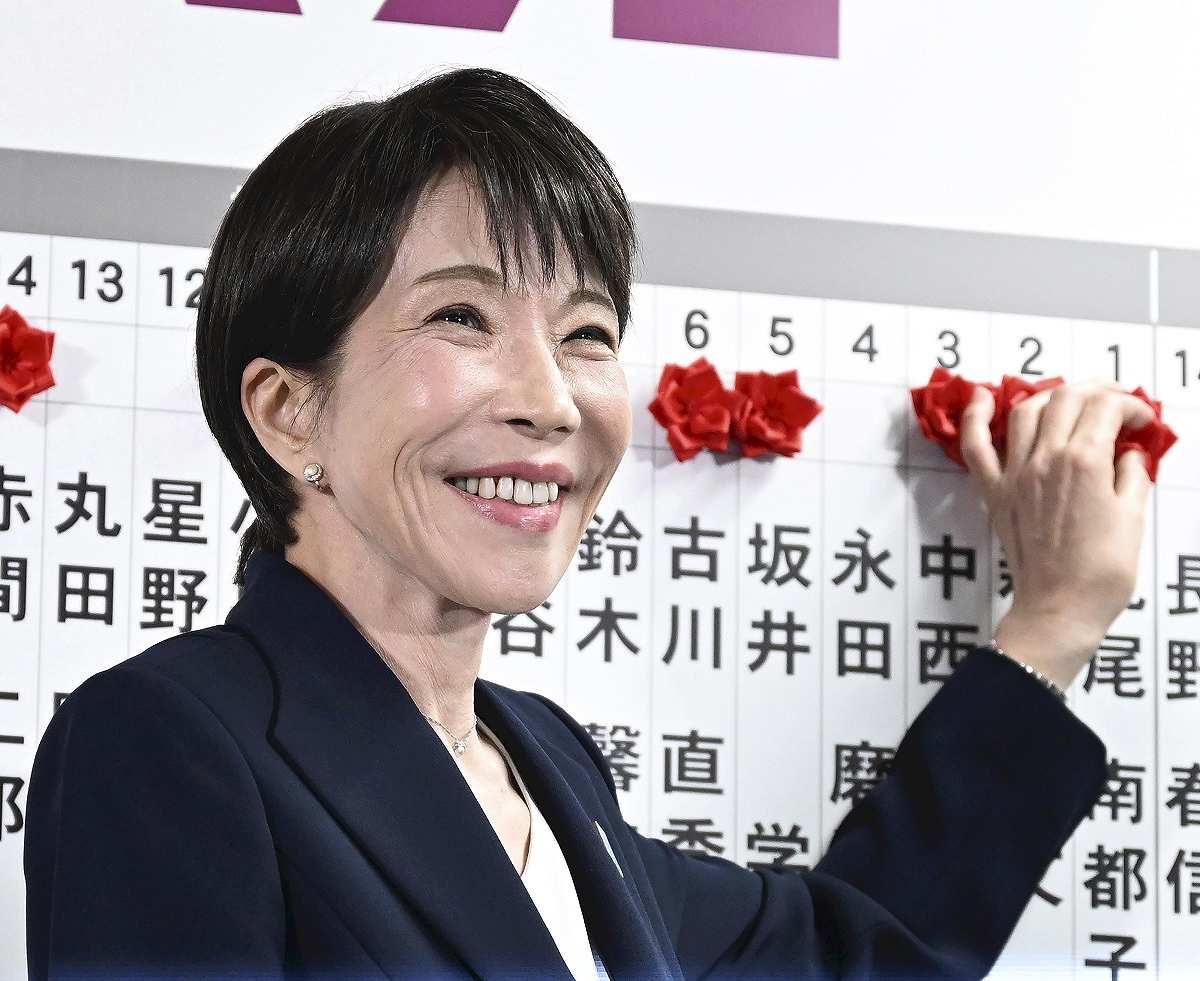
February 9, 2026
Tokyo – The Liberal Democratic Party appears certain to gain a one-party majority in the 51st House of Representatives election on Sunday, according to exit polls jointly conducted by the Yomiuri Shimbun, NHK and Nippon Television affiliates.
The Liberal Democrats look set to gain a majority of 233 seats in the 465-seat House of Representatives, up from 198 seats before the House was dissolved. The ruling coalition of the Liberal Democratic Party and the Japan Reform Party is expected to gain more than 300 seats.
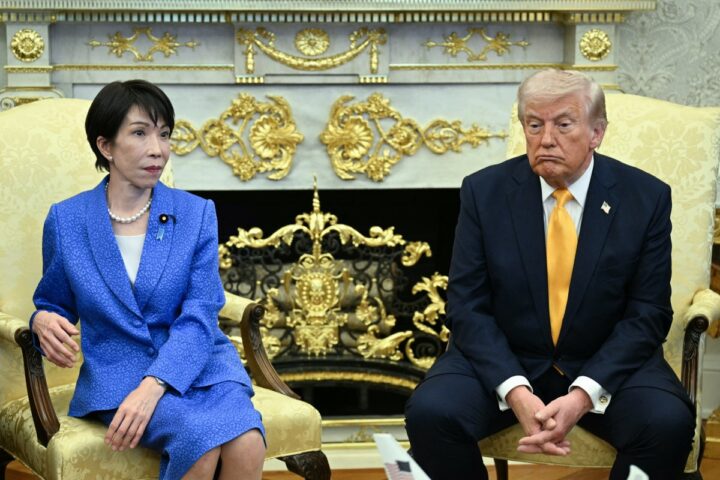
Prime Minister Sanae Takaichi, president of the Liberal Democratic Party, aims to win a majority for the ruling coalition. With the election victory, Takaichi is expected to advance the policies she touted during the campaign, such as “responsible and proactive public finance” measures, and claims her government has a public mandate. The ruling coalition is also likely to tighten its control over parliamentary operations.
Liberal Democratic Party Secretary-General Shuni Suzuki said late Sunday that the party intends to advance discussions on reducing the consumption tax on food and beverages within two years in line with its campaign promise.
Suzuki made the above remarks on a TV Tokyo program that day.
In addition, in response to reports that the Liberal Democratic Party is expected to win a landslide victory in the election, Suzuki analyzed the following situation. “I believe that the support we have is driven by expectations for a responsible and proactive fiscal policy that Prime Minister Takaichi aims to pursue, as well as strengthening defense and diplomatic capabilities.”
Yoshihiko Noda hints at resignation
Yoshihiko Noda, co-leader of the centrist Reform Alliance, was asked about his resignation. “I have made up my mind but I will discuss it with other party executives because the results are not all out yet,” he said.
This is the first House of Representatives election since the Komeito Party and the Liberal Democratic Party broke away from the ruling alliance in October last year, and the Japan Independence Party and the Liberal Democratic Party joined forces. This is also the first national election since Gao Shi took office. Takaichi said whether the public will support her as prime minister is a key issue in the election.
In the opposition camp, the CRA – a new party made up of the Cadets and Komeito and currently the largest opposition party – appears likely to fall well short of the 167 seats held by its members before the dissolution of the House of Representatives.
Sanseito and Team Mirai are expected to make progress. Before the dissolution of the House of Representatives, the three provincial parties held two seats in the House of Representatives. Mirai is expected to win her first seat in the House of Representatives.
Kamiya Sohei, the leader of the Three Provinces Party, said the party’s support in Sunday’s election was unlikely to exceed last year’s upper house election.
“I gave the previous [national] The election score was about 120 points, but in comparison, I think our score this time is about 75 points,” Kamiya said on Sunday night in Tokyo’s Shinjuku Ward.
Team Future leader Takahiro Anno attributed his party’s stance on the consumption tax to what is expected to be a strong performance in the election.
“On the key issue of consumption tax cuts, we have taken a different stance from other parties,” Anno told a news conference in Tokyo on Sunday night. “I believe we may have become the only option for voters [who are against the tax cuts]”.
Other parties have called for lowering consumption taxes in their campaigns, but Mirai has not included such tax cuts in its platform.
The elections to the House of Commons were held about one year and three months after the last election, and a total of 465 seats were contested: 289 single-seat constituencies and 176 proportional representation parts. The time from the dissolution of the House of Commons to the counting of votes was 16 days, the shortest time since the end of World War II.
More than 1,200 candidates
A total of 1,284 candidates are running in the House of Representatives elections on Sunday. In single-seat constituencies, 1,119 people are vying for 289 seats, while 914 candidates are vying for the proportional representation part.
A total of 749 candidates are registered in the constituency and proportional representation contests.
key data
By winning what is known as a “stable majority” of 243 seats, the ruling bloc will be able to hold half of the seats in the House of Representatives’ 17 standing committees and dominate all committees.
Before the dissolution of the House of Representatives, the position of chairman of the Budget Committee was held by the opposition camp, and wars of words between the government and the opposition were the most common.
In a street campaign speech, the Prime Minister stressed: “Other parties hold [chairperson posts] in all major committees [in the lower house]”.
Winning 261 or more seats would give the ruling bloc a dominant position in all committee chairmanships and a majority on all standing committees. This situation is called a “supermajority.”
Recently, the Liberal Democratic Party led by then Prime Minister Fumio Kishida won an absolute majority in the 2021 House of Representatives election.
If the ruling bloc adds 78 seats, the total will reach 310, enough to meet the two-thirds vote required by the House of Representatives to initiate constitutional amendments.
After a bill is passed by the House of Commons, if the House of Lords votes to reject it or does not vote on it within 60 days, the bill can be put to a second vote in the House of Commons and passed by two-thirds or more of the votes of members present.
Snow affects polling stations
Heavy snow has changed the opening hours of polling stations for the House of Representatives elections in Shimane and Tottori prefectures.
The opening of the Oyama polling station in Tottori Prefecture was delayed by two hours to 9 a.m. because the official in charge was unable to arrive on time.
In Shimane Prefecture, 14 polling stations in Umama City and 16 in Okinoshima, all on remote islands, closed three hours early at 5 p.m.