The Tamesis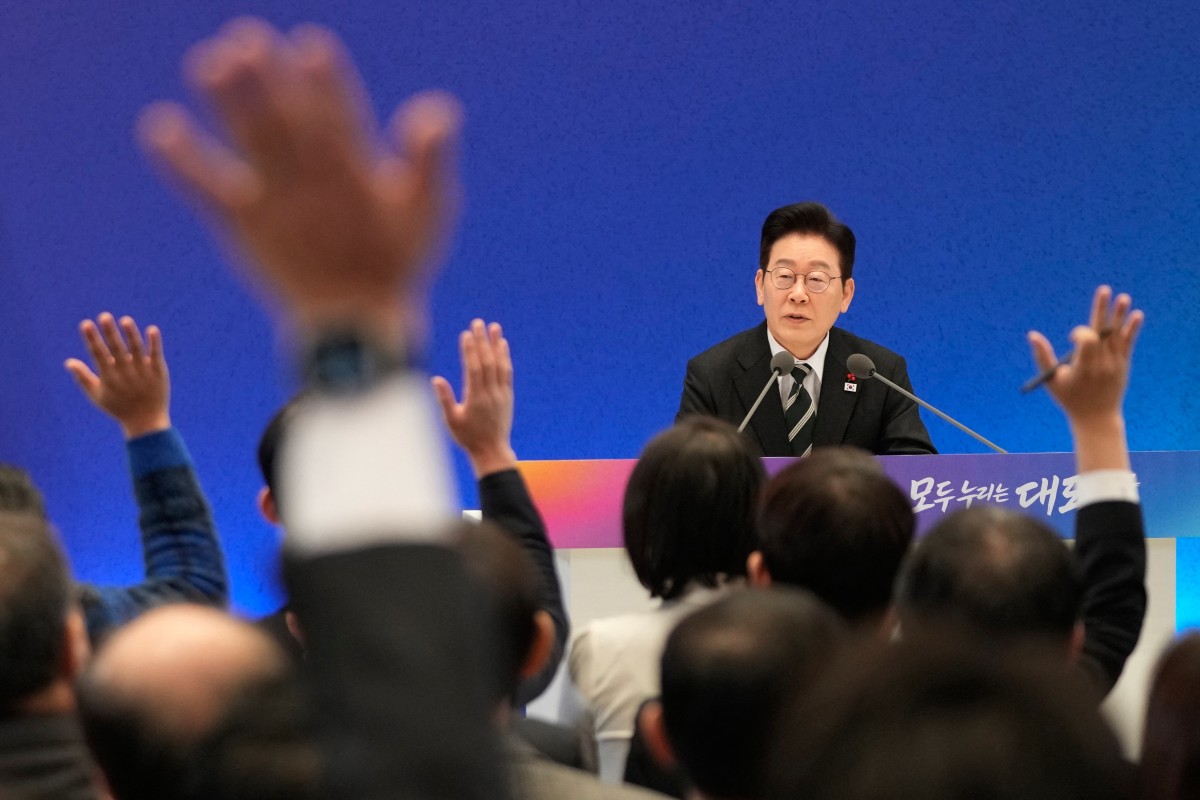
January 30, 2026
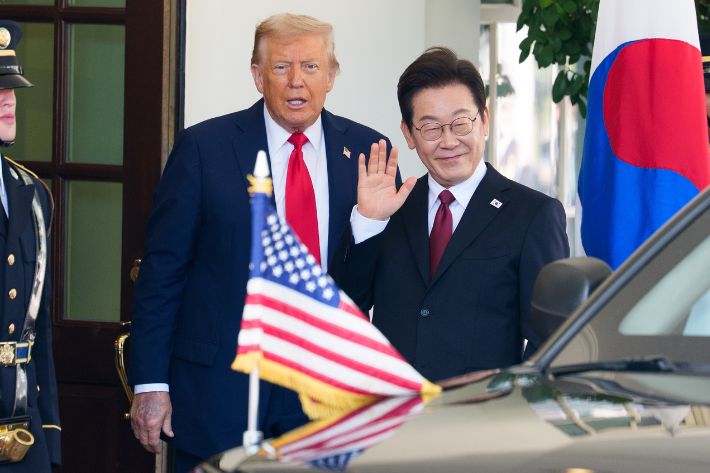
Seoul – In South Korea, concerns about press freedom and accusations that the government suppresses media with opposing political leanings are rising again – a phenomenon that repeats itself with every new administration.
This time, President Lee Jae-myung and his aides sparked controversy again by speaking out against “low-quality” political programming on some television networks. The controversy comes amid deepening political polarization in South Korea over the past few years, which has partly contributed to a deterioration in press freedom.
According to an assessment by the non-governmental organization Reporters Without Borders, South Korea’s World Press Freedom Index has declined for four consecutive years, from 76.57 points (full score) in 2021 to 64.06 points in 2025, a drop of 19 places, ranking 61st.
The president’s public criticism of political television began late last year, when he compared some talk shows on general programming cable channels to those on far-right YouTube channels.
“If I watch this (political) program on a licensed broadcaster or a (far-right) YouTube channel, I sometimes make mistakes,” Lee said at the Korea Media and Communications Council’s year-end policy briefing.
Since then, Lee Jae-yong has made similar remarks many times, the latest of which was made at the cabinet meeting on January 20.
Lee told the meeting that some broadcasters failed to uphold the principles of impartiality and neutrality, citing political programming that he believed had supported prosecutions in cases involving liberal politicians.
Li said that these TV programs “always side with the prosecution no matter what” after enjoying various privileges of general program channels.
Speaking about the censorship and regulatory process, Lee also said that freedom of expression for media entities that require government permission is not unlimitedly guaranteed.
“We have a misconception that ‘the media can 100 percent do whatever they want,’ but that’s not always the case,” he said.
This view was later echoed by Lee Kyu-yeon, the President’s Chief Secretary for Public Relations and Communications. In an interview with JTBC (former CEO of JTBC), the presidential secretary said that the quality of political programs broadcast by some TV networks is low and the views of political commentators are biased.
In an interview with Media Today, he said such programs “do not meet the government’s purpose of licensing general programming channels”.
General programming cable channels — Channel A, JTBC, MBN and TV Chosun — are often accused by the left of bias due to their conservative leanings.
Known as “jongpyeon,” these channels were born out of the politically charged media reforms of the late 2000s. Under the Lee Myung-bak administration, the government revised the media law in 2009 to loosen restrictions on cross-ownership between newspapers and broadcasters.
This allowed four major daily newspapers, all conservative, to enter the television market through these channels.
Supporters argue the move will increase competition and media diversity, while critics warn it could undermine editorial independence and favor politically aligned outlets. The channels, launched in 2011, sparked controversy and reflected wider tensions over media power, regulation and the role of broadcasting in shaping public opinion.
The comments from the president and top communications aides sparked a backlash.
Rep. Kim Jang-gyeom of the main opposition People’s Power Party said in a statement on Monday that Cheong Wa Dae was trying to interfere in the operations of important media. He added that Cheong Wa Dae’s warning may be aimed at broadcasters critical of those in power rather than those broadcasting programs that benefit liberal governments.
“Soon, only the freedom to praise power will flourish, while the freedom to criticize power will wither,” said Kim, the former president of MBC.
People’s Power Party Rep. Lee Sang-hui echoed Kim’s sentiments on Tuesday, saying the government’s comments “will inevitably have a chilling effect on production personnel.”
Rep. Lee Joon-seok, chairman of the conservative Reform Party, also said on Monday that Cheong Wa Dae’s criticism of the media is selective.
Reform Party representatives compared the Lee Jae-myung administration to Russian President Vladimir Putin and Hungarian Prime Minister Orban, saying the current government is targeting conservative media to silence critics.
The attempt by the powerful to tame critical media is not new in South Korea.
Lee Myung-bak, the conservative president from 2008-13, was accused of interfering in the management of left-leaning TV networks while allowing right-leaning newspapers to run general programming channels through a controversial bill.
His successors, the conservatives Park Geun-hye (2013-17) and Yoon Sook-yeol (2022-2025), and the liberal Moon Jae-in (2017-22) have also been criticized for trying to control the media by firing the heads of public broadcasting networks or appointing more politically sympathetic figures to lead media regulators.
De facto media censorship was particularly rampant during Yin’s tenure. The then-ruling People’s Power party denounced TBS radio station as a “news factory” and labeled it anti-government.
The show has been repeatedly sanctioned by the Korea Communications Standards Commission for violating impartiality rules.
The station is funded by the Seoul Metropolitan Government. Conservative Seoul Assembly members have led the charge to cut subsidies for TBS and move to strip it of its status as a municipal agency.
“News Factory” host Kim Oh-joon became popular in the early 2010s for his podcast “I’m a Cheapskate,” in which he raised questions aimed at conservatives such as Lee Myung-bak.
He was forced to quit TBS in 2022 and migrated to YouTube in 2023 due to conservative pressure on Kim and his show. The News Factory YouTube account currently has over 2.3 million subscribers.
Kim Jong-un’s fortunes have changed dramatically since Yoon Eun-hye’s ouster, and he is now considered a major beneficiary of Ri Jae-myung’s government.
In July, Cheong Wa Dae allowed News Factory to join its news library along with two other left-wing outlets. Kim’s brother-in-law was also named head of the state-run Small Business and Market Services Agency on Wednesday.
People’s Power Party lawmaker Park Sung-hoon accused the government of nepotism on Wednesday, saying: “Why not appoint Kim O-joon as the next prime minister?”
Meanwhile, the liberal bloc passed a law in December to curb the spread of fake news without the participation of the main opposition parties.
Under the law that took effect in July, those who intend to “cause harm to others” or “obtain improper benefits” through the use of “false” information may be liable for punitive damages.
The bill does not give clear criteria for determining falsehoods, or what constitutes damage or “unlawful gain”, for example whether the latter includes general media income such as advertising sales.
The Austria-based International Press Institute, a media freedom advocacy group, criticized the bill because its vague language limits the media’s ability to hold power accountable and could leave room for those in power to arbitrarily accuse critics of wrongdoing.
“IPI is deeply concerned about how this legislation can be used to censor and punish journalists and media organizations in South Korea,” IPI executive director Scott Griffen said in a recent statement.
However, Paul Large, a professor of media law at the University of Leeds, said there was no problem with press freedom regarding the remarks made by President Lee and his secretary, saying that in a world plagued by misinformation, the need for liberal democracy to stop fake news outweighs the need to defend press freedom.
“Press freedom is not an absolute right, that is, restrictions on journalistic speech are justified and, in this case, justifiable,” Raghu said, stressing that mainstream media have a moral responsibility to acknowledge their role in the spread of fake news.
Regarding South Korea’s controversial fake news bill, Large said that vague language in legislation is not uncommon in well-intentioned liberal democracies and that the established tripartite system will guide society by guaranteeing press freedom.
“In a system where the courts are independent of the government, the courts can establish appropriate safeguards for press freedom to ensure that the government cannot use legislation as a political weapon to suppress criticism of its policies,” Large explained.