The Tamesis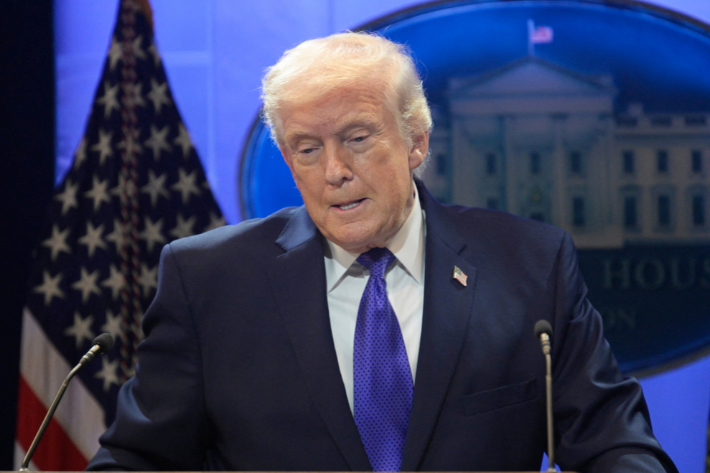
U.S. President Donald Trump said on Monday he would delay military strikes on Iran’s power plants and energy infrastructure for five days.
Trump announced the news truth society – on Monday evening (Asia time) – said “the United States has had a very good and productive dialogue on a complete and complete solution to our hostilities in the Middle East”.
He made the decision after issuing a 48-hour ultimatum on Saturday to “destroy” Iran’s power plants if the Strait of Hormuz was not reopened to tanker traffic by Monday.
See also: Asian markets fall on Trump threat; IEA warns of worst-ever crisis
His warning prompted Iran to threaten to attack Israeli power plants as well as those that power U.S. bases across the Middle East if the United States attacks Iran’s power grid.
Trump’s post suggested the United States has held talks with Iranian officials since Saturday’s threat to attack key Iranian facilities. He said conversations would continue this week.
I’m pleased to report that the United States of America and Iran have had a very good and productive dialogue over the past two days regarding a complete and final resolution of our hostilities in the Middle East. Consistent with the tone and tone of the in-depth, detailed, and constructive dialogue that will continue throughout the week, I have directed the Department of War to postpone any and all military strikes on Iran’s power plants and energy infrastructure for a five-day period, subject to the success of ongoing meetings and discussions. Thank you for your attention to this matter! President Donald J. Trump.
but Iranian state media mocked his moveSays U.S. leaders backed down because of their firm response.
Tehran has not confirmed it has entered into any talks with the United States, and the regime has previously vowed not to enter into negotiations.
“Trump abandons his 48-hour ultimatum out of fear of Iran’s reaction,” read a graphic on IRIB state television.
“The Islamic Republic warned that it would target energy infrastructure across the region if the United States attacked Iran’s energy infrastructure, and Trump backed off and said he had ordered the attack to be postponed,” the semi-official Fars news agency reported.
“Iran warned of a swift and forceful response to any potential attack on its energy facilities, leading Trump to make concessions,” the semi-official news agency Maher said.
Oil prices fall, markets rise
Still, the market and investors seemed happy with the news.
Brent crude fell 13% to $96 a barrel, but edged up to $101 at the time of writing.
At the same time, Dow Jones futures rose 1,100 points, with major technology stocks rising, with Nvidia rising 2%, Meta rising 1.8%, and Amazon rising 1.5%.
The FTSE 100 rose 0.5% after falling more than 2% before Trump took office.
As of this writing, it was unclear who the talks were held with or what they focused on.
Commentators said the two sides could discuss Iran’s ballistic missile program or nuclear enrichment program or just a ceasefire, although Trump on Friday played down the possibility of an end to hostilities.
Israel continued to launch attacks on targets in Tehran after Trump’s speech.
Many analysts believe that Iran is unlikely to open the Strait of Hormuz, as this is Tehran’s biggest leverage point.
Shortly after Trump announced the postponement, Iran’s Foreign Ministry said the U.S. leader’s shift was “part of an effort to lower energy prices and buy time to implement its military plans.”
In a statement issued by Meir, the ministry said: “There is no dialogue between Tehran and Washington.
“Yes, there have been initiatives by regional countries to reduce tensions, and our response to all of them has been clear: we are not the party that started this war and all such requests should be directed to Washington.”
See also:
Xiaomi will invest US$9 billion in artificial intelligence to embrace the “new era”
India races to secure supplies as new attacks threaten ‘energy war’
Asian shares fall after oil prices surge 5% and energy worries mount
War with Iran could hit some of Asia’s biggest economies hard
Iran war sends gas prices soaring, Asia ramps up coal power generation
Iran war trumps sanctions, Indian refiners snap up Russian oil
Iran threatens to ‘destroy world economy’ as more ships attacked
Japan may jointly develop recently discovered deep-sea rare earths with the United States
Chinese tech giant Tencent keen on installing AI agents on WeChat apps
Amid Hollywood outrage over AI video models, ByteDance vows to make changes
China and U.S. opt out of global commitment to military use of artificial intelligence