The Tamesis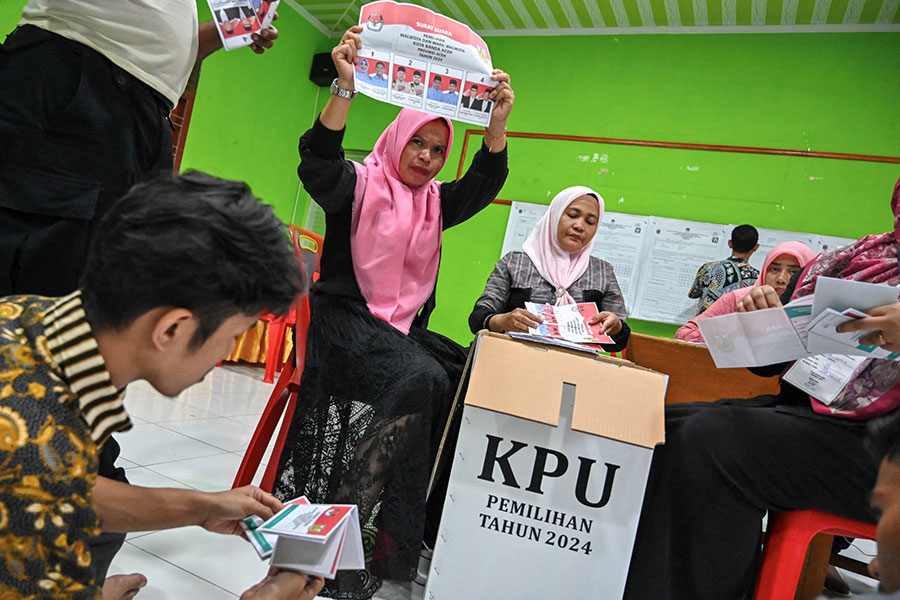
January 23, 2026
jakarta – The House of Representatives has shelved plans to amend regional electoral laws this year amid growing public opposition to new proposals from President Prabowo Subianto’s ruling coalition to end direct elections for regional leaders.
Support for the abolition of direct polls has grown among pro-government parties after President Prabowo Subianto repeatedly floated the idea of returning to the old system used during the New Order dictatorship, when governors, regents and mayors were elected by regional legislative councils (DPRDs).
Observers and pro-democracy activists warned that the change could reverse the country’s hard-won democratic reforms, arguing that the indirect system would ultimately shift voting power from voters to political elites.
Deputy Speaker of the House of Representatives Sufmi Dasco Ahmad, a politician from Prabowo’s party, said on Monday that the legislature had no plans to discuss such proposals in the near future, noting that revisions to the Regional Elections Act were not included in this year’s list of priority bills.
“So far, the House of Representatives has not discussed plans to amend the law, and the idea circulated that regional leaders should be appointed or elected by the DPRD is neither on the agenda nor considered for discussion,” Dasco said.
He made the remarks after meeting earlier in the day with State Secretary Prasetio Hadi and leaders of the House of Representatives’ Second Committee responsible for internal affairs. These include the chairman and deputy chairman of the committee representing pro-government parties, as well as the deputy chairman of the quasi-opposition Indonesian Democratic Party of Struggle (PDI-P), the only party in the House of Representatives that had previously refused to reinstate the old indirect vote.
The move comes amid growing public opposition to the change. The latest opinion poll released by Compass Research and Development (Litbang) on January 12 showed that 77.3% of respondents were in favor of maintaining local direct opinion polls, with nearly half of them citing democracy and public participation as the main reasons.
State Secretary Prasetti clarified on Monday that the government had not initiated or endorsed proposals to resume indirect regional elections, adding that the government would remain open to dialogue and take into account the views of the public and political parties.
“As directed by the president, the government’s first priority is to act in the national interest. While political parties may have different views, the president emphasized that decisions should serve the public and the country,” Plasetio said.
Shift focus
Monday’s session comes as lawmakers and the government plan to immediately re-examine all election-related laws and either merge the revisions into a new law or keep them as separate laws.
But Dasko said the House of Representatives and the government would this year focus on amending the General Elections Act, which governs presidential and legislative elections, to pass a series of Constitutional Court rulings that policymakers have yet to resolve. These include a 2024 ruling that removed the threshold for parties to nominate presidential candidates, and a 2025 ruling that removed the threshold for House of Representatives seats and ordered separate direct polls for presidential and regional offices starting in 2029.
The Gerindra politician also dismissed any speculation about the reintroduction of indirect presidential elections in the upcoming amendments to the general election law, stressing that “the president will continue to be directly elected by the people”.
With revisions to the Regional Electoral Law delayed, pro-government Nas Democratic Party House of Representatives Second Committee Chairman Rifqinizamy Karsayuda confirmed on Monday that plans to immediately review all laws on electoral systems and political structures using a comprehensive approach have been abandoned.
Haikal, from the election watchdog Association for Elections and Democracy (Perludem), criticized the House of Representatives for its sudden decision to abandon plans to also amend election-related laws, slamming the legislature for being “incoherent” after months of pushing for a comprehensive approach.
He also warned that the House could subsequently change its mind and revive proposals to reinstate indirect regional elections, citing past precedent of opaque and rushed consideration of controversial bills.
“We are particularly concerned about opaque legislative practices that often catch the public off guard because laws are drafted in secret, hastily and without meaningful public participation,” Heikal told The Jakarta Post.