The Tamesis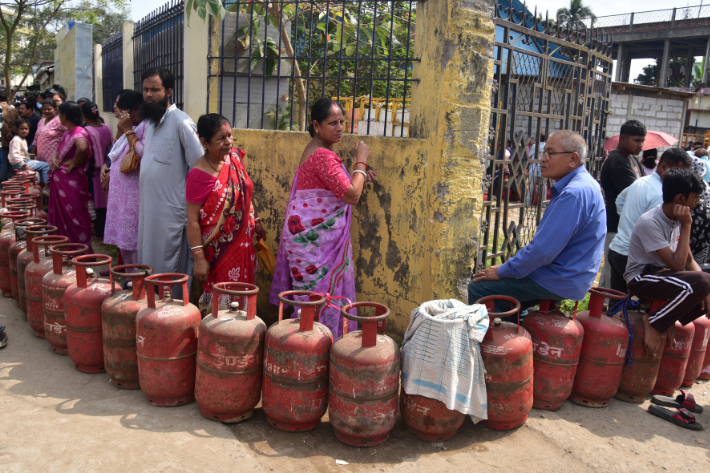
Increased hoarding and soaring gas prices amid supply uncertainty stemming from the Iran war are forcing India’s marginalized households to return to wood and coal for cooking.
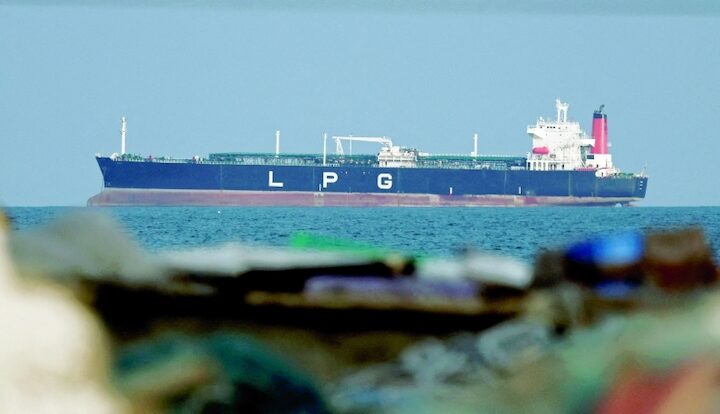
India is the world’s second-largest buyer of liquefied petroleum gas (LPG), which is used for cooking. The country’s supplies mainly come from the Middle East, but these have been choked by ongoing wars.
For poor families who have long relied on the black market for cooking gas, it means an “unimaginable” spike in the price of LPG cylinders.
AF ALSO REPORTS: Iran mocks Trump for concessions on crackdown on its oil, power plants
“We used to buy cylinders for 1,800 to 2,000 rupees ($19 to 21 dollars), but now the price on the black market has gone up to 5,000 rupees ($53),” Sheela Kumari, a 36-year-old domestic help in Delhi, the Indian capital, told AFP. The price is now almost equivalent to her monthly salary of 6,000 rupees.
“This is unimaginable to us,” she said. “The next best option for us is to go back to wood and coal.”
Kumari said a 14-kg cylinder would last only 15 to 20 days for her family of six, even if they extended its use.
But a 10-kilogram bundle of firewood, which lasts several days, costs 30 rupees ($0.30), she said.
“There are health consequences, my kids are coughing,” she said. “But tell me a way out?”
Activists say that while there are no real shortages yet, the high prices are the result of increased hoarding.
“Many migrants rely on black market cylinders and prices have increased two to three times,” Deepak, an activist with the Center for Advocacy and Research (CFAR), told AFP.
Indian Prime Minister Narendra Modi during a cabinet meeting on Sunday urges countries Curb black market marketing and avoid panic. He also emphasized that India’s energy supply remains stable.
Return to dirty energy
For many households, the forced use of coal and wood marks a sharp reversal of the transition to gas since Modi took over as prime minister in 2014.
Over the past decade, the Indian government has promoted the “Ujjwala” or “light” clean energy scheme, subsidizing more than 100 million LPG connections to poor households.
Still, many migrant workers lack the documentation needed to access subsidized LPG and rely on informal markets, where hoarding drives up prices.
The return to dirtier fuels also poses problems for New Delhi, which is regularly ranked as one of the world’s most polluted capitals.
The city’s 30 million residents regularly face toxic pollution levels due to deadly pollutants emitted by power plants, traffic congestion, and the burning of garbage and crops.
Greater use of wood and coal may only worsen air quality in this polluted megacity.
Burning wood, coal and biomass indoors also exposes households to high levels of smoke and toxic particles, increasing the risk of respiratory illness. Women and children spend more time near cooking areas and are therefore particularly vulnerable.
Sheela Kumari’s neighbor Munni Bai, 45, suffers from asthma and uses a rice cooker and cow dung biogas to help her breathe.
But now, “natural gas is too expensive,” she said.
“We can’t rely on it – we no longer use coal and wood due to my health issues, but it’s now difficult to maintain that.”
- AFP, with additional editing and input by Vishakha Saxena
Also read:
India races to secure supplies as new attacks threaten ‘energy war’
Iran war sends gas prices soaring, Asia ramps up coal power generation
War with Iran could hit some of Asia’s biggest economies hard
Iran war trumps sanctions, Indian refiners snap up Russian oil
Iran threatens to ‘destroy world economy’ as more ships attacked
Iran says three ships attacked, ready for $200 a barrel price
Oil crisis: US allows Iranian tankers to pass through Strait of Hormuz
Oil prices top $100 a barrel as Asian leaders rush to limit impact of war