The Tamesis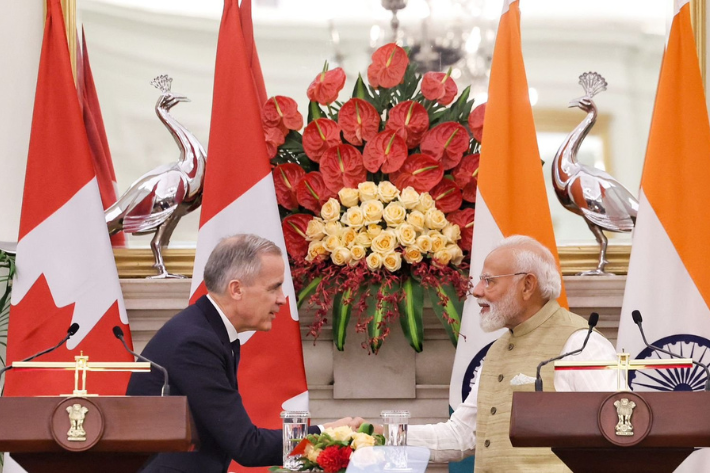
India on Monday signed a long-term uranium supply deal with Canada to support its nuclear expansion goals and ensure energy security for its 1.4 billion people.
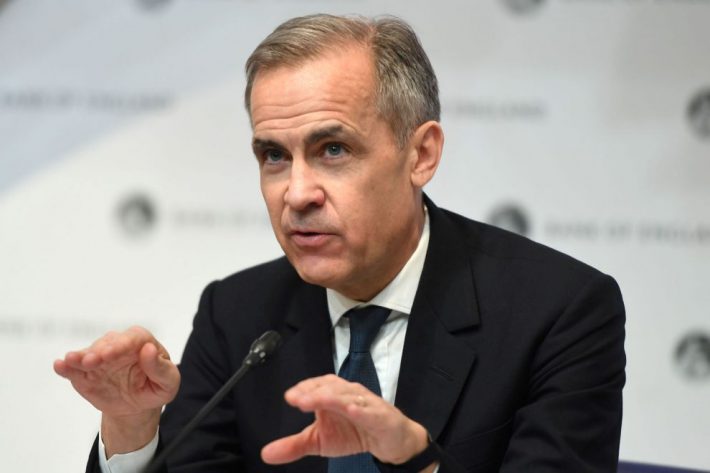
The agreement is part of a series signed by Indian Prime Minister Narendra Modi and Canadian Prime Minister Mark Carney, who is on a state visit to adjust relations with New Delhi.
The deals, covering technology, renewable energy, rare earths and broader economic partnerships, could take two-way trade between the two countries to $50 billion.
Also on AF: China ‘weaponsizing bottlenecks’ by restricting key rare earth exports
For energy-hungry India, the world’s most populous country, the uranium supply deal comes as New Delhi has laid out plans to expand nuclear power capacity to 100 gigawatts by 2047 from the current 8 gigawatts.
“In the civilian nuclear energy sector, we have reached a landmark long-term uranium supply agreement,” Modi said, adding that the two countries will also cooperate on small modular reactors and advanced reactors.
Carney said they had agreed to launch a “strategic energy partnership with huge potential” that includes a uranium supply deal worth C$2.6 billion ($1.9 billion) to “support India’s nuclear ambitions.”
Carney added that Canada is also “well positioned to serve as a reliable supplier” of liquefied natural gas (LNG) from its west coast.
“Canada’s resource base and world-leading companies position India as a strategic partner as it seeks to access critical minerals for its manufacturing, clean technology and nuclear power plants,” he said.
Year-end trade growth target
Carney’s visit to India is his first since taking office last year. Canada steps up efforts Diversify trade beyond the United States. After India, Kani will also travel to Australia and Japan.
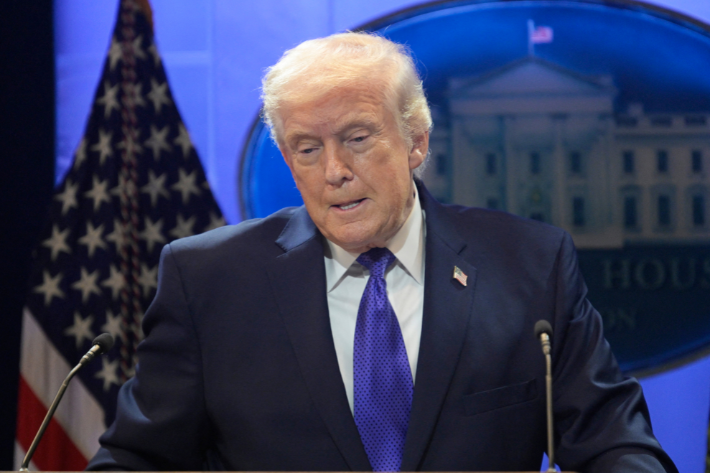
Carney has made reducing Canada’s heavy dependence on the U.S. economy a centerpiece of his foreign and economic policy. U.S. President Donald Trump’s tariff policy has shaken relations with Ottawa, with some saying the two countries’ ‘The worst in modern history’.
Canada is seeking to finalize a free trade deal with India, known as the Comprehensive Economic Partnership Agreement (CEPA), negotiations for which began nearly a decade ago 2017. Last year, the two countries agreed to resume talks on a trade agreement.
Speaking to the media after the deal was signed on Monday, Carney said he hoped to reach an agreement on the “ambitious” CEPA before the end of the year. He said the agreement would help “reduce barriers and increase certainty”.
At the same time, Modi said New Delhi aims to achieve “bilateral trade volume of $50 billion” with Canada. “That is why we decided to finalize the Comprehensive Economic Partnership as soon as possible,” he said, adding that it would “bring new opportunities for investment and job creation in both countries”.
“New Energy” in Relationships
Canada’s Carney also said the two countries were resuming security cooperation through a “new defense partnership.” Canadian pension and wealth funds have invested $73 billion in India.
It would mark a sharp reversal in relations, with Ottawa accusing Modi’s government of direct involvement in the 2023 killing of Canadian naturalized citizen Hardeep Singh Nijjar before Carney took office.
Nijjar is a member of a fringe group that advocates the creation of an independent Sikh state called Khalistan. Khalistan militants have been accused of assassinating former Indian Prime Minister Indira Gandhi and bombing a passenger plane.
After Nijjar was shot and killed in British Columbia in June 2023, then-Prime Minister Justin Trudeau explain There are “credible allegations” linking the shooting to “Indian government agents.”
India repeatedly rejected Canada’s accusations at the time. tension This led to a rapid decline in relations between the two countries.and the two countries Expelling a series of senior diplomats 2024.
Relations between the two countries have improved significantly under Carney’s leadership, and the special envoy has now been reinstated.
“Our relationship is filled with new energy, mutual trust and positivity,” Indian Prime Minister Narendra Modi said in a speech alongside Carney.
The Canadian Prime Minister added that “there were more contacts between the governments of Canada and India last year than in more than two decades combined”.
“This is more than just a renewal of the relationship. It is an expansion of a valuable partnership with new ambition, focus and vision, between two confident countries charting their own course for the future.”
Prime Minister Carney and I agree on the need to further deepen economic ties. We hope to increase bilateral trade volume to US$50 billion by 2030. Canadian pension funds’ investments in India reflect strong confidence in India’s growth story. We also discussed expanding our partnership…
— Narendra Modi (@narendramodi) March 2, 2026
- AFP, with additional editing and input by Vishakha Saxena
Also read:
India delays talks, China says ‘cancel tariffs’ after US ruling
China exploits Trump’s ‘uncertainty’ to dominate global trade
Canada Carney leads trade shift away from U.S. to China, India and Australia
Modi says huge EU-India trade deal is finalized
U.S. sanctions force Indian and Chinese refiners to cut Russian oil output
India rejects Russian oil for US deal as protests brew
Russian oil share of India imports falls to lowest since end-2022
Developer proposes $1 billion Trump Tower on Australia’s Gold Coast
German Merz lands in Beijing seeking closer ties with China
Trudeau blasts India for ‘horrible mistakes’ as relations sour – The Guardian