The Tamesis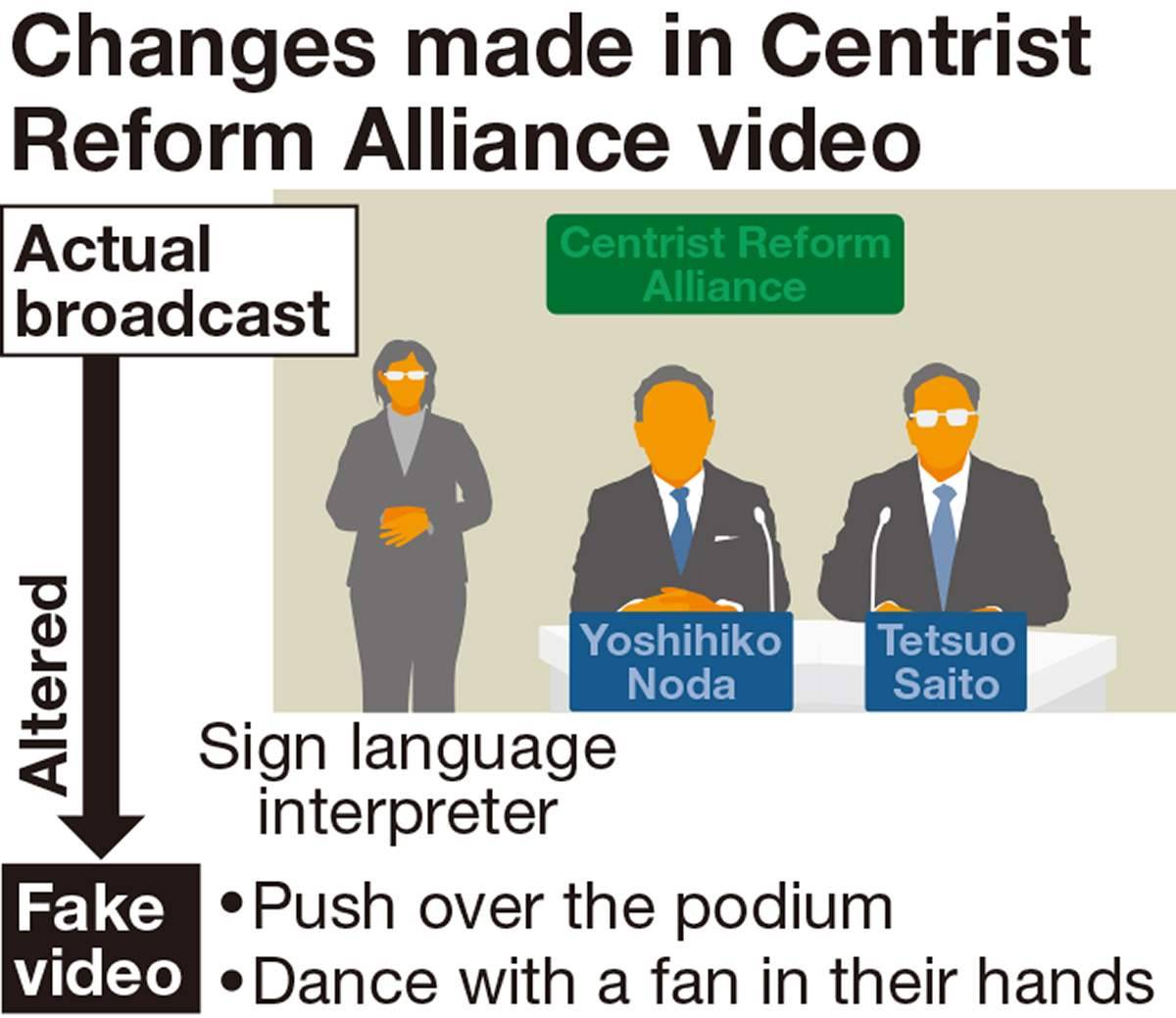
February 2, 2026
Tokyo – A doctored version of a “campaign broadcast” produced by the centrist Reform Alliance for the February 8 House of Representatives elections went viral on the X social media network.
The video, modified by artificial intelligence to show party co-chairman Yoshihiko Noda and Tetsuo Saito dancing together, has been viewed more than 1.6 million times. Experts warn that such broadcast changes could cloud voters’ judgment and distort elections.
Candidates, parties and political organizations in national and provincial gubernatorial elections use campaign broadcasts on television and radio to present their platforms. The Public Offices Elections Act stipulates that broadcasts must be unedited, but does not prohibit voters from changing the content and posting it on social media.
In their initial campaign broadcasts, Noda and Saito promoted their policies and unanimously called on voters to vote for their parties. Then they bowed to the sign language interpreter. Edited footage shows two men knocking over a podium, standing up and dancing with a fan in their hands.
The altered video, posted on Friday morning by a personal account purportedly based in Japan, had been viewed more than 1.6 million times as of around noon on Saturday. Many viewers made critical remarks, saying that this would cast a shadow on the fairness of the election.
The account deleted the video in question around noon on Saturday and posted a comment saying the video had been altered by artificial intelligence. The account owner apologized, saying the video was extremely inconsiderate and inappropriate and they were just trying to be funny.
The Yomiuri Shimbun requested an interview with the account owner but had not received a response as of 7pm Saturday.
A spokesman for the centrist Reform Alliance told the Yomiuri Shimbun, “We are very disappointed as this defeats the purpose of campaign broadcasts to convey the party’s views.”
In another case related to the ongoing election, footage of another opposition candidate waving in the street before the official start of the campaign was altered by generated AI to appear to be wearing a vest.
“If fake campaign broadcast videos are produced, viewers can easily believe that the content is true. If political opinions, policies and facts are changed, this may affect voters’ judgment and distort the election,” said Harumichi Yuasa, an information law professor at Meiji University and an expert on electoral systems.
“Under current law, tearing down election posters is illegal, but the law does not address the problem of the Internet being flooded with misinformation and disinformation from artificial intelligence. The law needs to be reviewed against reality,” Yuasa said.