The Tamesis
Until last season, the brand relied entirely on its direct-to-consumer (DTC) channel, before launching wholesale for spring/summer 2026 and acquiring Palm Springs concept store Comma as a stockist. Revenues are below six figures in 2025, but Dovenryd Almberg hopes to get there this year by expanding DTC and wholesale. To help achieve this, she began working with US sales agency Plus Plus Showroom, participating in showrooms in London, New York and Paris.
Low waste sampling
Studio Constance uses 100% natural or recycled materials, which is a requirement for all CPHFW brands, mainly using recycled yarn or deadstock fabrics.
“Because of my background in the industry, I have developed strong relationships with factories that I know have the ability or want to support us in doing this. So, we have an Italian supplier who has a lot of capacity to handle deadstock fabrics, and they allow us to do small batches,” says Dovenryd Almberg. “If we have an idea of a fabric we want, we don’t develop a new one. We ask the factory to find something similar from their slow-moving stock, and then we select it.”
This often requires compromises in design. For the Fall/Winter 2026 collection, Dovenryd Almberg wanted to achieve tailoring for the first time, but when the deadstock arrived, the color wasn’t exactly what she had imagined, and the weight of the fabric was different. “We ended up using something else, but it still turned out beautiful,” she said. “Working with deadstock is risky. Sometimes you think, ‘Oh my God, what could this be?’ But then you see it. It can be scary, but most of the time – thanks to our suppliers – it’s great because they understand what we want.”
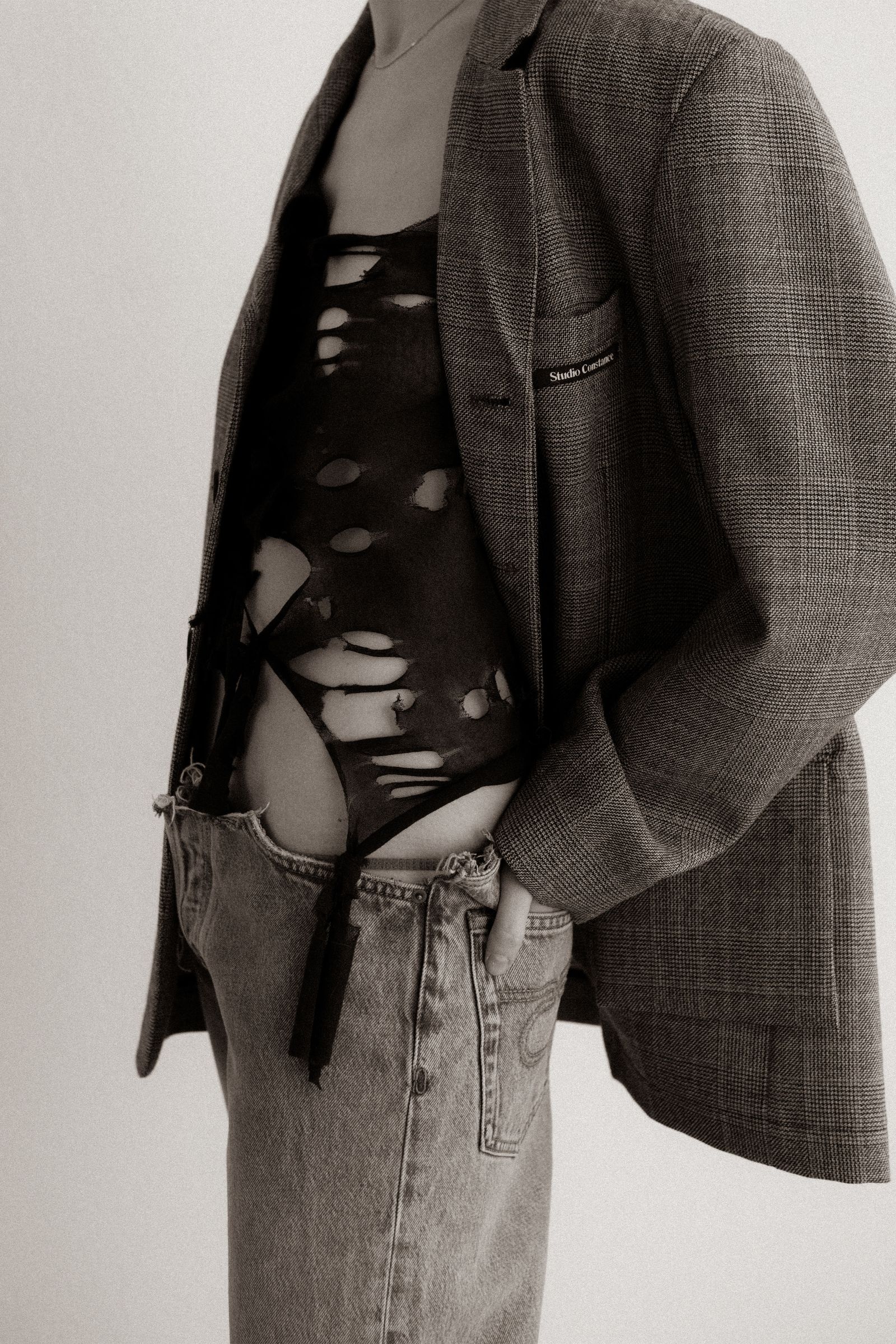
In addition to the benefits of reducing waste, this approach can also help businesses financially. Some factories have larger minimum orders, so Dovenryd Almberg will place a minimum order and use any leftover fabrics or garments for the next season – reworking them, recycling them and designing something new. “We never run into inventory that we can’t sell,” she said. “More companies could adopt this approach. But it’s difficult when you grow and now there aren’t a lot of people involved; it’s mainly me, so I can make these decisions.” Atelier Constance doesn’t set trends either, so each collection is a graduate of the previous one, she adds.
Copenhagen and the international scene
On the topic of growth, Studio Constance’s biggest challenge is finances. “It was very difficult, but with my background and personality, it was an interesting challenge,” Dovanreed Almberg said. But assembling the right team helps plant the seeds. “You need to find the right people to work with you, you need someone who believes in you and your brand and can get along with you. I’ve been very lucky to have found so many great people along the way.” The team consists of two full-time employees (production and design) and six freelance consultants responsible for PR, sales and business development. She also collaborates with the Paris-based design studio WAT Agency.