The Tamesis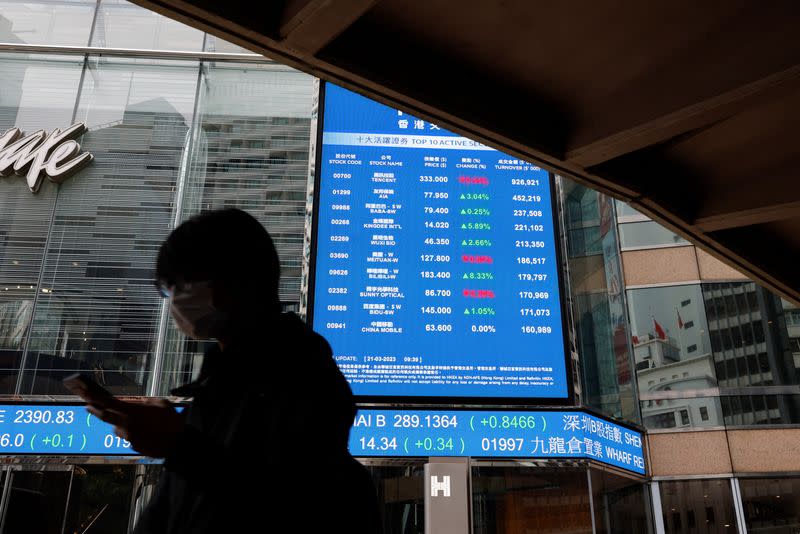
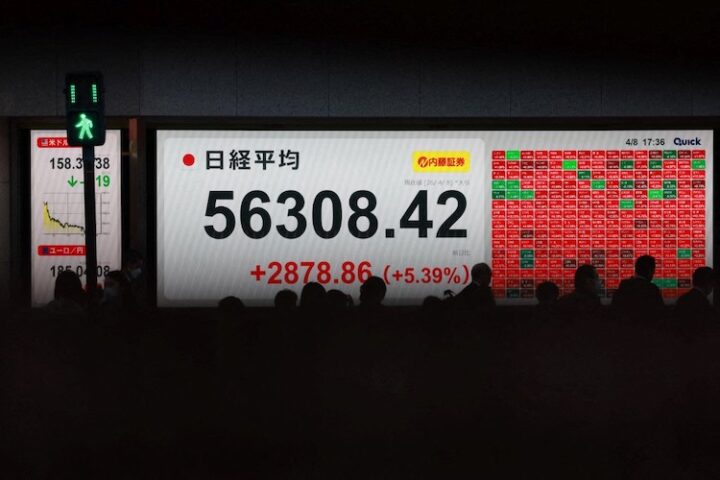
Asian markets rose on Monday while the dollar fell after the U.S. Supreme Court on Friday struck down much of President Donald Trump’s tariff policy.
Although markets in Tokyo and Shanghai were closed for holidays, Hong Kong’s Hang Seng Index rose more than 2.5%.
The rally was led by Hong Kong technology companies, which have been at the forefront of regional gains this year as traders flee Wall Street in search of cheaper investments amid concerns about expanding valuations.
See also: Tariff ruling casts huge doubt over U.S. trade deal
Trump’s trade agenda took a heavy blow on Friday. The country’s highest court ruled The International Emergency Economic Powers Act used by the White House in April to impose sweeping tariffs “did not authorize the president to impose tariffs.”
The furious president immediately vowed to impose 10% global tariffs under a separate agency before raising them to 15% on Saturday. The measures will come into force tomorrow (February 24), but there are a number of exceptions to the measures and they are only legally allowed to remain in place for 150 days.
Tariff uncertainty
The development has sparked a new wave of uncertainty, with calls growing for the government to repay cash collected under the program and analysts warning officials may look to other ways to collect tolls.
“The first thing to observe is that IEEPA tariffs may have disappeared, but Trump’s trade regime has not,” National Australia Bank’s Rodrigo Catril wrote.
“The administration has multiple paths it can take; they could lead to litigation within a few years, but there’s no sign President Trump intends to back down.
“Another conclusion is that the tariff landscape is now more uncertain than before, [and] Uncertainty is not good news for any economy or market.
“Unless common sense prevails, we may enter a cyclical process where new tariffs are announced, which may then be reversed, and only when new tariffs are announced do we dance again.”
Trade deal pending
The decision also raises questions about trade deals signed by Washington.
European leaders were scheduled to approve EU-US Agreement But on Tuesday, the chairman of the European Parliament’s trade committee said he would call on Monday for “a pause in legislative work until we get a proper legal assessment and a clear commitment from the United States.”
Bloomberg reports that Indian trade officials will postpone a trip to the United States aimed at finalizing a trade deal. provisional agreement.
China said on Monday it was conducting a “comprehensive assessment” of the impact of the ruling and called on Washington to lift the tariffs.
“China urges the United States to cancel unilateral tariff measures against its trading partners,” the Commerce Ministry said in a statement. “There are no winners in trade wars… Protectionism has no way out.”
Ruling favors China and India
Asian investors welcomed the Supreme Court ruling as a benefit to China and India, with technology companies performing the best.
Hong Kong stocks rose more than 2% and e-commerce giants Alibaba and JD.com soared more than 3%, while Seoul hit another record high on sharp gains by chipmakers Samsung Electronics and SK Hynix.
Singapore, Wellington, Taipei, Mumbai, Bangkok and Manila also rose, but fell in Sydney. London, Paris and Frankfurt all opened lower.
Charu Chanana, chief investment strategist at Saxo Markets, wrote: “This looks less like ‘tariffs are over’ and more like ‘effective tariffs may be lower than feared, but policy uncertainty and fiscal noise remain high’.”
The week started strong, with stocks rising on Wall Street as the tariff ruling overshadowed data that showed the U.S. economy grew much less than expected in the fourth quarter of 2025, when it was hit by a prolonged government shutdown.
The uncertainty also weighed on the dollar, which fell sharply against the yen, pound and euro.
Oil prices fell more than one percent on hopes of an Iran nuclear deal.
That eased concerns last week about a possible U.S. attack on the country after Trump deployed warships, fighter jets and other military equipment to the Middle East, warning that “bad things are going to happen.”
- Further editing by Jim Pollard, AFP
See also:
Japan agrees to make first $36 billion investment in U.S.
Altman admits ‘urgent’ need for AI regulation at India summit
Potential peak in China’s carbon emissions sparks hope and concern
Focus on economic growth is killing nature, UN agency warns
Indian stocks, rupee soar on US trade deal, despite few details
Trump hails Greenland ‘long-term deal’, but EU deal still hangs in the balance
EU strikes expensive deal with Trump to avoid trade war