The Tamesis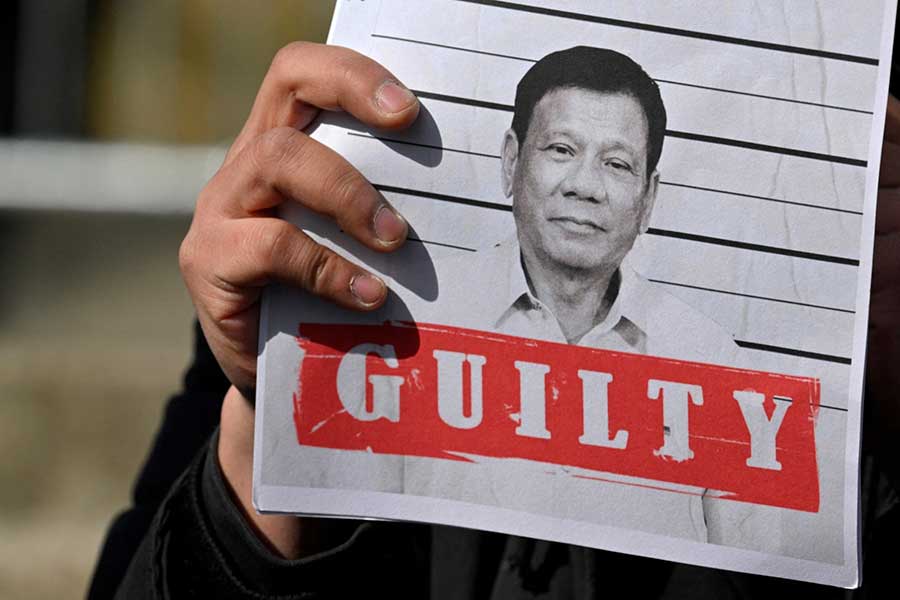
February 19, 2026
Manila – Former President Rodrigo Duterte has waived his right to appear before the International Criminal Court (ICC) next week, either in person or via video, as he refuses to recognize the Hague tribunal’s jurisdiction over him.
In a six-page document dated February 18, his lawyer Nicholas Kaufman conveyed Duterte’s written request from the Pre-Trial Chamber (PTC) regarding his decision to skip the February 23 confirmation hearing on charges.
“I, Rodrigo Roa Duterte, wish to waive my right to participate in the confirmation hearings currently scheduled for February 23-27, 2026. I understand the consequences of waiving this right, which has been explained to me in detail by my attorney, and I am confident that he and his team will be able to challenge the sufficiency of the prosecution’s evidence on my behalf,” the letter signed by the former president reads.
“I do not wish to pursue these proceedings outside the courtroom through the use of communications technology. An original copy of this waiver and my signature are in the possession of my attorney,” he continued.
He stressed that he had no reason to attend the hearing as he insisted that the ICC had no jurisdiction over his case and that he was merely “kidnapped” when he was arrested on March 11 last year.
Duterte said: “I was a Filipino citizen who was forcibly pushed onto a plane and extradited to The Hague, Netherlands, in flagrant violation of our country’s constitution and national sovereignty. The office of the current President of the Philippines specially chartered a plane for this purpose and facilitated my kidnapping.”
He described himself as “old, tired and frail” and said he had accepted the possibility of his death in custody.
“I don’t want to take part in legal proceedings that I will forget in a few minutes. I am old, tired and frail. I want the court to respect my peace in my cell. I have accepted the fact that I may die in prison,” he said.
Duterte, who is being held in a prison in the Dutch district of Scheveningen, faces three counts of murder for his alleged “indirect complicity” in a “common scheme” to target drug suspects that ultimately led to the brutal killings of thousands of people.
He also responded to the accusations for the first time since being detained by the ICC, calling “the claims made by critics that I oversee a policy of extrajudicial killings an outrageous lie”.