The Tamesis
March 4, 2026
kathmandu – Nepal’s preparations for the polls are in the final stages, with candidates concluding their campaigning on Monday, followed by a two-day silent period to allow voters to make up their minds before exercising their right to vote.
The Election Commission has allowed candidates and political parties to conduct full-fledged campaigning for 15 days starting from February 16. Under the rules of the constitution’s poll-governing body, campaigning and vote-seeking are prohibited during the silent period that began on Monday night.
“No election-related activities, including political advertising, social media campaigns and the dissemination of any message calling for voting, will be allowed within 48 hours,” said Kul Bahadur GC, the commission’s assistant spokesman.
Under the Electoral Code of Conduct, which includes provisions for a silent period, all party or candidate campaign materials placed within a 300-metre radius of a polling station must be removed once the silent period comes into effect.
Likewise, publishing, sharing or disseminating any message, information or campaign material supporting or opposing any political party or candidate through social media, online platforms, print or any other electronic medium is prohibited.
The code of conduct also stipulates that no person shall obstruct voters or officials involved in conducting polls at polling centers from three hours before polling begins until completion of the voting process.
It is prohibited to play musical instruments, organize singing and dancing, hold public banquets, hold parades or any form of gatherings or ceremonies, or create or incite crowds and disturbances within 48 hours before the vote.
On March 5, a total of 18,903,689 citizens were registered to vote. They will elect 275 members of the House of Commons, 165 of whom will be elected by a simple majority and the remaining 110 by proportional representation.
“All necessary preparations to conduct, monitor and manage the elections are in their final stages,” the GC said.
With just two days left until the polls, President Ramchandra Paudel and Prime Minister Sushila Karki on Monday called on all eligible citizens to vote, calling it a decisive moment for the country’s future.
Paudel issued a statement saying that this vote is not only a constitutional procedure to elect representatives, but also a historic opportunity to expand the journey of the Federal Democratic Republic and enhance credibility and resilience.
He said that although Nepal has made remarkable achievements in institutionalizing the federal governance system and decentralizing powers to provincial and local levels, there is still much work to be done in the areas of good governance, social justice, responsible leadership and service delivery.
“I believe that the upcoming elections will help institutionalize these aspirations and breathe new life into democracy. The vote should respect the dreams of earlier generations and martyrs who sacrificed their lives for a long time against authoritarianism. It should also respond to the demands of the younger generation for good governance, transparency and accountability, making our democratic practices more credible and mature,” Paudel said. “I believe this election will redefine and take the country’s journey towards development, prosperity, social justice and progress to new heights.”
He said that this election is a historical necessity to safeguard past achievements and move towards new possibilities, urging all political parties, candidates, civil society, media organizations and relevant institutions to be fully committed to ensuring that the electoral process is conducted in a peaceful, free, fair and fearless environment.
Earlier in the day, Prime Minister Karki addressed the nation, saying: “Voting is more than stamping a symbol. It is a decision about your future and the future of your children.”
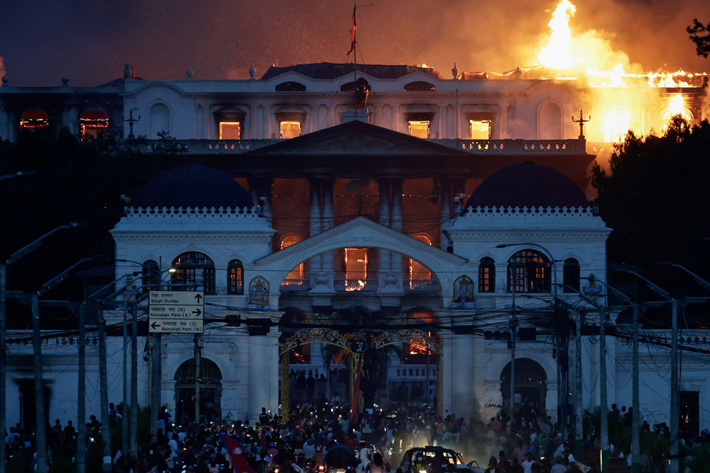
Speaking of the period following the Gen Z movement, she called it “complex, sensitive and challenging,” marked by public anger and uncertainty. She said the government’s primary responsibility is to guide the country away from violence and back to the constitutional path.
“Today, we have overcome the difficult transition period and are moving steadily forward under the rule of law,” she said.
Karki urged political parties and candidates to maintain discipline, especially during the period of silence, and thanked the Electoral Commission, security agencies and civil servants for their preparations to ensure a free and fair vote.
She said the government was committed to conducting the elections in a free, fair and fear-free manner, adding that all four security agencies had been mobilized to prevent any security breach.
The prime minister also warned against misinformation on social and mainstream media, saying authorities were tracking and taking action against those spreading fabricated content and misleading claims.
“There will be no impunity of any kind. The government will not act as required by law,” she said.
Extending Holi greetings ahead of the polls, she said the festival symbolizes unity and goodwill and urged people to celebrate responsibly and not to color anyone against their wishes.
On foreign affairs, Karki expressed concern about the escalation of tensions in West Asia. She said the government was closely monitoring the situation and prioritizing the safety of Nepalis in the region.
“All Nepalese missions in the area have been put on alert to help maintain security and the Ministry of Foreign Affairs is closely monitoring the situation,” she said.
Karki concluded her speech by saying that she takes office at a difficult time and the direction of the country will soon depend on the people’s elected representatives. “In a few days, this country will be led by your elected representatives,” she said, urging voters to ensure a peaceful and credible vote.