The Tamesis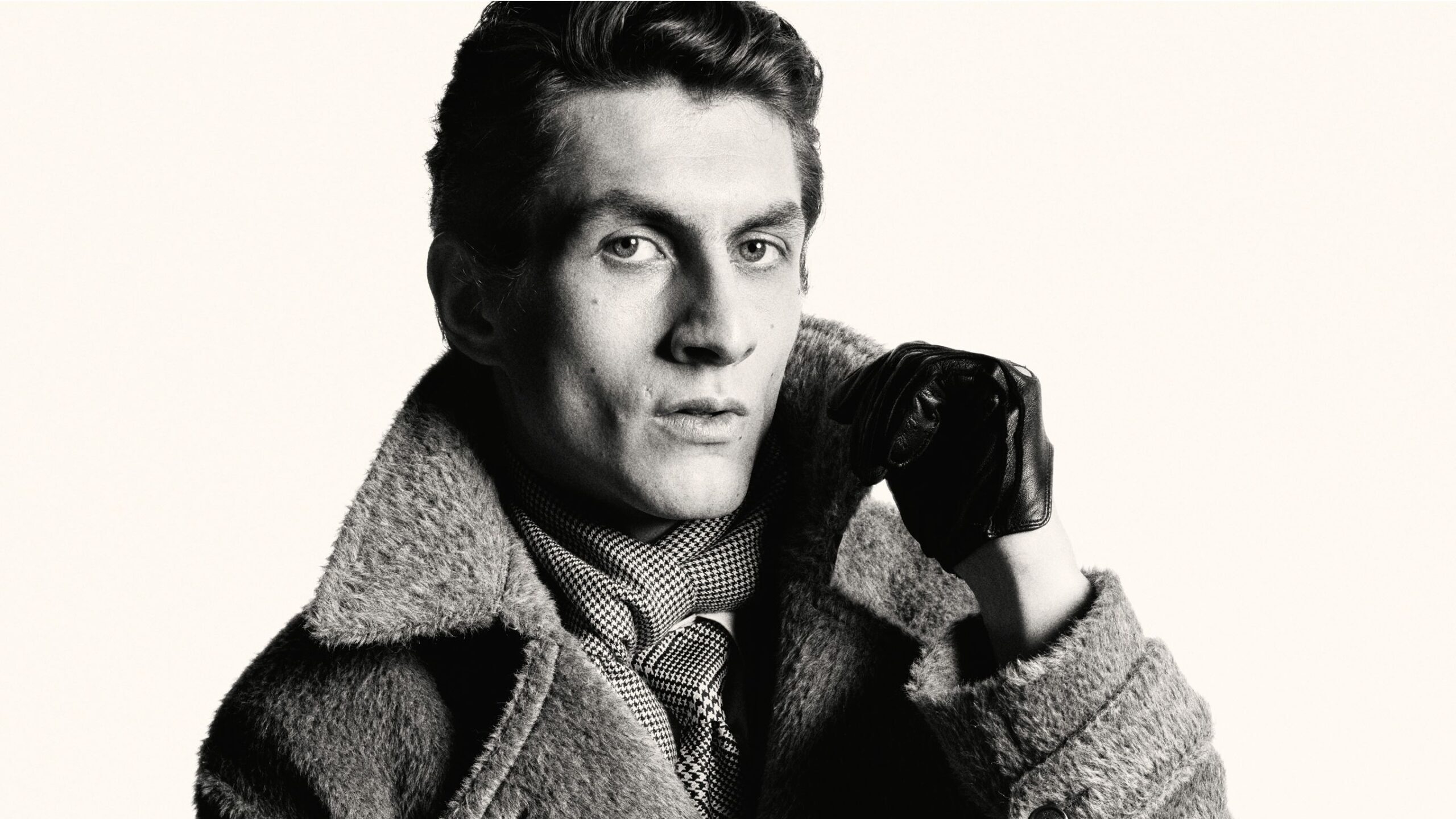
David Bailey’s portraits of Lord Snowdon or Anthony Armstrong-Jones, taken in the 1960s for those who preferred unvarnished aristocratic credentials, became the inspiration for Simon Holloway’s autumn collection at Dunhill. It’s hard to imagine a more fitting muse. If Dunhill were a man, it would be this bohemian, extremely unfashionable aristocrat: sexy, sensible, and unyielding.
“Snowden embodies the collision of aristocratic blood and creativity, at the crossroads of tradition and rebellion,” comments Holloway. He not only documented the cultural upheavals of the late 1960s; He wore them with casual precision. His style oscillates between two extremes: intensely formal one moment and brutally insistent the next, never apologizing for this contradiction. The man who rides motorcycles and loves fast cars looks perfectly at home in leather and suede field jackets, but can also move seamlessly to formal tailoring and impeccably knotted ties, giving even the most formal menswear a creatively rebellious feel. He has an aristocratic air but is restless, and his clothes are impeccable yet vaguely dangerous. “He’s the ultimate Dunhill man,” commented Holloway.
Choosing intimacy over spectacle, the collection is staged in the elegant interiors of Mozart’s villa; a setting that encourages closer inspection and allows Dunhill’s sartorial skills to be fully appreciated. The talk is accompanied by a limited edition catalog raisonné, shot in crisp black and white by Ethan James Green. Featuring model and artist Henry Kutcher, these portraits pay homage to Bailey-Snowden’s photographic lineage: smart, sexy, and stark.
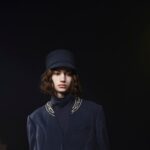
The collection plays on the tension between traditional British dress rituals and the lively modernity that contemporary life demands, moving from subtle gray gradients in daylight to deeper, nocturnal, almost cinematic tones at night. Holloway positions this balancing act as Dunhill’s raison d’être.
He kept the silhouette slim, gently easing the stiffness of English tailoring without compromising its authority, introducing a softness into the structure that felt deliberate rather than indulgent, and a polish that never became serious. Daywear tends to be casual and elegant; tailoring is sophisticated, and coats are relaxed yet luxurious. After dark, the mood became more sophisticated, culminating in a series of dark silk jacquard stand-collar Bourdon jackets, whose Arts and Crafts-inspired patterns were woven in a specialist factory in Suffolk.
“Dunhill was born not from a single icon, but from a way of life,” Holloway said. From its automotive origins, the brand evolved into a comprehensive wardrobe, then a purveyor of luxury accessories, and finally a refined bespoke tailor, especially known for its eveningwear. This tradition is perhaps best exemplified by Truman Capote’s tuxedo for the Black and White Ball, a beautiful bespoke Dunhill piece that still exists in the archives and is one of the most legendary garments in the history of men’s formal attire.