The Tamesis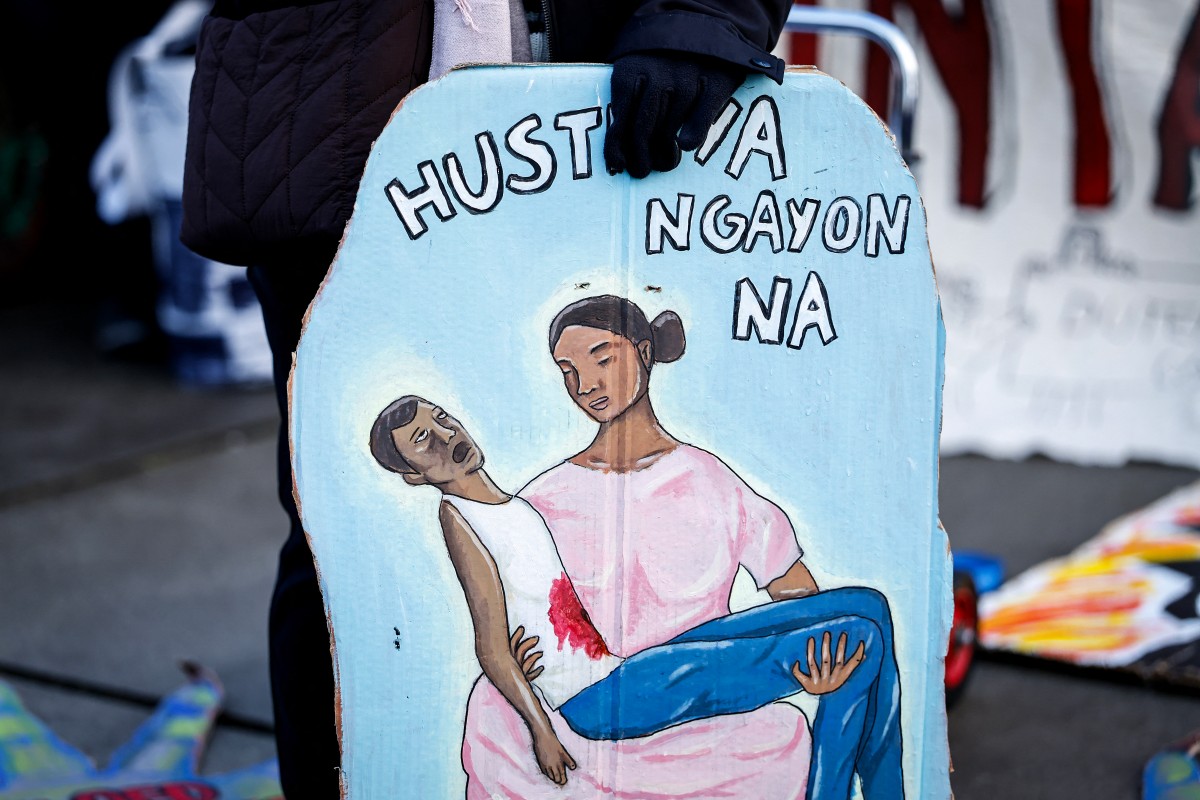
The Hague – After listening to human rights lawyer Joel Butuyan’s opening speech on Monday during the confirmation of charges against former President Rodrigo Duterte at the International Criminal Court (ICC), I felt something stir inside me — something somewhere between sadness and anger that I have carried for years.
In a powerful speech, a joint legal representative of victims of the “war on drugs” denounced the virus of impunity Duterte has spread across the Philippines, leaving Filipinos unable to distinguish between right and wrong, good and evil. Butuyan provides the context that is sorely needed at this moment — not just for the hearing, but for the entire saga of Duterte-era atrocities that have traumatized our country. He gave the disease its name. He described the decay. Sitting in that cold, gloomy gallery, every word felt to me like an indictment of a country that had not fully reckoned with what it had allowed to happen.
I was disturbed because I knew exactly how Butuyan felt. I know exactly where this anger comes from because I have lived with it for many years. Over the years and decades, I have been overwhelmed by the toll of Duterte’s “war on drugs” and his Davao death squads because there are so many people like me—activists, journalists, lawyers—who have spent their lives documenting Duterte’s depravity while the rest of the world turned a blind eye and too many of our fellow citizens cheered. We do not document these horrors from a distance. We are there. We saw what was done to people. We know their names.
Sitting next to me in the public gallery is photojournalist Raffy Lerma, one of the staunch witnesses to the killing fields Duterte has created. When Duterte’s lawyer, Nicholas Kaufman, made a cynical move to discredit Lerma’s Pieta-like photo — the Inquirer’s devastating front-page photo in 2016 of a wife holding her husband, who was shot dead by police in Pasay — I instinctively reached out and put my hand on his back. We both lowered our heads as if in prayer. We are mourning. Not only has the violence under Duterte struck so many Filipinos, but now, in real time, we are mourning the shameless lies used in the courts to defend the violence. Kaufman’s actions were not only cynical, but obscene. Taking a photo that captures one of the most intimate and devastating moments in a woman’s life, one that stems directly from state-sanctioned murder, and using it as a prop in a legal action — that’s an act of violence in itself.
After the hearing, not far from the ICC, a group of Duterte supporters stood and chanted his name. They were boisterous, loud, proud – as if what they were doing, what they were shouting against the gray Dutch sky was the most righteous thing in the world. It was this sense of pride that kept me calm that cold afternoon as I walked to the bus stop. Not noise. pride. They are steadfast in their belief that they are on the right side of history, while history—real, documented, blood-soaked history—screams otherwise.
I came home that night filled with unspeakable sadness. Because this is not just a Duterte problem. Never. It’s about the millions of Filipinos who look at the bodies piling up in the streets and feel nothing, or worse, feel satisfied. This is about close friends and relatives – and I suspect most Filipinos reading this know what I mean – who chose and still choose to ignore this atrocity. Those who saw the dead as collateral, as criminals, as acceptable losses in a war that was never a war but a massacre. for what? To worship a man whose entire identity is based on violence and disdain for human life? Because he speaks rudely and people mistake him for cruelty? Because he’s “one of us”?
This kind of bargaining is so despicable. We need to say this out loud, without diplomatic hedging.
About an hour before I started writing this article, a new Facebook friend sent me a message with a compelling suggestion: Maybe the Philippines needs to be “de-Duterteized” just as postwar Germany needed to be denazified — with a systemic, painful national confrontation about what happened, who enabled it, and why, so that it never happens again.
He is right. ICC procedures are necessary but not sufficient. What the Philippines needs is a real moral reckoning — in schools, media, families and politics. We need to take an honest look at the culture of impunity that has made Duterte not only possible but popular. We need to stop valuing the feelings of his supporters over the lives of his victims.
Decontamination. It’s not easy. It won’t be comfortable. But it’s the only way back to a country you can trust.
The article De-Duterteization appeared first on Asia News Network.