The Tamesis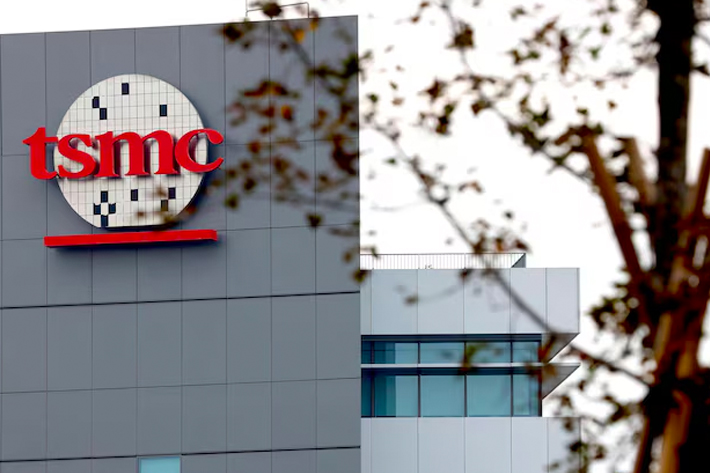
Taiwan said it hopes to become a close strategic partner with the United States in the field of artificial intelligence after reaching an agreement to reduce tariffs and increase investment in Taiwan.
U.S. President Donald Trump has urged Taiwan, a major semiconductor producer, to invest more, especially in producing chips that power artificial intelligence.
“In this negotiation, we promoted two-way investment in high-tech between Taiwan and the United States, hoping to become a close strategic partner in artificial intelligence in the future,” Taiwan Vice Prime Minister Cheng Li-qun commented live at a press conference in Washington.
Also AF: Chinese companies told: ‘Stop using US-Israeli cybersecurity software’
Cheng presided over the meeting reach trade deal Thursday. It lowered tariffs on many of Taiwan’s exports and guided $250 billion worth of new investment in the U.S. technology industry, specifically boosting production of semiconductors, energy and artificial intelligence.
U.S. Commerce Secretary Howard Lutnick said on Thursday that figure includes chipmaker TSMC’s $100 billion commitment to 2025, with more to come.
The Trump administration said Taiwan would also provide an additional $250 billion in credit guarantees to promote further investment.
“Win-Win Agreement”
Mr Cheng called the agreement a “win-win” and said it would also encourage US investment in Taiwan. Although the two countries lack formal diplomatic relations, the United States is the island’s most important international backer and weapons supplier.
Zheng added that the investment plan is business-led, not government-driven, and Taiwanese companies will continue to invest domestically.
“We believe that this kind of supply chain cooperation is not ‘moving’ but ‘building’. We expand our footprint in the United States and support the construction of local supply chains in the United States. It is an extension and expansion of Taiwan’s technology industry.”
Investments will also cover artificial intelligence servers and energy, Taiwan’s Economic Minister Kong Ming-hsin told reporters in Taipei, adding that it would be up to companies to disclose chip-related amounts themselves.
TSMC takes center stage
TSMC, the world’s leading producer of advanced artificial intelligence chips, welcomed the prospect of a “robust” trade agreement between the United States and Taiwan in a statement, adding that all investment decisions are based on market conditions and customer needs.
“Market demand for our advanced technology is very strong,” it said. “We will continue to invest in Taiwan and expand overseas.”
Once signed, the deal will need approval from Taiwan’s parliament, where the opposition holds the most seats. Opposition leaders have expressed concern about the “hollowing out” of the key chip industry under the U.S. trade deal.
Yesterday, we launched the largest semiconductor investment in U.S. history, joined by Ingrid D. Larson of the American Institute in Taiwan and Alexander Tah-Ray Yui of TECRO, advancing a historic “America First” trade and investment partnership led by… pic.twitter.com/asQPxWqBqZ
— Howard Lutnick (@howardlutnick) January 16, 2026
Lutnick said in an interview with CNBC on Thursday that the goal is to move 40% of Taiwan’s entire chip supply chain and production to the United States. If they are not made in the United States, the tariff may be 100%.
Kong said he didn’t know how the 40% figure was calculated, but Taiwan estimates that by 2036, the production split between Taiwan and the United States for advanced chips at 5 nanometers and below will be 80/20.
“This round of deployment will enhance the flexibility of semiconductor supply in Taiwan, the United States and the world,” he said.
“Moderate global diversification is also necessary. Going forward, the largest AI orders will come from the U.S. market.”
Taiwan’s benchmark stocks closed at a record high on Friday, boosted by TSMC Strong fourth-quarter earnings and a positive investor reaction to the tariff deal.
“Taiwan is the first country in the United States to publicly announce that it has received the most preferential treatment in chips and related products, which highlights that Washington regards Taiwan as an important strategic partner in the semiconductor field,” Zhang Jianyi, president of the Taiwan Economic Research Institute, told Reuters.
China worries
At the same time, the deal is also likely to anger China.
China regards democratically-ruled Taiwan as its own territory and strongly opposes high-level exchanges between the United States and Taiwan. Taiwan rejects Beijing’s sovereignty claims.
But Washington is increasingly impatient with its reliance on foreign computer chips, especially an island in China’s eyes.
Semiconductors were invented in the United States, many are designed in the United States, and the United States remains the largest importer of semiconductors, making everything from consumer electronics to artificial intelligence chatbots and advanced weapons. But many of the most cutting-edge chips are made abroad, especially in Taiwan. Intel and South Korea’s Samsung Electronics are also expanding U.S. production capacity.
TSMC announced a plant in Arizona in 2020 during U.S. President Donald Trump’s first term and has expanded the facility under his Democratic successor, Joe Biden.
As it expands further, TSMC faces the risk of overspending on the fast-growing industry, running into labor and skills shortages, navigating the thorny politics surrounding foreign worker immigration, and shifting operations away from Taiwan at a time when Taiwan’s geopolitics is extremely fragile.
“Look, they need to keep our president happy, right,” America’s Lutnick told CNBC on Thursday, referring to Taiwan. “Because our president is the key to protecting their country.”
- Vishakha Saxena Additional Editor, Reuters
Also read:
Trump says he would be very unhappy if Xi Jinping takes action against Taiwan
Trump’s attack on Venezuela ‘could strengthen China’s territorial claims’
Some Chinese warships remain alert after large-scale drills, Taiwan on alert
U.S. delays new chip tariffs on China to keep peace
TSMC, South Korean companies “can send chip manufacturing tools to Chinese factories”
Trump says he will impose high tariffs on China if it occupies Taiwan
Taiwan may train U.S. chip manufacturing workers under tariff deal
Taiwan rejects U.S.-driven 50-50 chip production deal
TSMC $100 billion US deal: Taiwan says it won’t share top chip technology
TSMC to cut off supply of its advanced chips to all Chinese AI customers
War risks in China lead Taiwan Semiconductor Manufacturing Co., Ltd. to move its wafer fabs to the United States and Japan
Taiwan invasion ‘could cost up to $1 trillion a year’