The Tamesis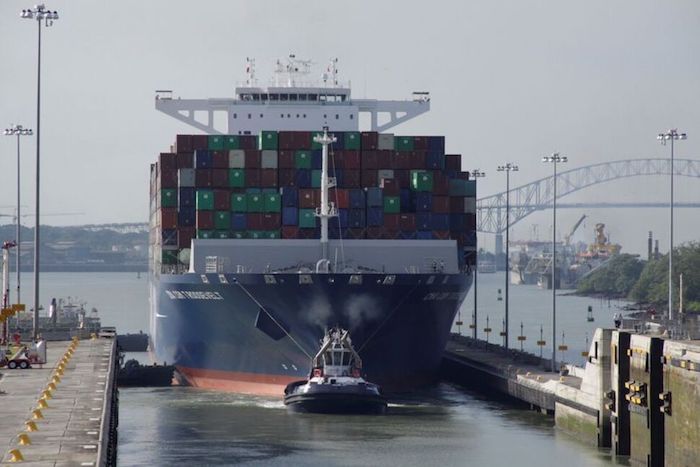
The fight for control of the world’s most strategic trading ports has intensified after a Panamanian court ruled last week to cancel long-standing concessions for two ports operated by a Chinese company.
China expressed displeasure with the decision on Tuesday and warned that the small Central American country would pay a “heavy price” for the ruling.
Beijing’s Hong Kong and Macao Affairs Office said the Panama Supreme Court ruling – hailed in Washington as a “victory for the United States” – was “shameful and deplorable”.
Also read: Indian stocks, rupee soar on US trade deal, though details are scant
supreme court of panama terminate long-term contract Panamanian Ports Company (PPC), a unit of Hong Kong-based CK Hutchison Holdings, must operate the ports of Balboa and Cristobal, which sit on either side of the strategic waterway.
The report said the PPC violated the country’s constitution by granting it exclusive privileges and tax exemptions.
The battle for the two Panama ports is just the first round of a larger battle over plans by parent company Hutchison Whampoa. Plans were revealed in March last year to sell its 43 ports in 23 countries to a consortium led by BlackRock and Mediterranean Shipping Company (MSC), which is run by Italian billionaire Gianluigi Aponte.
Beijing’s “wolf warriors” are angry and condemn $23 billion sale plan seen as ‘betrayal’ It belongs to the Chinese people. “
And they still show their fangs, so see Changhe moving to Initiate international arbitration proceedings to challenge the results.
However, analysts say arbitration hearings could drag on for years and may achieve little, given the fierce competition between China, the United States and other Western countries.
US President Donald Trump insists the United States must control the Panama Canal because it funded and built the waterway between 1904 and 1914 and returned it to local authorities in 1999.
U.S. officials last year reminded their Panamanian counterparts that this was a national security issue because 40% of U.S. container traffic still passes through the canal.
Port sales may be broken into smaller parts
Last July, Beijing’s Communist Party leaders intervened forcefully, saying the Chinese shipping giant COSCO must be part of the deal.
By the end of the year, they said COSCO must have a majority stake BlackRock and MSC opposed the request.
But sources recently told major news outlets that Hutchison Whampoa, BlackRock, MSC and Beijing, controlled by Hong Kong billionaire Li Ka-shing, remain open to tweaking the original acquisition.
Hutchison Whampoa owns major ports in China, but they were not involved in the deal. However, the other 41 ports included in the proposed acquisition include ports in Mexico, the Bahamas, as well as Barcelona in Spain and Rotterdam in the Netherlands.
“One option in the latest discussions is for both parties to consider splitting the portfolio so that the three bidders hold stakes in different ports,” a person familiar with the matter told Reuters.
“Given the challenges, such as obtaining approval from anti-competition regulators in nearly 50 jurisdictions, it could take at least two years to clear all regulatory hurdles, sources said.”
JPMorgan and Citigroup reportedly said the sale of Hutchison Ports might be easier to resolve with Panama excluded.
Information for other “competitors”
Beijing is speaking out this week as it wants its “high price” message heard. Other countries want to drive Chinese companies out of local ports.
In Australia, for example, Prime Minister Anthony Albanese has vowed to regain control of the company’s operations. darwin portThe company in the country’s far north was sold to a company owned by a Chinese billionaire in 2015, when Canberra viewed Beijing as a more friendly regional power.
But it made a big move into the South China Sea, trade war In partnership with Australia in the early 2020s, it was decided to host Live-fire exercise across Tasman Strait The moves clearly shattered any illusions about Xi Jinping’s China ahead of last year’s federal election.
The Albanian government is now seeking Dozens of unused parcels of land owned by the Department of Defense are for sale Help fund expenditures at northern and western bases, as well as infrastructure to support submarines purchased under the AUKUS program.
See also:
Supreme Court revokes Hong Kong company’s Panama port concession
Iranian ‘ghost tanker’ delivers jet fuel to Myanmar air force
COSCO’s demands ‘could block BlackRock’s $23 billion takeover of Hutchison Ports’
Changhe Port deal mired in US-China trade war
China threatens to block Panamanian port deal, “hopes to gain COSCO shares”
China warns CK Hutchison, BlackRock: be cautious about port deals
Clouds cloud over Panama port trade: China slams Hong Kong shipowners’ sell-off
China and CK Hutchison ‘seeking solutions to $23 billion port deal’
Trump praises BlackRock’s $23 billion acquisition of Hong Kong’s giant port
US investigation shows China unfairly dominates shipbuilding industry: sources