The Tamesis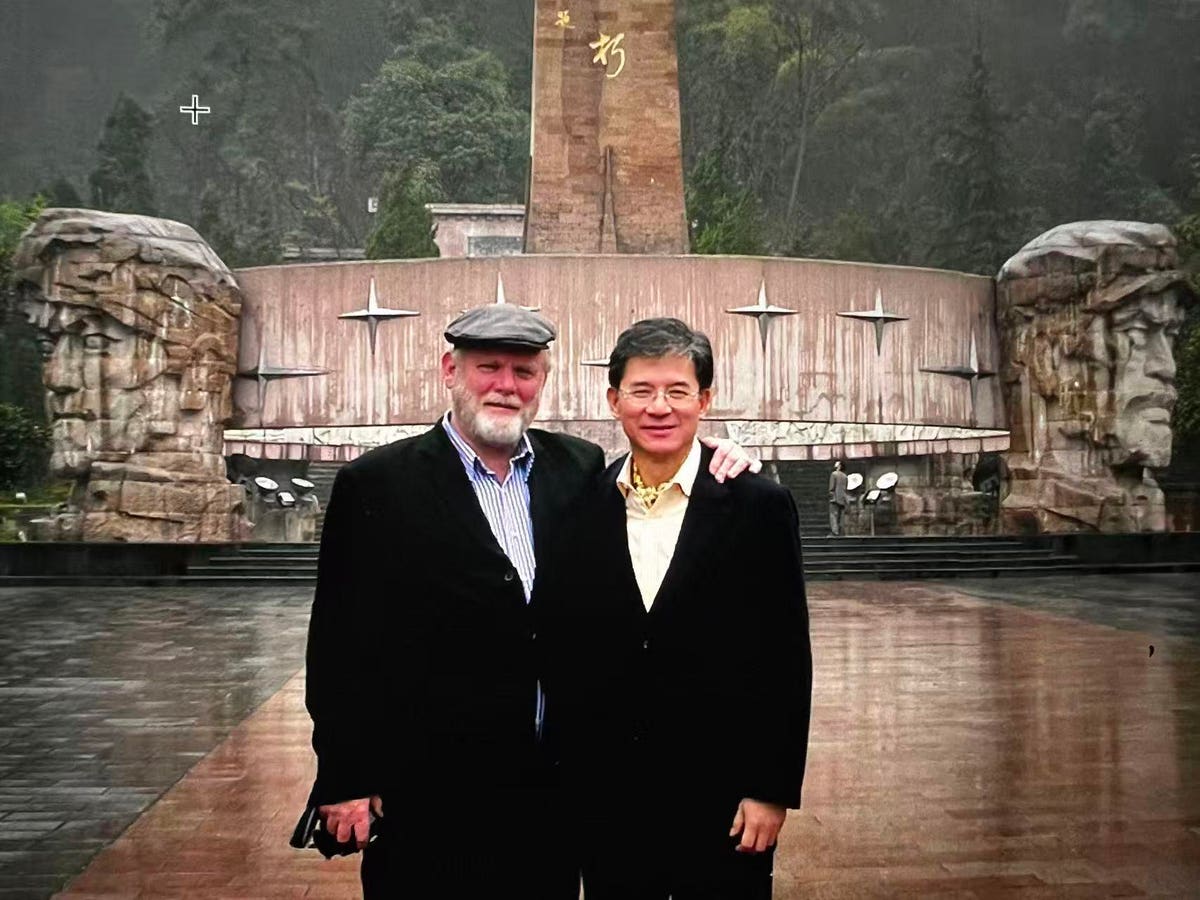
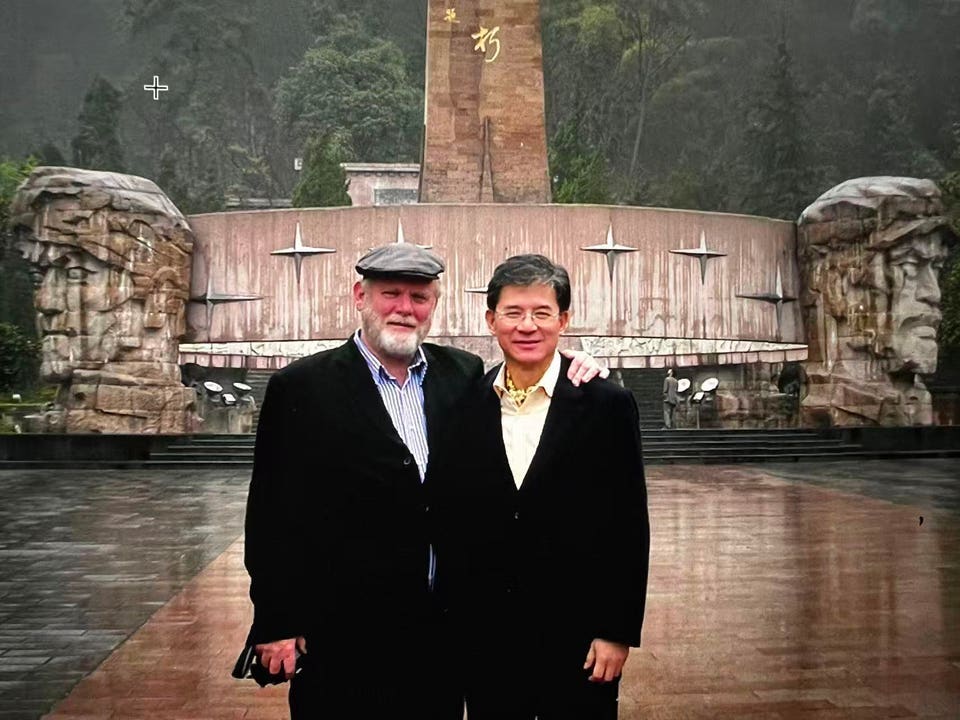
Billionaire Shui On Land chairman Luo Kangrui (right) and American architect Benjamin Wood (left) (pictured in 2006) have teamed up to develop iconic property developments in China over the past 25 years, including Shanghai Xintiandi.
Shanghai Studio
American architect Benjamin Wood rose to fame in China for a visionary project that became an icon of Shanghai. Xintiandi is a neighborhood built from scratch, where Hong Kong developer Shui On Land won awards for reviving old buildings and breathing new life into one of Asia’s richest cities. Shui On Land’s recent Panlong Tiandi project with Wood is located in a water town in the western suburbs of Shanghai and combines commercial and residential buildings with historically protected village houses and infrastructure such as bridges and canals; it has won multiple awards and is even popular with tourists from Shanghai.
Wood, 77, said in a recent phone interview that the success of Xintiandi and Panlongtiandi in creating communities that integrate work, life and entertainment provides an “incredible opportunity” to change people’s perceptions of urban environments and points the way forward for Chinese cities dealing with massive real estate oversupply.
Instead of separating office and residential areas, city planners should combine living and working areas into more “semi-autonomous” neighborhood mixes with their own characteristics, the architect said. His Shanghai studio is currently working on new projects based on this approach in Xi’an and elsewhere. An MIT graduate, Wood was a protégé of legendary Boston architect Benjamin Thompson, best known for his designs in the city’s popular Faneuil Hall district in the 1960s.
China could use some bold ideas. China’s property glut has knocked many real estate developers out of the ranks of the world’s billionaires and left bond investors with losses. The most high-profile is Xu Jiayin, founder of China Evergrande Group, who topped the 2017 Forbes list of China’s richest people with an estimated fortune of $42.5 billion, but is now reportedly being detained over massive debts.
In comparison, the Hong Kong-listed shares of Shui On Land, a developer of Xintiandi and Panlong, still have a market value of HK$5.6 billion, even though their market value has shrunk by one-third in the past five years; Chairman Luo Kangrui is still a billionaire with a net worth of US$1.5 billion on Forbes’ real-time billionaire list today. Xintiandi attracts thousands of visitors every day and has global fashion brand tenants such as lululemon as well as local restaurants; Wood himself is popular at the “DR” bar, whose name recalls the Design Research lifestyle chain Thompson founded at its Harvard Square flagship.
Although China’s export-supported GDP growth will reach 5% year-on-year by 2025, the average time it took for 100 major cities to sell existing residential inventory was 27.4 months as of November, twice the 14-month cycle required to balance the market’s outer limits, the government-published China Daily reported on Jan. 15, citing Shanghai-based E-House China Research Institute. In lower-tier markets, buyers are waiting more than three years, the report said. China is not the only country grappling with an oversupply of real estate. New York, for example, has become a center for converting commercial space into residential units after experiencing a glut during the coronavirus pandemic. Notable projects include the conversion of an office building at 25 Water Street into more than 1,000 rental units.
In addition to Xintiandi and Panlongtiandi, Wood’s other works that combine work and life include Zhongshan Avenue in the central Chinese city of Wuhan, one of China’s ancient commercial centers. Wood said as part of the public-private partnership, about 254 hectares of land had been transformed from a run-down space into a thriving mixed-use area, with many locals inspired to stay and upgrade their shops and homes.
Shanghai Xintiandi is a popular destination for locals and overseas tourists.
RFF
A new government-coordinated 44,055 sq m project based on the Wood masterplan is underway in the eastern Chinese city of Suzhou and near the intersection of Shanghai and Zhejiang province, including a cruise terminal hotel, offices and apartments. The other is located in Hengmian Old Street, Pudong District, Shanghai. It is currently developed by the state-owned China Jinmao Holding Group and integrates the characteristics and culture of the ancient town in an environmentally friendly style. Wood said the two companies used public-private partnerships with locals to bring small neighbors and shops together in a manner similar to the Enning Road projects in Wuhan and Guangzhou. “Neighbors helping neighbors, better communities — each with a unique identity — create a better city within a city,” he said.
In addition to construction talent, success will require creative and real-world thinking among developers, regulators and financiers, Wood said. The former Air Force pilot noted that the country’s regulators would be better off allowing relatively small, community-level projects to be approved more quickly to help address market oversupply and try out new ideas. Wood also believes the rollout of large-scale projects launched in the country during a big wave 75 years ago will slow down.th 2024 is the anniversary of the Communist Party, which is probably a smart thing to do. “You don’t have to do a full project and then learn for the next big project. You learn the mistakes you made in the first phase. It’s better to start a project in two or three years and see where the demographics end up looking like,” he said.
It’s part of nearly three decades of design and business experience that have created a continued American success story through the ups and downs of China’s real estate industry.