The Tamesis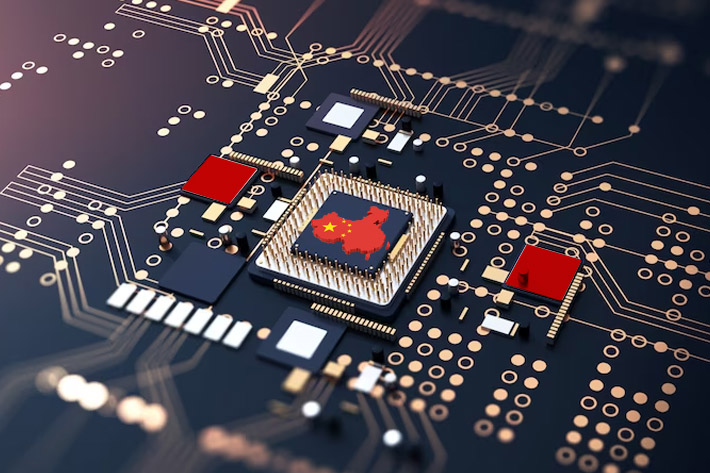
China is urging chipmakers to ensure at least half of the equipment used to add new production capacity is made domestically, sources told Reuters, making the order one of Beijing’s most significant steps yet to reduce purchases of foreign technology and build a self-sufficient semiconductor supply chain.
The rule is not publicly documented, but chipmakers seeking state approval to build or expand factories have been told by authorities in recent months that they must prove through procurement tenders that at least 50% of their equipment will be made in China, people familiar with the matter told Reuters.
While authorities grant flexibility based on supply constraints, applications that don’t meet the threshold are typically rejected, people familiar with the matter said. Requirements for advanced chip production lines have been relaxed because domestically developed equipment is not yet fully available, sources said.
Also on AF: China wants to tackle addiction and self-harm caused by AI imitating humans
“The authorities would prefer much higher than 50%,” one source told Reuters. “Ultimately they aim to have factories using 100% domestic equipment.”
This shift has accelerated the pace In 2023, the United States will tighten technology export restrictions and ban the sale of advanced artificial intelligence chips and semiconductor equipment to China.
While U.S. export restrictions have hampered sales of some of the most advanced tools, the 50 percent rule has led Chinese manufacturers to choose domestic suppliers even in areas where foreign equipment from the United States, Japan, South Korea and Europe is still available.
The policy is already bearing fruit for Beijing — breakthroughs and higher revenues for chip equipment suppliers.
One supplier – Naura Technologies – has particularly benefited from China’s rules.
Sources said Naura has stepped up domestic alternatives in areas such as etching, a key step in chip manufacturing that involves removing material from silicon wafers to carve out complex patterns of transistors.
The company, China’s largest chip equipment group, is testing its etching tools on Semiconductor Manufacturing International Corporation’s cutting-edge 7-nanometer production line, two sources said. This early milestone follows Naura’s recent success in deploying etch tools at 14nm, demonstrating how quickly domestic suppliers are progressing.
“The government’s requirement for fabs to use at least 50% domestic equipment accelerated Naura’s etching results,” a person familiar with the matter told Reuters, adding that this forced the company to improve quickly.
Significant revenue growth
Advanced etching tools in China are mainly supplied by foreign companies such as Lam Research and Tokyo Electron, but are now partly replaced by Naura and smaller rival Advanced Micro-Fabrication Equipment, sources said.
Northern Huachuang has also proven to be an important partner for Chinese memory chip manufacturers, providing etching tools for advanced chips with more than 300 layers. The company developed electrostatic chucks, devices that hold wafers during processing, to replace worn parts in Lam Research equipment that the company will no longer service after the 2023 restrictions, sources said.
According to Anaqua’s AcclaimIP database and verified by Reuters, the company filed for a record 779 patents in 2025, more than double the number filed in 2020 and 2021, while AMEC filed for 259 patents.
This also translated into strong financial results. Northern Huachuang’s revenue in the first half of 2025 will increase by 30% to 16 billion yuan. Micron announced that its revenue in the first half of the year increased by 44% to RMB 5 billion.
Analysts estimate that China is now about 50% self-sufficient in photoresist removal and cleaning equipment, a market previously dominated by Japanese companies but now dominated by Naura.
Another source said, “The domestic equipment market will be dominated by two to three major manufacturers, and Nanpu is definitely one of them.”
“National” approach
China’s progress, and that of companies like Nowra, is being worried by global rivals as foreign suppliers are squeezed out of the Chinese market.
Beijing has invested hundreds of billions of yuan to support the local chip supply chain through the “big fund”, and the third phase will be established in 2024 344 billion yuan (US$49 billion) in the capital.
Meanwhile, Chinese President Xi Jinping has been calling for a “nationwide effort” to establish a fully self-sufficient domestic semiconductor supply chain involving thousands of engineers and scientists at companies and research centers across the country.
This effort is taking place across a wide range of supply chains. Chinese scientists are It is said Prototypes of machines capable of producing cutting-edge chips are also being developed, something Washington has tried to block for years.
According to public procurement data, state-owned enterprises purchased a record 421 orders for domestic lithography machines and parts this year, worth about 850 million yuan.
“In the past, domestic fabs like SMIC preferred American equipment and would not really give Chinese companies a chance,” a former employee of local equipment maker Northern Huachuang Technology said of SMIC.
“But things changed starting with U.S. export restrictions in 2023, when Chinese fabs had no choice but to work with domestic suppliers.”
- Vishakha Saxena Additional Editor, Reuters
Also read:
China’s big technological secret: Dutch chip-making machine replicated in laboratory
Chinese companies lobby for Nvidia H200 but retain local chips
ByteDance, Alibaba “seeking to place large orders for Nvidia’s H200”
Nvidia’s biggest Chinese buyer can no longer use its chips for artificial intelligence
Powerful Nvidia chips could put Chinese chipmakers in trouble
U.S. delays new chip tariffs on China to keep peace
China ‘cuts electricity bills in half’ for its AI chip companies – FT
Chinese AI firms form alliance with chipmakers to ditch foreign technology
The Financial Times reported that China has stepped up inspections of Nvidia artificial intelligence chips at major ports.
Subsidies and homegrown technology: How China plans to compete with Stargate
Nvidia CEO says U.S. export restrictions on AI chips are ‘flawed’ policy
China’s Huawei ‘hopes its new AI chips can surpass Nvidia’
China’s Huawei and SMIC will “increase production” of the latest artificial intelligence chips
Satellite images show Huawei’s expanding chip facilities – FT
Nvidia tries to stop Huawei
Chinese Science and U.S. Export Controls
Beijing and its billions in artificial intelligence