The Tamesis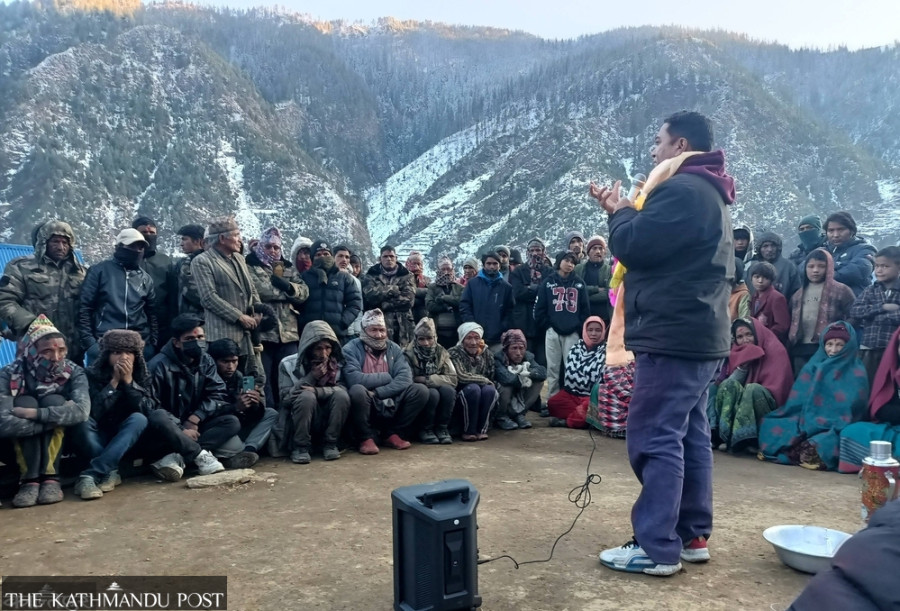
February 2, 2026
Yumla – Heavy snow covers forests and rivers, and the biting cold makes even simple tasks difficult. Still, as the election approaches, party leaders and cadres brave the wind and rain, donning jackets, hats, gloves and masks to reach voters.
With many residents away from home during the day, candidates visited early in the morning despite the cold. Some consider snow a boon to farmers, while others use it to emphasize the growth of winter crops.
Villagers were surprised when the campaign team arrived in such cold weather. Two snowfalls in Jumla this month have intensified the winter chill, but political activity remains high.
Most of the plateau areas are still covered by ice and snow. Traffic is normal only in the lower areas connected by the Karnali Expressway. Rural roads are bumpy, snowy and slippery in parts, making walking the only way to reach voters.
Nepal Communist Party candidate Naresh Bhandari, campaigning in Pategaun in Pategaun District 2 of Patarasi township, said despite heavy snowfall, he was visiting households to meet farmers ahead of the March 5 assembly elections. He called on the government to ensure that the voting process was fair and secure.
Gyanendra Bahadur Shahi, candidate of the Rashtriya Swayamsevak Sangh and the party’s spokesperson, visited all eight local units with an aim to highlight Jumla as a winter tourist destination. “Jumla – Kalanga, Lara Lake, Patarasi Hills and Sinja Valley – look very beautiful under the snow. It benefits farmers and will attract tourists from within the country and abroad,” he said in a Facebook post.
Rastriya Swatantra Party candidate Binita Kathayat, who also visited the houses, said just like snow is crucial for winter crops, elections are also crucial for the development of the country. Snowfall can inspire voters to make informed choices, she added.
Candidates from the Nepali Congress, Nepal Communist Party-UML and other parties have limited access to remote villages and focus their attention on areas near district centres. Voters are now publicly voicing their concerns, moving beyond the one-way speech common in past elections.
“We will take feedback from our voters before coming up with our electoral agenda,” Bhandari said.
Currently, all candidates are visiting households with hopes and promises to address issues raised by voters.