The Tamesis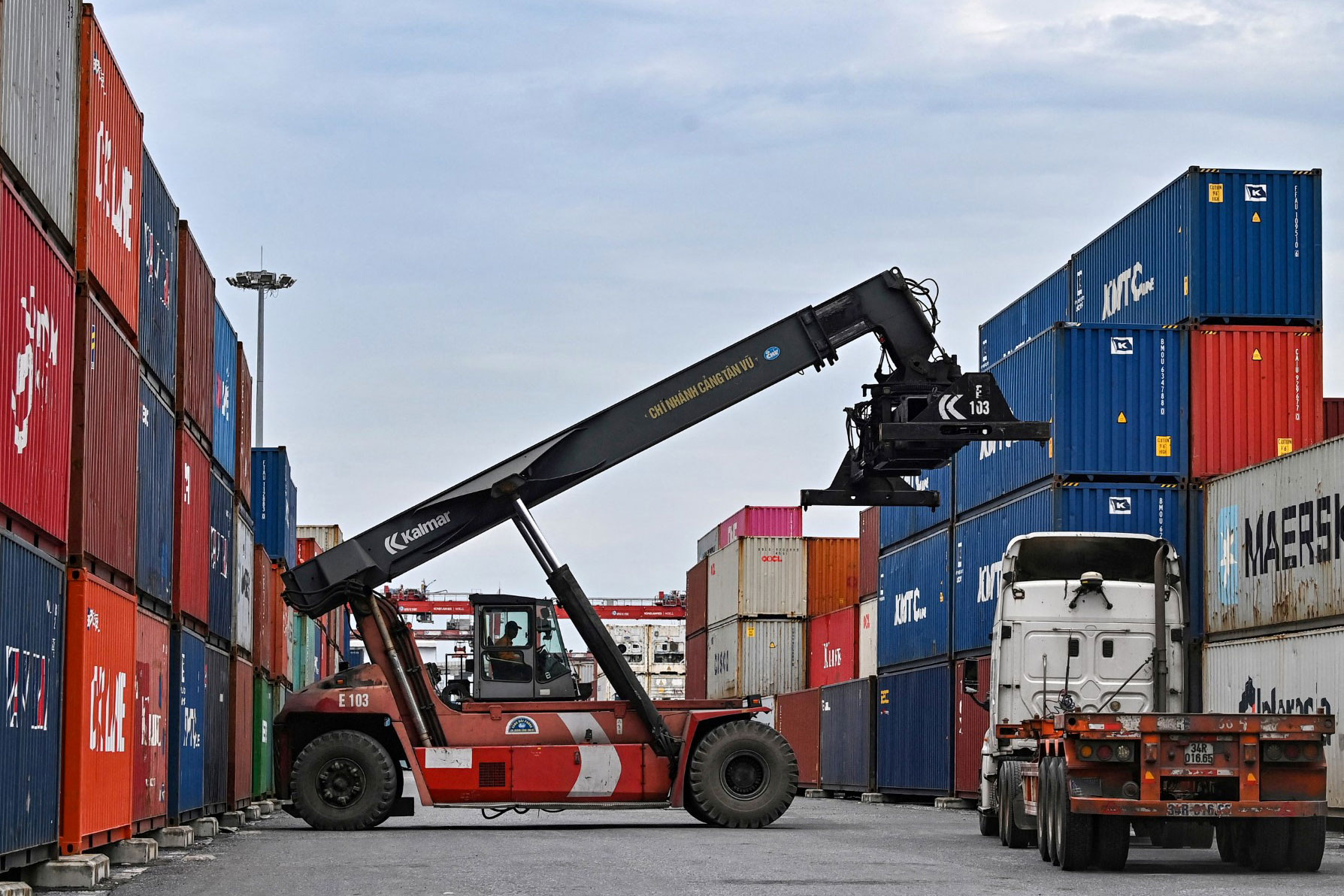
January 22, 2026
Ho Chi Minh City – Vietnam’s contemporary political development is best understood as a series of distinct stages, with the strategic imperatives of each stage determined by historical circumstances
[Politicalandsocialmobilizationbetween1945and1975wasprimarilyaimedatresolvingissuesofsovereigntyandterritorialunitythis[1945年至1975年间的政治和社会动员主要是为了解决主权和领土统一问题。这Damei The process launched in 1986 addressed a very different set of problems, namely economic stagnation and international isolation, through incremental reforms rather than systemic ruptures.
In the theoretical discourse of the Communist Party, this long period is usually regarded as a period of “quantitative accumulation”. Continuous investment in infrastructure and progressive institutional reforms guided by market principles and globalization have provided a platform for economic growth in the past 40 years.
However, recent results suggest that the scale of success alone does not bring about the qualitative change needed to break out of the middle-income trap. Structural obstacles gradually expose the shortcomings of a development approach that relies mainly on resource accumulation rather than productivity growth.
Given these constraints, the importance of this week’s 14th Party Congress is clear. The “era of national rise” proposed by General Secretary Duolin is a response to the historical threshold of reorganizing the development logic required by the accumulation of national capabilities.
The focus is shifting from a recovery-oriented vision to a quality-led development anchor. Governance must therefore move beyond long-term strategic patience and towards proactive policy intervention seeking tangible change.
The confidence expressed before the Congress is closely linked to the achievements of the 13th term (2021-2025). The late General Secretary Nguyen Phu Trong often said that Vietnam “never had the wealth and potential it enjoys today,” which must be analyzed through empirical measures and not simply accepted as a political slogan.
Reports from the International Monetary Fund and the World Bank confirm that Vietnam remains one of the fastest-growing economies in the region despite the extremely volatile international economy. Trade continues to grow even amid supply chain disruptions, reflecting both the flexibility of domestic SMEs and Vietnam’s deep integration into global production networks. Taken together, these trends indicate that Vietnam is no longer a peripheral player in international trade flows, but a structural player.
Vietnam’s diplomatic stance coincided with these changes. The establishment of comprehensive strategic partnerships or strategic partnerships with all five permanent members of the United Nations Security Council in a short period of time marks the success of the diversification project. This configuration should be interpreted less as a series of individual achievements and more as the overall product of a long-term strategy to maintain strategic autonomy as international dynamics evolve.
The transition to this new stage of development takes place in an international landscape filled with uncertainty. By the mid-2020s, unilateralism tended to become more apparent, and respect for the basic principles of the United Nations Charter was increasingly challenged.
In many areas, reliance on power-based approaches and instrumental views of sovereignty reintroduces security risks, particularly for small and medium-sized states with naturally limited space for strategic engagement.
In this sense, the convening of the 14th National Congress once again confirmed the foreign policy orientation of “bamboo diplomacy”. The logic of this approach is the interplay of strategic coherence and tactical flexibility.
Independence, self-sufficiency and compliance with international legal norms remain the roots of Vietnam’s external behavior. Instead, diplomatic flexibility provides room for maneuver in dealing with great power competition without formal alliances, while still allowing Vietnam to take a firm stance on matters of national interest.
There is a causal logic behind this position: maintaining strategic autonomy can bring external stability, and external stability is the prerequisite for domestic stability and sustainable development. In this context, diplomatic constraints and flexibility are not seen as ends in themselves but as tools for achieving broader long-term national interests.
However, the congressional document marked a realignment of diplomatic thinking. As Secretary of the Secretariat of the Communist Party of Vietnam Central Committee and Foreign Minister Le Hoai Trung recently emphasized, the continuity of foreign policy principles is now accompanied by greater expectations for effectiveness.
“In the new stage, Vietnam has decided that global integration should be broad and deep,” he said. “Previously, integration was mainly economic; now, it is an undertaking for all people and the entire political system. One of the key breakthroughs is that Vietnam will not only abide by existing rules, but also play a more proactive role in establishing and developing multilateral institutions. Diplomacy must be a strong driver of national breakthroughs, with people, local communities and businesses at the core, while maximizing the use of external resources, especially in the fields of digital transformation, green transformation and technology.”
These directions demonstrate the ability to assume greater global responsibility. Vietnam contributes to the rules-based security architecture through its participation in ASEAN and other multilateral forums. At the same time, its new network of free trade agreements not only has economic benefits but also constitutes a model for reducing geopolitical risks. The greater the interdependence of Vietnam’s interests on global events, the more important it is to view domestic stability as something that transcends national borders.
The strategic vision proposed by the 14th National Congress takes into account synergies between three sources: existing internal capabilities, new external opportunities and political will. Internal capabilities imply the material and institutional framework developed over decades of reforms. Technological changes, digitalization and green growth paths bring opportunities. However, neither element works automatically.
The decisive factor is the level of political and social consensus on the country’s long-term goals. The expectations of the party and the public for the 2045 development vision need to be aligned to create the coherence needed to turn possibilities into action. Failure to achieve this integration may mean that resources and conditions are not utilized appropriately.
Rather than a conclusion, the conference is evidence of a reorientation in Vietnam’s approach to development and foreign relations that extends far beyond the current political cycle.
Nguyen Tuan Khanh is an Asia-Pacific scholar and a senior lecturer at the University of Social Sciences and Humanities in Ho Chi Minh City, Vietnam National University. Dao Dinh Duc serves as a teaching assistant.