The Tamesis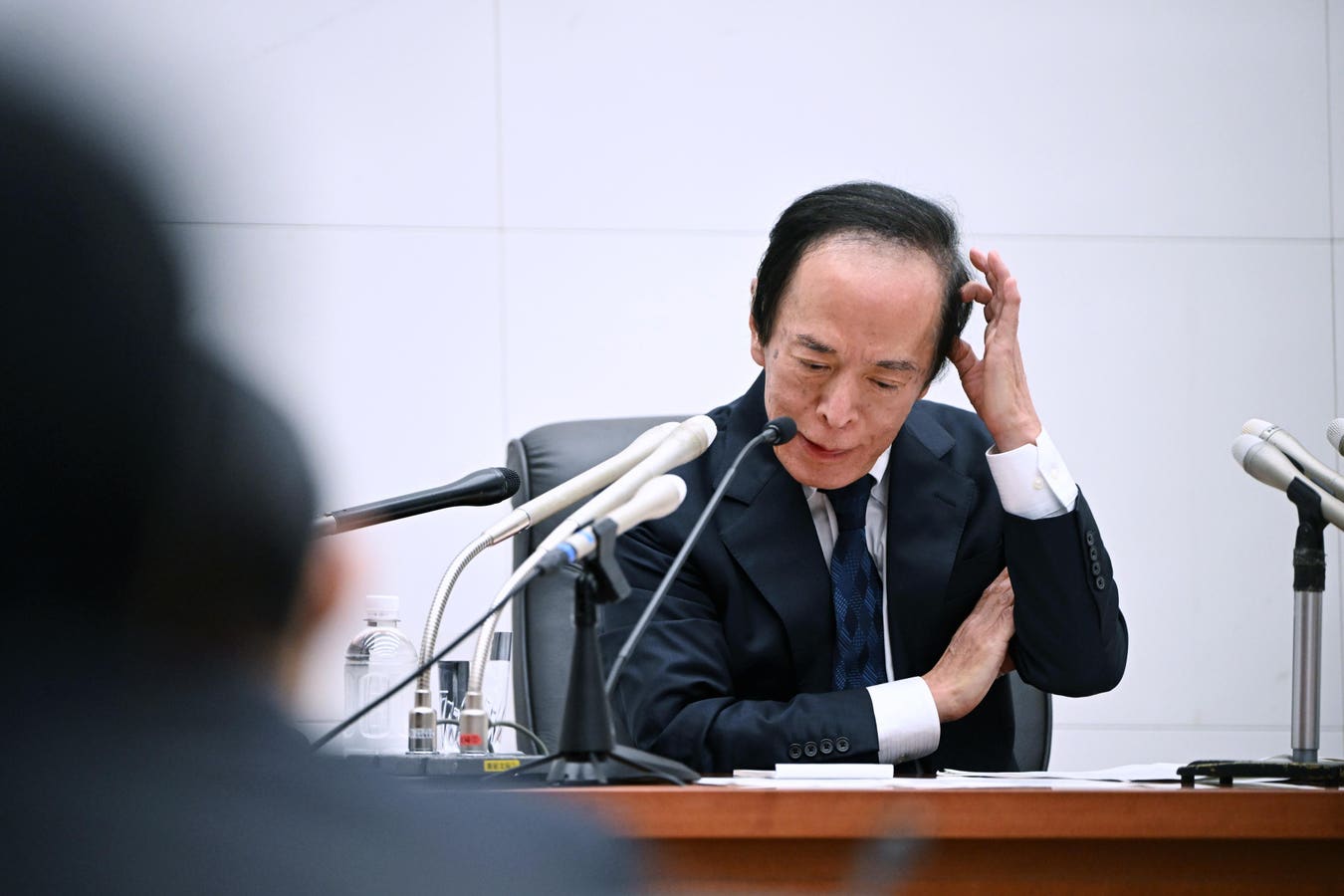
Bank of Japan (BOJ) Governor Kazuo Ueda
Akio Kon/Bloomberg
Few central bankers are more annoyed by the good news about inflation than Japan’s Kazuo Ueda.
As the Bank of Japan governor wraps up 2025, a big question facing Ueda’s board is how many rate hikes will occur in the coming year. Now, the bet is that Ueda might not tighten up at all.
There are three reasons for this shift. One of them was new Prime Minister Takaichi Sanae, who made it clear that the Bank of Japan would be “foolish” to continue normalizing interest rates. 2. The inflation rate fell below the 2% target to 1.8% in February. Third, there is complete uncertainty about how a Donald Trump White House might shake up Asian markets in the coming months.
True, there are rumors that the Bank of Japan is determined to raise interest rates again in the near term, perhaps in April. In December, the Bank of Ueda raised Japan’s benchmark interest rate to 0.75%, a 30-year high.
Of course, the concern is that Ueda’s board may suffer the same humiliation as the Bank of Japan in 2006-2008. At that time, the central bank ended its quantitative easing policy and raised interest rates to 0.5%. But after a mild recession and the Lehman shock, the Bank of Japan rushed back to zero interest rates and restarted quantitative easing.
The likelihood that Ueda would suffer a similar fate was disturbingly high. For one thing, real wages still lag inflation. In fact, real wages did not rise for a month last year, falling at an annual rate of 1.3%.
This creates a real dilemma for the Bank of Japan. If it raises interest rates to, say, 1%, it could be accused of disrupting the virtuous cycle of rising wages and higher domestic spending that the market hopes to spark this year.
Although the Bank of Japan is technically independent, it often lacks the autonomy enjoyed by the Federal Reserve or the European Central Bank. In fact, no other major central bank has kept interest rates at or near zero for 27 years. Or another that would buy up half the government bond market, become the largest holder of the nation’s stocks, and expand its balance sheet to a size larger than the entire economy.
Frankly, the Bank of Japan’s mistake was not normalizing interest rates sooner. From 2013 to 2023, Governor Haruhiko Kuroda passed the baton to Ueda; he could have put a rate hike on the scoreboard. Or at least let the quantitative tightening (QT) process continue.
After Ueda took office in April 2023, he waited more than a year before raising interest rates to 0.25%. In doing so, he squandered the ideal window to initiate QT and normalize interest rates. Just like Kuroda before him. Now, as Trump’s trade war devastates Asia, deflation intensifies in China and the number of geopolitical threats increases in real time, raising rates will be even harder for the Tokyo establishment.
The Gao city government is not only opposed to raising interest rates. Her Liberal Democratic Party plans to reopen the fiscal floodgates in a way that would scare bond markets. Earlier this year, Japan’s 10-year government bond yield rose to its highest level since 1999.
Japan already has the largest debt burden of any major economy by far – about 260% of gross domestic product. Japan has already paid record debt-servicing costs. Just as the market is talking about tax cuts, raising interest rates now from the Bank of Japan could exacerbate the problem.
It’s never a good thing to hear the bond market buzzing about a Japanese-style “Liz Truss moment.” But that’s where Ueda finds himself in early 2026. In 2022, then-UK Prime Minister Truss launched an unfunded tax cut plan that caused bond markets to collapse.
Will the freshman year of high school also tempt fate? Only time will tell, but it doesn’t help that senior high school predecessor Shigeru Ishiba said last May that Tokyo’s financial situation was “worse than Greece.” All of this complicates Ueda’s job in tantalizing ways in real time. As time goes on, things may only get more volatile.