The Tamesis
U.S. stocks and Asian markets rose on Wednesday, while oil prices tumbled after U.S. President Donald Trump said the war in the Middle East would be over within weeks.
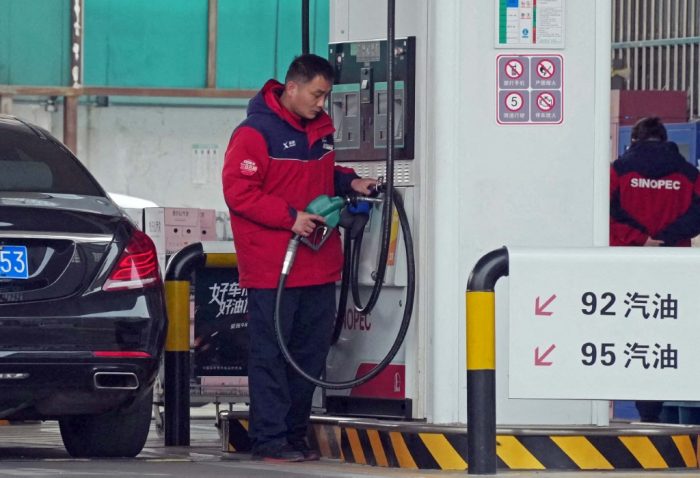
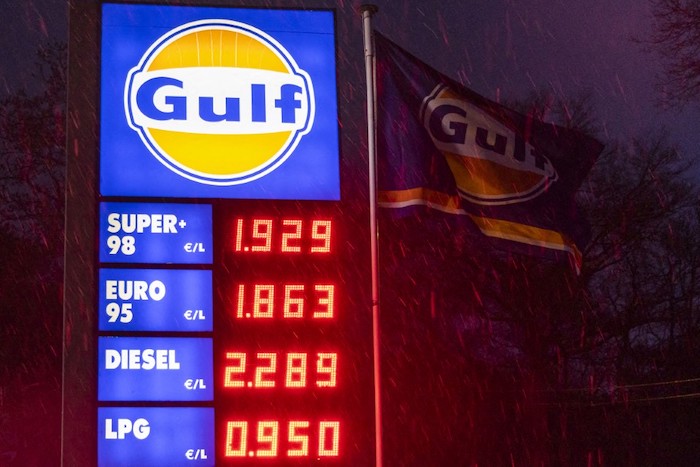
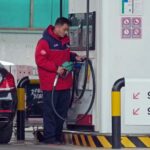
Iranian President Masoud Pezeshkian also said Tehran had the “necessary will” to end the conflict. Their comments come as the economic fallout from the war worsens, with fuel prices soaring around the world and governments struggling to curb inflation and other impacts.
Trump told reporters in the Oval Office that the United States would be leaving Iran “very soon,” maybe in “two weeks, maybe three weeks… but we’re getting the job done,” he insisted.
“We want to destroy everything they have,” Trump said, before adding, “It’s possible we can make a deal before then.”
See also: Asia ‘suffers worst energy crisis’ from war with Iran
The White House said Trump would address the nation at 0100 GMT on Thursday to “provide an important update on Iran”.
Earlier, Iranian leader Masoud Pezeshkian told the European Council president that his country “has the necessary will to end this conflict, provided that basic conditions are met, especially the guarantees needed to prevent a recurrence of aggression.”
Stocks surged on Wall Street, with the Nasdaq up 3.8% and the S&P 500 up nearly 3%.
Oil prices plummeted, with Brent crude falling more than 5%, falling below $100 for the first time since last week, and West Texas Intermediate crude falling more than 4%.
North Asian stocks rise
In Asia, Seoul – the strongest performer before the war but one of the hardest-hit cities since the war – surged more than 8%, while Tokyo rose more than 5% and Taipei more than 4%.
Most other Asian markets also saw healthy growth: Hong Kong (2%), Shanghai (1.5%), Sydney (2.3%), Singapore (1.85%), Mumbai (1.7%), Bangkok (1.6%), Manila (0.84%) and Jakarta (1.93%).
Markets in London, Paris and Frankfurt were also higher later in the day despite reports that Trump is considering withdrawing the United States from the NATO security alliance.
Traders also appeared to shrug off Prime Minister Benjamin Netanyahu’s remarks that Israel would continue its actions and that “we will continue to suppress terrorist regimes.”
However, Trump also said that the US military would not work to clear the Strait of Hormuz, through which one-fifth of the world’s oil and natural gas passes. He said it was up to other countries to do the same.
“We will have nothing to do with what happens in the Straits,” he said.
“Go buy your own oil.”
Earlier on Tuesday, Trump lashed out at NATO allies and other countries that refuse to help the United States secure shipping lanes in a post on The Truth Society.
“The United States will no longer help you, just as you no longer help us,” he wrote. “Iran is basically destroyed. The hard part is done. Go get your own oil!”
This comes after he said on Monday he was willing to end the war even if the strait remained closed.
Trump has wavered on whether Washington plans to escalate the conflict, possibly by deploying U.S. ground troops, or try to negotiate an end to it.
Nonetheless, Fiona Cincotta of City Index warned in a commentary: “Even if military tensions completely ease, the economic damage from higher oil prices may already be starting to be felt.
“Rising energy costs could tighten financial conditions, increase inflationary pressures and weigh on economic growth.”
She added that “diplomatic signals remain mixed and oil prices are likely to remain high as long as uncertainty persists and shipping disruptions persist.”
As U.S. troops continue to arrive in the region, traders remain wary, with the Wall Street Journal citing Arab officials as saying the United Arab Emirates is preparing to help Washington open the strait by force, which would make it the first Gulf state to join the fight.
The head of maritime analysis group Kpler told AFP Asia faces worst impacts from war.
“We believe that Asia will be the most affected region at the moment,” said President Jean Maynier.
Gold prices rose as falling oil prices raised hopes that soaring inflation could force central banks to raise interest rates.
In company news, Chinese artificial intelligence startup Zhipu, which went public in January with much fanfare, said its cloud business revenue nearly tripled last year, sending its shares soaring more than 32%.
Key figures around 0810 GMT
West Texas Intermediate crude oil: fell 4.7% to $96.63 a barrel.
North Sea Brent crude oil: fell 4.2% to $99.56 a barrel
TOKYO – Nikkei 225: up 5.2% to 53,739.68 (close).
Hong Kong’s Hang Seng Index: rose 2.0% to 25,294.03 (close).
Shanghai – Composite Index: up 1.5% to 3,948.55 (close).
LONDON – FTSE 100: up 1.8% to 10,359.34.
USD/JPY: fell from 158.77 yen to 158.59.
NEW YORK – Dow Jones: up 2.5% to 46,341.51 (close).
- AFP Additional input and editing by Jim Pollard
See also:
The Gulf War intensifies, large Chinese ships sail through the strait, and oil prices rise again
Two more LPG tankers transit Strait of Hormuz bound for India
India’s demand for wood, coal poor as gas prices soar due to Iran war
War with Iran could hit some of Asia’s biggest economies hard
India races to secure supplies as new attacks threaten ‘energy war’
Iran war sends gas prices soaring, Asia ramps up coal power generation
Iran war trumps sanctions, Indian refiners snap up Russian oil
Iran threatens to ‘destroy world economy’ as more ships attacked
Iran says three ships attacked, ready for $200 a barrel price