The Tamesis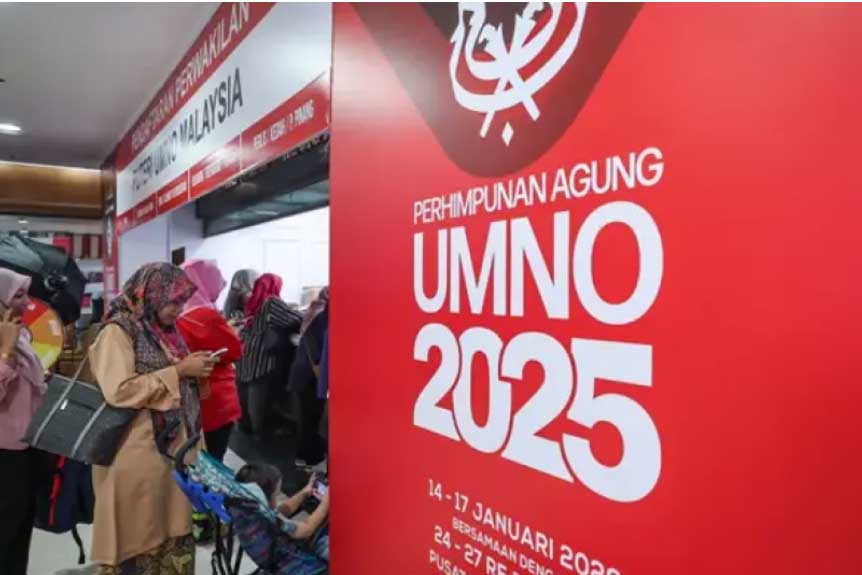
January 19, 2026
Kuala Lumpur – What does paku (nail) have to do with the political fortunes of Umno Youth chief Datuk Dr Muhammad Akmal Saleh?
Earlier this week, I had coffee with Hisomuddin Bakar, executive director of the Ilham Center, in Kuala Lumpur. We discuss the changing political landscape involving Dr Akmal, Khairy Jamaluddin (KJ) and former Deputy Prime Minister Tun Musa Hitam, as well as the Malaysian Anti-Corruption Commission’s investigation into the former minister and the 2025 Sabah elections.
“Akmal will not resign as Umno Youth president because the position is like a nail,” said a pollster at an independent research firm.
“A veteran Umno politician once told me that a party position is like a nail – it nails the politician into a position of power. No matter what the political situation is, politicians should grab that nail.”
Allow me to expand on this nail theory.
In high-stakes politics, power is often a fluid, ever-changing thing. The nail theory proposes a stricter reality: power is a structure, and specific positions within a party are the nails driven into that structure. This is the nail that anchors politicians and keeps them relevant. Without a nail, politicians are just a voice in the wilderness; with it, they become institutional fixtures that cannot be easily replaced.
Dr. Akmal is a perfect example.
In a stirring keynote speech at the Umno Youth Conference on Saturday, he announced his resignation as Malacca executive councilor in order to “fight the DAP to the bitter end”.
While the Panchayat post is a prestigious title, it has become a “soft nail” for Dr Akmal. It provides visibility but also carries a heavy burden of collective responsibility. As an executive member of the Umno-led coalition government in Malacca, he was posted to governments that included his main political target, the Democratic Action Party. The nail is actually a shackle, which prevents him from attacking federal policy or the DAP without violating executive protocol.
By pulling out the chief executive’s nails, Dr. Akmal freed himself. He realized that his real “nail to power” was the position of Umno Youth Leader – a structural anchor that gave him the power to speak out.
This strategy echoes Musa’s legendary strategy. In 1986, when he broke with then-prime minister Tun Dr Mahathir Mohamad, he resigned as deputy prime minister but crucially remained as deputy president of UMNO.
Moussa understood then what Dr. Akmal understands now: Government jobs are just a building cladding — decorative and easily peeled off. But the party’s position is omnipotent.
Dr Akmal sacrificed a state-level government seat to ensure that his party’s nails were driven deeper into the hearts of the grassroots across the country.
He used his role as a youth leader to dominate the headlines, making himself too controversial to ignore and too widely supported to be fired. As long as he seizes this nail, the party leadership cannot easily silence him because he represents an entire faction of the party.
The importance of this anchor becomes even more apparent when we look at KJ. KJ has had the same nails that Akmal now wears for over a decade. As Umno Youth chief from 2009 to 2018, he was the “high nail” – visible, structurally important and a bridge to the younger generation. (For some women, and even some men, “high nails” then meant “tall, dark, and handsome.”)
However, in January 2023, the UMNO leadership used a crowbar to remove him and expel him from the party. For three years, KJ has been surviving in the political wilderness, popular on podcasts like Keluar Sekejap but legally and institutionally impotent as he lacks structural nails in any political party.
The power of the nail theory was on full display at this month’s Umno Youth Conference. After years of living in the wilderness, KJ reappears at the rally at the invitation of Dr. Akmal.
Dressed in white Malay attire, he was greeted with drumming and Malay performances usually reserved for those in power. This contrast illustrates the core truth of the theory: Despite KJ’s immense popularity and intellectual brand, he proves that without making it at the party, you’re just a spectator. His appearance in parliament in 2026 suggests he recognizes that to effect change he needs to reintegrate into the party structure.
The nail theory reminds us that in politics, popularity is just a cloud, but party positions are a solid anchor. Dr Akmal resigned from the state government because he knew that being a small peg in the executive council was worthless compared to being the main peg in the youth wing of the party.
KJ’s long road back to the Umno general assembly shows that even the most talented politician can eventually become irrelevant if he cannot find a place to drive a nail in the halls of power. Ultimately, what matters is not how many people like you, but how many people like you. It’s about what part of the electrical structure you’re anchored to.
The current political fortunes of Dr Akmal and Khairy are a tale of two Pakus.