The Tamesis
Editor’s note: This article was written in partnership with CIFRA.
As the art world continues to grapple with how best to display, preserve and monetize digital works, a new streaming platform aims to do more than simply replicate the white cube online. CIFRA positions itself as a platform for artists working in video, sound and other time-based media. For years, digital artists have been constrained by social media platforms that prioritize speed, virality, and short presentations over context and craftsmanship. CIFRA attempts to solve this problem by allowing artists to upload complex works, list provenance, build portfolios, and connect with curators and collectors in a purpose-built environment.
Audience engagement and artist discovery at CIFRA extend beyond the scope of our increasingly algorithmic internet landscape. Public playlists allow the public to act as curators, while navigation tools and curator spotlights help artists and audiences gain insights into genres, artists, and history, putting the power back into the hands of users. Headquartered in Dubai and developed in collaboration with researchers and art experts around the world, CIFRA believes that digital art requires more than just exposure, but also infrastructure.
While media theorists parse the teetering philosophical differences between the online world and the physical world, digitally native artists engage with the realities of life in both worlds. Many of the 1,500 artworks currently on display at CIFRA deal with the nature of stand-ins, verification systems that try to separate humans from robots, and avatars who are both themselves and not themselves. Other works have set their sights on gamification. Before the Internet, gaming meant suspending social rules and applying new rules in a controlled environment, allowing people to role-play and enter into immersive world-building mediated by imagination. But now, the boundaries of gaming have seeped into everyday life. Dating, finances, security, and even memory are all affected by gamification.
The six artists in this playlist gesture to the blurred boundaries of our virtual worlds, showing how once-hermetic fantasies increasingly dominate real life.
fugitive2010-2011, Kara Ganis.

Image source: Screenshot/CIFRA
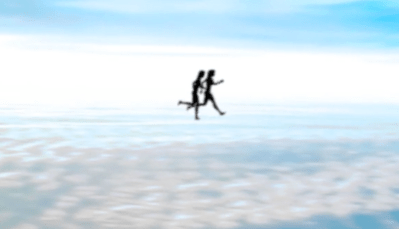
Two figures run above clouds in this short performance piece by pioneering new media artist Carla Gannis. One is Gannis; the other is a virtual avatar rendered in the clunky graphics of a long-running life simulation video game The Sims. They circle the sky, overtaking each other, and then the scene cuts to split screen: the avatar walks along the yellow line of an empty cityscape, while Gannis crosses the centerline of a country road. The impact was immediate. A world that seems immortal – the rules of the road are suspended and a run over simply means another chance at rebirth.
Skin.II, 2025, Li Clementina

Image source: Screenshot/CIFRA
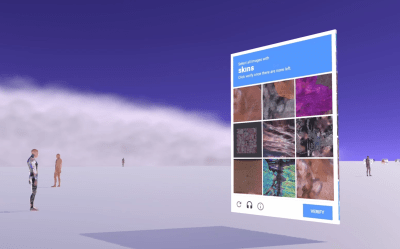
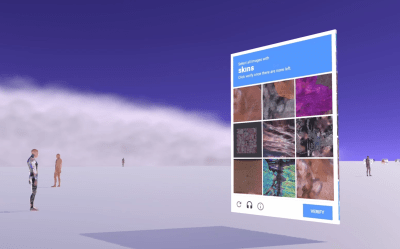
As digital technology advances, avatars are no longer just puppets in games. Bots and AI agents now penetrate the workforce and generate spam. Skin.II questions this new frontier and issues of virtual representation and even discrimination through what Lee describes as an “interactive visual novel” made up of humanoid and robotic characters. The CAPTCHA test asked passers-by to identify “skins” – both human flesh and in-game digital avatar clothing and accessories. In the process, Lee questions the very basis of virtual identity. “Their digital identities are constantly interchangeable and ever-changing, and their stories lead us,” Lee wrote in an Instagram post introducing the work.
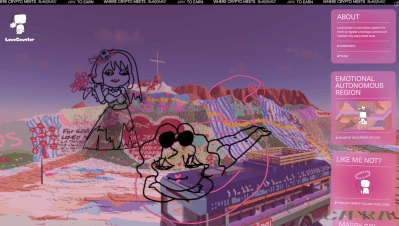
love counter, 2025, Shrini

Image source: Screenshot/CIFRA
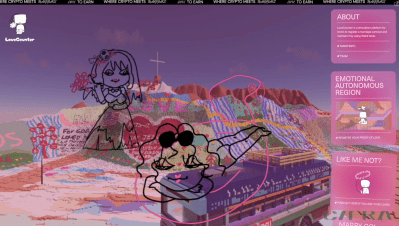
Over the past decade, we have increasingly entrusted our private lives to online games, apps, and digital services. love counter A satire on the gamification of dating and the financialization of the most intimate aspects of social life. The project offers a fictional platform where users can deploy blockchain technology to create NFT-like “proof of love” stamps for their crypto wallets, or earn karma points by investing in marriage smart contracts. Even the most intangible parts of our personal lives can now be quantified, Shi said.
roaming simulator, 2020, Cao Shu

Image source: Screenshot/CIFRA
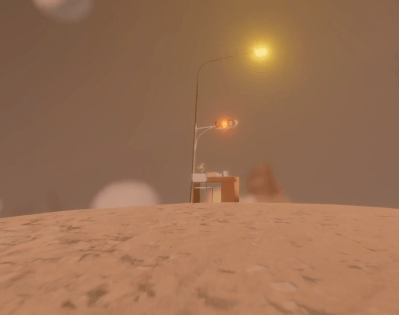
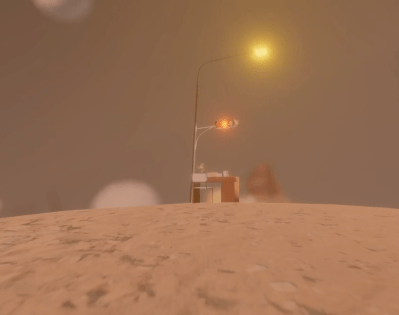
More melancholy reflections on the intersection of digital life and intimate life appear in Cao Shu’s work. Roaming Simulator (2020). In this interactive game and video installation, viewers travel through a desert landscape designed by Shu, punctuated by buildings, rocks, and street signs. Users can “take photos” to display family photos that Shu uses as reference for rendering environments. The result is a poetic attempt to construct a landscape constructed of memory in a virtual space.
slap2021, Ismail Joffroy Chandutis

Image source: Screenshot/CIFRA
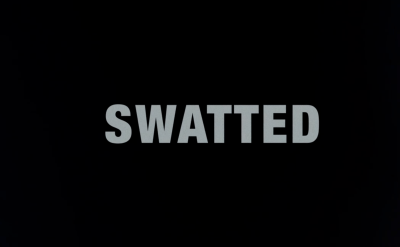
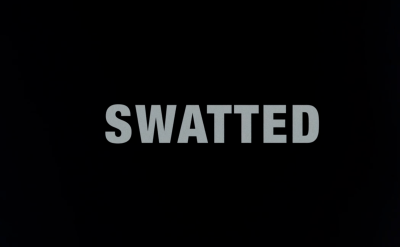
If Shu’s work draws on real-life experiences to construct a virtual space, Ismaël Joffroy Chandoutis’s short film slap Demonstrating the explosive power of the Internet to disrupt the realities of life. In the film, the anchor recounts being “beaten” by a malicious online actor who obtained their address and convinced police to send a SWAT team to their home. With many anchors broadcasting live, these attacks are often recorded and broadcast in real time, enhancing the spectacle. Chandoutis cross-cuts animations, gameplay and YouTube videos to depict how trolls exploit the internet infrastructure to wreak havoc offline.
meet me in the spread2024, Shao Lihao

Image source: Screenshot/CIFRA
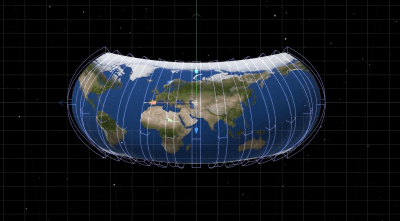
Chandutis examines interpersonal chaos, while Shao Lihao takes a more global perspective. exist meet me in the spread (2024), Shao employed an artificial intelligence image generation model trained on diffusion techniques to create disturbing video works. The piece begins with a spinning Earth floating in space. The Earth gradually breaks apart, its surface transformed into a series of anime characters. The interplay between the world map and the avatar intensifies, culminating in a shot of wrestler Conor McGregor facing an ever-changing anime entity that eventually consumes his image just as it has consumed the Earth. If Ganis once ran across the sky with her avatar, Shao imagines the AI avatar as a devouring system—a system that threatens to overtake the world itself.