The Tamesis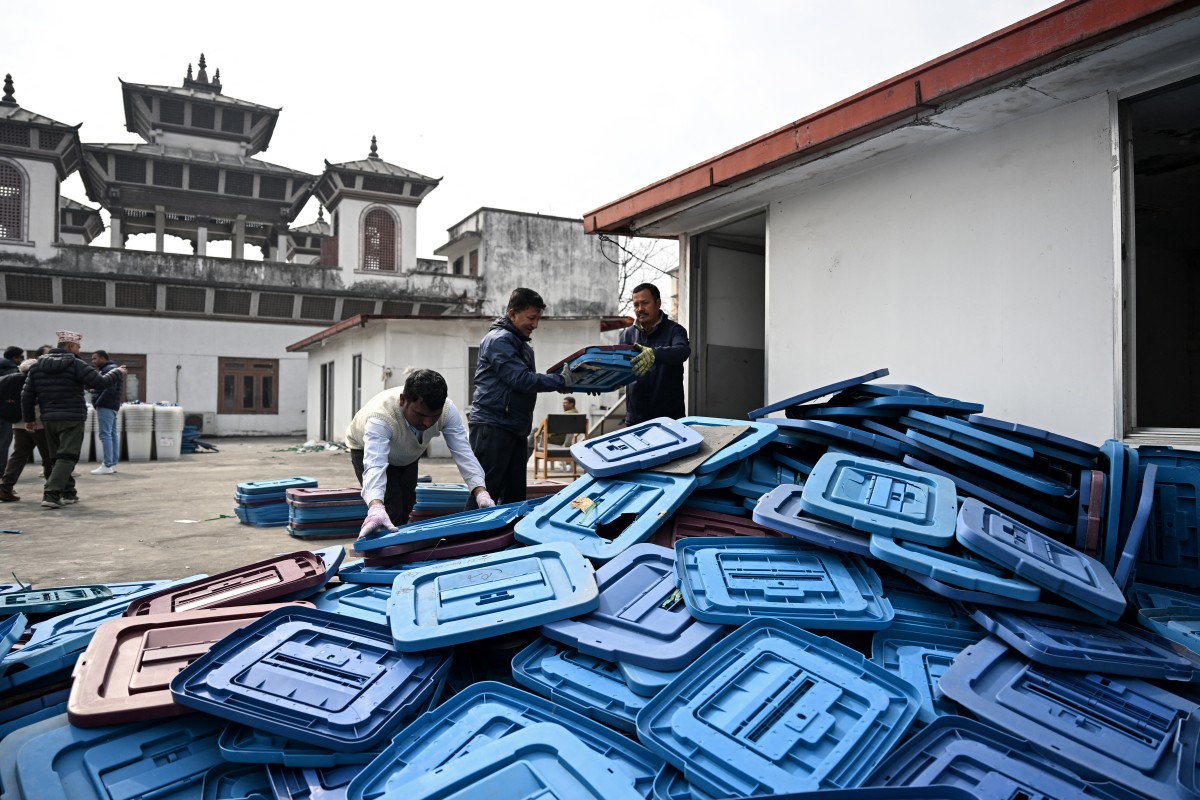
kathmandu – A meeting of CPN-UML affiliated organizations was held on December 9 at the party’s central office in Chasar, just ahead of its 11th National Congress. The meeting, chaired by Secretary General Shankar Pokhrel, considered a range of organizational and political issues and adopted a number of key decisions.
One of the clear instructions was to mobilize party organizations in preparation for the March 5 elections. The leadership places special emphasis on the effective use of social media to shape public opinion in the party’s favor. Participants are urged to actively participate online and ensure that the party’s message reaches voters through digital platforms.
This focus on digital promotion is not entirely new. In internal meetings of the UML, the party has consistently encouraged its cadres to be more active and coordinated on social media, reflecting the growing influence of online platforms in Nepal’s political landscape.
One of the reasons the UML urged its active cadre to be active online was the party’s president, KP Sharma Oli, who clashed with the then mayor of Kathmandu, Balendra (Balen) Shah, who was elected as an independent largely on the back of enviable social media support.
While Shah has been dissing Oli on social media from time to time on various issues and has received support from thousands of users, UML has been quiet on social media. This happened despite the party’s strong organizational network.
Furthermore, the new entrant in the 2022 elections, the RSP (RSP), has become the fourth largest political force in the country even though its organization has not yet been formed.
The RSP, which is still building its organization, is expected to do well in the March 5 elections. Even without a strong organizational base, the RSP enjoys widespread support on social media and hopes to convert this into votes.
Analysts say the growing influence of social media on voter decision-making is a global phenomenon and Nepal is no exception.
For decades, Nepal’s major political parties, including the United Marxist-Leninist Party, the Nepali Congress and the Communist Party of Nepal (a merger of several left-wing parties), have relied heavily on structured grassroots networks.
Multiple party structures from the center to the constituencies, sister organisations, youth and student groups and door-to-door mobilization formed the backbone of their electoral success. So far, electoral victories have been won not just through slogans but through rigorous physical presence – village rallies, home visits and long-established community ties.
However, the political landscape has changed dramatically in recent years. Social media platforms now play a decisive role in shaping narratives, influencing undecided voters and amplifying campaign messages at an unprecedented rate. Political messages that once took weeks to spread through party structures can now spread across the country in hours.
Analysts warn that while social media offers speed and influence, it also brings risks. Unlike party organizations, which operate through clear hierarchies and accountability mechanisms, digital campaigns are often decentralized and emotionally driven. This can lead to the rapid spread of misinformation, polarizing rhetoric and person-centered politics.
“Traditional party structures are based on long-term engagement and ideological training,” said political science professor Krishna Kanal. “In contrast, social media rewards immediacy and emotion. This can distort policy debates and prioritize viral content over substantive discussion.
“There are also concerns about the erosion of intra-party democracy. When online popularity starts to matter more than organizational loyalty or grassroots credibility, candidates may prioritize digital visibility over ongoing community work,” Kanal added.
“This risks marginalizing experienced local leaders who lack a strong online presence but command trust on the ground.”
At the same time, social media has democratized political participation. Young voters, urban professionals and immigrant communities, groups that have historically been less connected to party structures, now have direct access to political discourse. Campaigns can reach first-time voters without the need for cumbersome rallies and constituency-level mobilization mechanisms.
Social media has simplified the work of party organizations. UML deputy general secretary Yogesh Bhattarai said mobilization through social media can serve the purpose of long-term rallies, distribution of pamphlets or any other form of party mobilization to convey a message to the grassroots.
However, Bhattarai said it would be a mistake to replace political party organizations with social media. “Even in today’s digitally intensive era, party organization has its own importance.”
The political parties themselves appear to be aware of this shift. At several party meetings, especially traditional ones, leaders stressed the need for cadres to be more active online, reflecting the recognition that digital narratives can enhance electoral momentum.
This was reflected in the March 5 election campaign, where political parties, despite their strong organizational structures, actively promoted their candidates through social media.
Yet experts warn against viewing social media as a replacement for organizations. Elections in Nepal, especially in rural constituencies, still depend heavily on face-to-face participation, local networks and credibility built through years of presence. Digital influence may influence perceptions, but votes are often secured through personal trust.
The RSP is said to be a party built through social media rather than organization, and its joint general secretary Bipin Acharya also believes organization is the cornerstone of any political party. But he said social media has simplified the management process of party organizations.
“The party organization has been a means of political communication with the grassroots since its inception. The advent of social media has made this task easy,” Acharya said. “But the value of an organization to a party cannot be compensated by social media.”