The Tamesis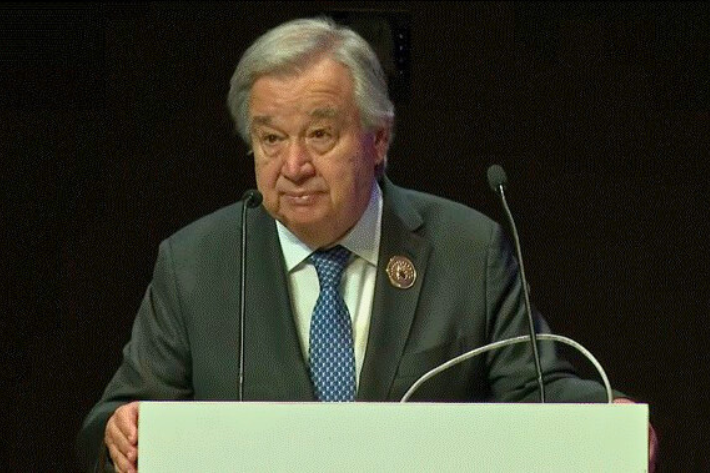
U.N. Secretary-General Antonio Guterres attended an artificial intelligence summit in New Delhi this week to push for the creation of a U.N. panel on artificial intelligence to try to curb the dangerous effects of this divisive new technology.
“We are entering the unknown,” he told the summit, warning that the gold rush around artificial intelligence could lead to job disruptions, deepfake videos, the proliferation of pornographic content, copyright abuses and potential horrors ranging from data center impacts to rogue military uses.
“The message is simple: less hype, less fear. More facts and evidence,” Guterres said, hoping to “make human control a technological reality.”
See also: Indonesia signs $33 billion trade deal with Washington
He said the United Nations General Assembly has confirmed 40 members of a new group called the International Independent Scientific Group on Artificial Intelligence.
The advisory body was established in August with the aim of becoming the artificial intelligence equivalent of the United Nations Intergovernmental Panel on Climate Change (IPCC) to global warming.
Guterres said that “science-led governance will not hinder progress” but can make technological development “safer, fairer and more widely shared.”
“When we understand what a system can and cannot do, we can move from crude measures to smarter, risk-based guardrails.”
US ‘completely rejects’ idea of global regulators
But perhaps unsurprisingly, the Trump administration has had little time to do so. In fact, it overturns that idea.
White House technology adviser Michael Kratsios said on Friday that the United States “totally” rejects global governance of artificial intelligence.
“We completely reject global governance of AI. We believe that if the adoption of AI is hampered by bureaucracy and centralized control, it will not lead to a brighter future,” he said.
Krasios, the head of the U.S. delegation to the AI summit, apparently opposed the idea of a leaders’ statement expected to announce a common position on how to deal with the technology. The announcement will be made on Saturday.
Dozens of world leaders and ministers are expected to conclude the five-day summit by sharing their views on the risks and opportunities posed by artificial intelligence. It’s hard to say whether it will have much support, but strong opposition from the United States certainly won’t help.
The Swiss president said on Thursday that this is the fourth annual global conference focused on artificial intelligence policy, with the next meeting to be held in Geneva in the first half of 2027.
The Delhi meeting is the first artificial intelligence summit for developing countries, and India uses the opportunity to promote its ambitions to catch up with the United States and China.
India Expected investment exceeds US$200 billion Both Indian and U.S. tech giants this week unveiled new deals and infrastructure projects for the next two years. It was a win for Delhi.
‘Safeguards needed’
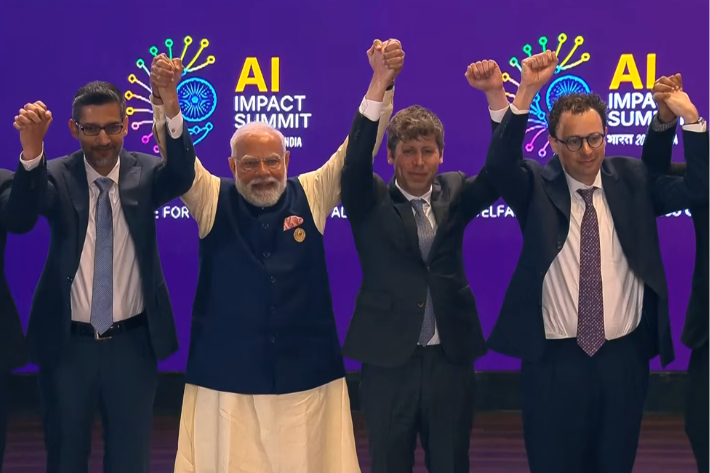
Sam Altman of OpenAILeaders of the company behind ChatGPT have called for oversight in the past but said last year that taking an overly restrictive approach could hinder U.S. progress in the AI race.
“The concentration of this technology in one company or one country could lead to destruction,” he said Thursday, one of several top tech CEOs taking office.
“That’s not to say we don’t need any regulation or safeguards. Clearly, we desperately need any regulation or safeguards, just as we do with other powerful technologies.”
But the broad focus of the New Delhi summit, and vague commitments made at previous summits in France, South Korea and the United Kingdom, may make concrete commitments unlikely.
Even so, “governance of powerful technologies often starts with a common language: which risks matter and which thresholds are unacceptable,” said Niki Iliadis, director of global AI governance at Future Society.
“AI companies do have influence, but they don’t have sovereignty,” she told AFP.
Tens of thousands of people from the AI industry attended discussions at the Delhi summit, which covered major topics from child protection to the need for more equal access to AI tools around the world.
“We are entering an era where humans and intelligent systems co-create, co-work and co-evolve,” Indian Prime Minister Narendra Modi said on Thursday.
“We must be determined to use artificial intelligence for the global common good.”
U.S. Under Secretary of State for Economic Affairs Jacob Helberg said at the summit that India has also officially joined the U.S.-led “Pax Silica” initiative to “build a supply chain that cannot be kidnapped” to ensure the supply of artificial intelligence.
“Alpha males in an AI world keep women out”
Another concern emerged Friday.
Artificial intelligence can change the world, but a lack of women in the booming industry will undermine the promise of inclusive technology, top computer scientist Wendy Hall told AFP on Friday.
Hall, a professor at the University of Southampton in the UK known for her groundbreaking research on networked systems, said the gender imbalance has long been significant.
“All the CEOs are men,” said the 73-year-old, who described the situation at a major artificial intelligence summit in New Delhi this week as “extremely bad.”
“It’s completely male-dominated and they just don’t realize that means 50 per cent of the population isn’t actually participating in the conversation.”
Gender bias “permeates everything because they don’t take it into account when they make the product,” Hall said.
- Jim Pollard, AFP.
NOTE: The top image of this report was resized and reattached on February 20, 2026.
See also:
Altman admits ‘urgent’ need for AI regulation at India summit
China and U.S. opt out of global commitment to military use of artificial intelligence
4,000 CEOs say AI has no impact: Study spurs massive sell-off
India’s tougher rules on social media AI spark censorship concerns
Tech leaders fly to India for AI summit amid concerns
Amid Hollywood outrage over AI video models, ByteDance vows to make changes
Nvidia delays sales of artificial intelligence chips to China again due to security review
Amazon, Microsoft will invest more than $50 billion in artificial intelligence in India
The idea of artificial intelligence superintelligence is a ‘fantasy’ – US researchers