The Tamesis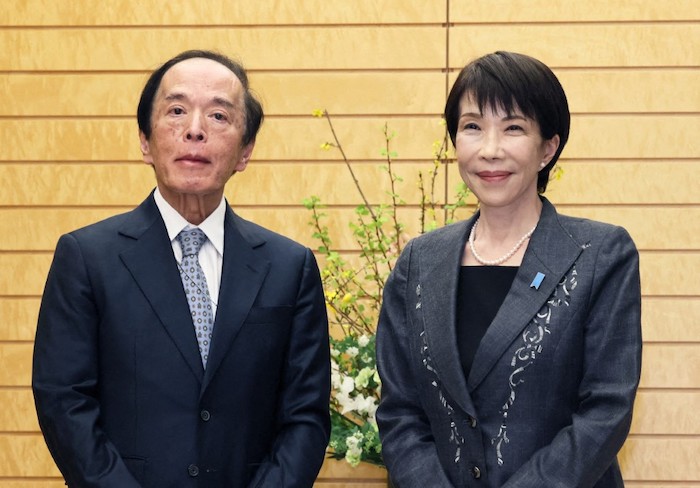
Japanese Prime Minister Sanae Takaichi is preparing to boost investment through public spending to revive the country’s meager economic growth.
Official data on Monday showed the country’s economy grew less than market expectations, adding to pressure to stimulate economic activity after a landslide victory in recent elections.
Gross domestic product (GDP) in the world’s fourth-largest economy grew by just 0.1% in the fourth quarter, below market forecasts of 0.4% growth.
Also read: India’s new 3-hour content removal requirement ‘impossible’: Experts
The increase followed a contraction of 0.7% in the previous quarter (revised downward from negative 0.6%).
The economic expansion was driven by growth in private consumption and investment in private homes and businesses, according to the Cabinet Office.
Data from the Japanese Cabinet Office shows that Japan’s economy will grow by 1.1% in 2025 after contracting by 0.2% in 2024.
On an annualized basis, GDP grew 0.2% in the three months to December, significantly below economists’ median forecast of 1.6% growth.
Takaichi became Japan’s first female prime minister in October, and early elections were held on February 8. In this vote, her Liberal Democratic Party (LDP) won a historic victory two-thirds majority in the House of Commons.
Meeting with the Governor of the Bank of Japan
On Monday, she held her first meeting since the election with Bank of Japan Governor Kazuo Ueda, likely to discuss the central bank’s plans to raise interest rates.
There is speculation that the central bank could raise interest rates as early as March or April as the cost of living rises due to a weak yen.
Ueda later said he and the prime minister “exchanged views on economic and financial development.” The Prime Minister did not make any specific monetary policy demands.
Asked whether he would be able to get the prime minister’s agreement on the Bank of Japan’s stance on raising interest rates, Ueda said: “I have nothing special to disclose about the details of what was discussed.”
In November, the Taka city government launched a 21.3 trillion yen ($139 billion) stimulus package aimed at boosting economic growth. It involves energy subsidies, cash subsidies and investment incentives in key areas such as semiconductors and artificial intelligence.
It also includes funds to expand defense spending as China ramps up military activity in the wider region.
Takako’s big election victory fueled speculation that the prime minister may again call on the Bank of Japan to keep interest rates low.
Japanese yen rebounds
Some analysts said the yen’s recent rebound could change the government’s view on the pace of future interest rate hikes. After slipping towards the key 160 mark in January, the yen gained nearly 3% last week, its biggest gain since late 2024. On Monday, USD/JPY was trading at 152.66.
At the same time, investors have been concerned about Gao’s spending plans. That’s because Japan’s debt is more than twice the size of its economy, the highest ratio among advanced economies.
Last month, long-term Japanese bond yields hit a record high after the market pledged to temporarily waive consumption taxes on food to ease the pain of inflation on households.
“The small rebound in economic activity last quarter may encourage the Prime Minister to implement further fiscal easing,” Capital Economics’ Marcel Thieliant said on Monday.
Weak growth “means that the large supplementary budget passed at the end of November has yet to provide a boost to public spending in the last quarter,” Tilliente said in a note.
He added: “Indeed, sluggish economic activity increases the likelihood that the city will not only move forward with suspending the food sales tax but also prepare a supplementary budget in the first half of the fiscal year starting in April, rather than waiting until the end of the year.”
But economists say weak growth in Japan is not expected to prevent the Bank of Japan from raising interest rates later this year.
- AFP Additional input and editing by Jim Pollard
See also:
Japanese stocks soar after Takahiro scores landslide victory in opinion polls
TSMC says its second US$17 billion factory in Japan will produce 3nm chips
Japan claims it’s ‘world’s first’ to recover rare earths in deep-sea drilling
Japan bond market hammered by high spending vows
Japanese Prime Minister Takaichi will hold polls on spending and defense issues on February 8
Japan calls China’s dual-use export ban ‘unacceptable’
China ramps up trade pressure on Japan over Taiwan comments
Japan signs rare earth and nuclear power deals with Trump