The Tamesis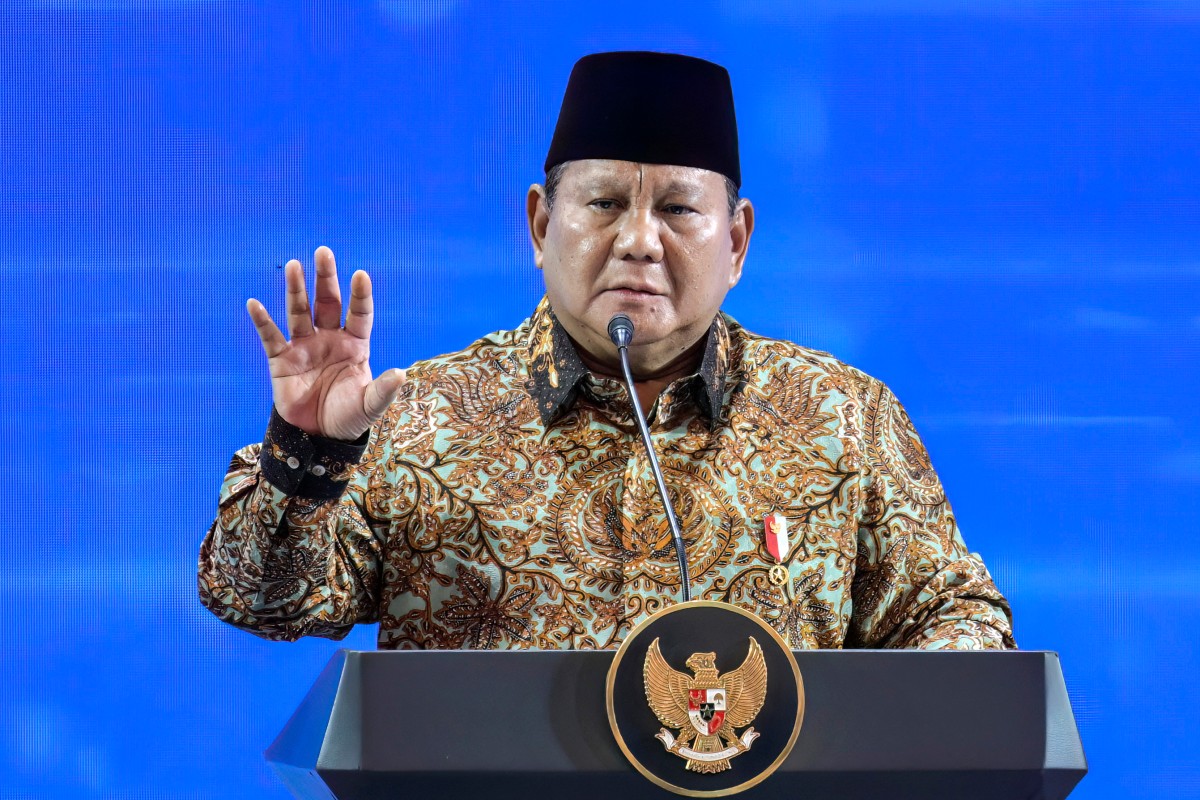
February 16, 2026
jakarta – President Prabowo Subianto said the country may need to adopt some authoritarian measures to effectively fight corruption, while reiterating his government’s commitment to a tougher anti-corruption campaign in all areas of government.
Prabowo made the remarks at an Indonesia Economic Outlook 2026 event on Friday, attended by government officials, businessmen and foreign ambassadors.
In a lighter tone, apparently responding to accusations that he leads in an authoritarian manner, he suggested tougher measures may be needed against those who steal from the country, including business people who circumvent the law and bureaucrats who abuse their power for personal gain.
“Some groups keep complaining, saying ‘This is how Indonesia is now’, ‘Prabowo is a dictatorship’. But if you ask the people, maybe a little bit of authoritarianism, just a little bit, is needed to fight those corrupt elements.” [individuals],” Prabowo said.
Still, Prabowo, a former army general, reiterated his commitment to democracy, noting that Indonesia remains a moderately democratic country, a system that made his presidency possible.
“I’m totally democratic, totally,” he told a laughing audience after noticing reporters and Western ambassadors in the room. “I wouldn’t be president without democracy.”
Prabowo then vowed to have zero tolerance for corruption, abuse of power or manipulation at all levels of government, saying the country must become a “new Indonesia” with a clean and accountable bureaucracy.
“We don’t need to be ashamed because we have many shortcomings. Corruption is still widespread. We must eradicate corruption from Indonesian soil,” Prabowo said.
He also reiterated his commitment to ensuring legal certainty and called for strict observance of the rule of law, noting that judicial decisions must be fair and not used “as a tool against political opponents.”
Since taking office more than a year ago, the president has repeatedly reiterated his commitment to fighting corruption and threatened to take unpopular measures to protect the country’s resources.
The latest survey by Indikator Politik Indonesia found that the anti-corruption movement has become the main factor behind Prabowo’s 79.9% approval rating, with strong anti-corruption measures topping the list at 17.5%.
The survey, which surveyed 1,220 respondents from January 15 to 21, also found that 48.8% rated the government’s anti-corruption performance as “good” or “very good”, 15.7% rated it as “average” and 21.2% rated it as “bad” or “very bad”.
This is an increase from a survey in October 2025, which found that 44.7% of respondents rated the government’s anti-corruption campaign as “good” or “very good”, up from 31.7% in October 2024, when Prabowo took office.
But Yassar Aulia, an activist with Indonesia Corruption Watch (ICW), criticized Prabowo’s suggestion of “petty authoritarianism”, saying it “simply confirms many analyzes that suggest he is inclined to push Indonesia’s governance into an authoritarian mode”.
“Successful anti-corruption action does not require rhetoric from the pulpit or authoritarian leadership. Instead, a corruption-free environment can be better ensured through two core elements of democracy – public participation and transparency,” Yassar said.
“The state’s commitment to anti-corruption can only be truly visible if society is actively involved and executive power is decentralized through checks and balances,” Yasar said, adding that Prabowo’s first year in office largely violated these principles.
He added that Prabowo’s authoritarian rhetoric suggested the president may not have adequately taken into account the findings of Berlin-based Transparency International’s 2025 Corruption Perception Index (CPI), which found that “setbacks in the anti-corruption agenda are closely related to declines in the quality of democracy.”
Indonesia dropped 10 spots in the annual global corruption rankings to 109th out of 182 countries surveyed, with its score slipping from 37 in 2024 to 34 in Prabowo’s first year in power.
This puts Indonesia below the global average score of 42 points and on par with countries such as Nepal. Nepal experienced political instability in September 2025 when youth-led protests led to the ouster of its prime minister.
Transparency International Indonesia (TII) cited declining quality of democratic leadership, weakening oversight institutions, declining judicial independence and shrinking civil liberties as among the reasons for Indonesia’s regression.
“Growing corruption in Indonesia is linked to the shrinking public space for the media and citizens to freely express their opinions, as well as the erosion of judicial independence. The courts are increasingly under the influence of the executive,” TII Secretary-General Danang Widoyoko said.
“Fighting corruption requires restoring democracy, expanding civic space and ensuring the independence of the judiciary,” he noted.