The Tamesis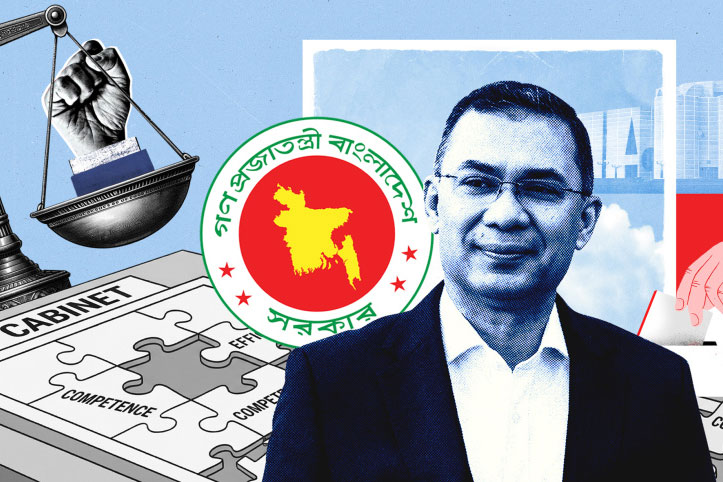
February 16, 2026
Dhaka – Hearty congratulations to the BNP and its leader Tariq Rahman for their brilliant victory. This is not just an electoral victory for one party. This was a takeover of political power at a critical moment in Bangladesh’s history. We have had successes but also experienced significant failures, the most damaging of which undermined institutions and did not allow them to operate independently and professionally. Sadly, this has become part of our political culture.
The ruling parties in the past always tried to control various departments of the government, not for the country, but for the party, and mainly for personal interests. As a result, they get richer and the common people get poorer, creating the most cruel and destructive wealth gap in Bangladesh today. Among other things, the politicization of the administration and budget processes is so entrenched that the prime minister-elect will find it difficult to challenge. In this effort, his own party may well be his biggest obstacle. Many leaders at all levels will plead and demand rewards, citing their loyalty to the party over the past 17-18 years despite suffering, ruined businesses and financial losses. While such an argument is both true and emotional, giving in to it would be the beginning of the corruption and poor governance that have plagued most of our past governments.
People won’t accept it, and neither will the independent media. The ruling party must also remember that the Opposition will be very powerful – with 77 members – and it will use (should and must) every parliamentary procedure to hold the government to account and expose even the slightest signs of corruption. Given what Tariq Rahman has said so far, he likely won’t allow it. But he will find resistance the most challenging. He must resist.
To win this fight, Tariq Rahman must choose the right cabinet. Of course, loyalty and service to the party are important factors, but they should not be the decisive factor. Instead, prioritize honesty, integrity, and efficiency. The new cabinet must be capable, modern, decisive and managerially minded; the last quality is one we always underestimate.
Tariq Rahman may have already made his cabinet choices. However, we recommend that he spend a little more time identifying his team. As soon as the process allows, he can immediately swear an oath to a small cabinet composed of the best and those he has decided on. As for the rest, he should take his time, which will provide our future prime minister with a valuable opportunity to fine-tune his final choice. This is crucial because the new government faces a daunting task. Bangladesh is at a critical stage of development. With institutions broken, high levels of corruption and widespread inefficiency, the incoming cabinet must play a more effective and insightful role than usual.
There is also fierce partisanship in the bureaucracy, various administrative departments, law enforcement agencies, etc. This phenomenon has been around for a long time and is almost impossible to eliminate quickly. But Tariq Rahman’s government may have an advantage. His public declaration of “I have a plan” when introducing the BNP manifesto leads us to believe that the new BNP government will be made up of “doers, not talkers”. The people he works closely with are people he knows; they have been tested by him and are people he trusts. That’s great. But he must remember that no matter how well he knows them, they must be capable enough to carry out the plans they help him formulate. In Bangladesh, “planning” and “implementation” belong to two different worlds. It is very important to remember this, otherwise the risk of failure increases exponentially.
In my opinion, the fundamental reason for the abject failure of the interim government in terms of good governance was the poor choice of cabinet by Professor Yunus (except perhaps for a few). He made two mistakes: first, he picked the wrong team, and second, he didn’t reshuffle the team. In fact, he never held them accountable for their performance. Why he allowed them to drag his reputation to the ground, only he knows. However, he will be remembered across the country for his contribution to a great election.
Maybe it’s a little early, but the incoming prime minister must remember that reshuffling the cabinet is not a sign of weakness or an admission of error. To ensure better performance, the prime minister must always be open to changing cabinet members. On the other hand, the prospect of a reshuffle keeps ministers on their toes and ensures better and honest performance.
Of the three factors that determine cabinet selection—loyalty, honesty and efficiency—only the first has played a role in the past.
After the loyalty factor comes honesty. The fight against corruption must start at the top and we hope this can be ensured. Next is the issue of ministers’ integrity. At this point, the new government will be closely monitored, and a slight deviation can cause serious harm to the government. However, the strongest message from the Prime Minister-designate should be that there should be zero tolerance for corruption and that when it occurs, the harshest penalties should be meted out. Singapore’s former leader Lee Kuan Yew should be a role model, not in terms of civil liberties, but in terms of honest and effective governance.
The third is the issue of capability. Ministers in modern government need to be more knowledgeable, effective and decisive than ever before. Political acumen is necessary, but in today’s world it is not enough. He or she must be open to different perspectives and ideas that conflict with practice and be humble enough to admit mistakes and quickly correct course. A minister needs to be like a corporate CEO with a party manifesto as his or her “mission and vision”. The modern minister needs to be proficient in management, which in today’s world is a science, and an evolving one at that. The Singaporean government under Lee Kuan Yew is once again a model worth emulating, with its globally recognized success largely due to competent management. This is where we fail most of the time because we don’t pay enough attention.
Some senior leaders of the BNP must be rewarded for their lifelong contributions to the party, especially during the repressive rule of Sheikh Hasina. But luckily for Tariq Rahman, there are only a handful of them. Therefore, when there are a large number of ministers, party leaders can appoint young, loyal, energetic, capable, academically qualified, and modern-minded people as ministers. The danger here is that many such young and qualified individuals may not be connected to the people and are not familiar with the realities of Bangladesh. We have seen in the past that scholars who returned from abroad to serve the country showed an arrogant attitude of “knowing everything”, which led to their inability to appreciate local scholars and experts. As a result, this creates a damaging rift that prevents much-needed collaboration between global and local scholars, both of whom need to learn from each other.
As Tariq Rahman declares, “I have a plan,” we assume that he also knows exactly how to implement it and with whom. This is where we want to sound the alarm. When he makes plans, he is the thinker. Now that the people of Bangladesh have given him power, he is now the “implementer”, the main one. There is a huge difference between these two realities. How should he transition into his new role? First, as the undisputed leader, he must resist all temptations and maintain true humility. This is very challenging. In my mind’s eye, I can see the adulation and praise he’s been showered with, and it’s likely to continue for the foreseeable future. Even with the strongest determination to resist this, it will be extremely challenging. We sincerely wish him real success here. He must always remember that there are almost no “checks” on his power. This is a very dangerous place. His senior political colleagues can play a limiting role, but our political culture neither allows nor encourages this. He and his family are the only “checks” that can put some sort of limit on his unlimited power. Of course, independent and ethical media can also play an effective role, but only if he allows them to operate freely without bias – which is what he promised – and takes them seriously.
The election slogan of “Bangladesh First” should play a key role in everything the new government does. When every BNP leader becomes a minister, they must keep in mind the fact that the moment they are sworn in, they transform from a BNP leader to a “people’s” leader. They no longer represent only those who voted for them but also those who voted against them – supporters of the Jamaat-e-Islami, the National Civic Party, Bangladesh Islamic Andolan, and all the other candidates who might win or lose. If Tariq Rehman can implement his party’s slogan “Bangladesh First” – Bangladesh before personal interests and Bangladesh before party interests – into his every action, and if he can ingrain in the minds of every cabinet member that once in government they must treat every citizen equally – something he asserted at yesterday’s press conference – then he will be able to ensure the success of his government. Anything else is fine.
Mahfuz Anam is the editor and publisher of The Daily Star.
The views expressed in this article are solely those of the author.