The Tamesis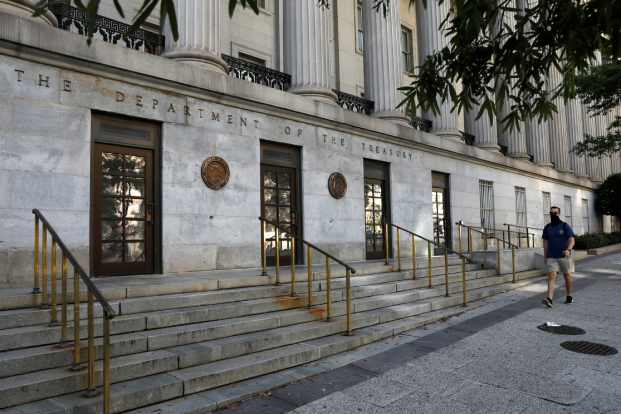
Reports this week about China and other countries exiting U.S. Treasuries have put the spotlight on international “de-dollarization” efforts and potential credit risks related to U.S. debt and political instability in the country.
U.S. President Donald Trump’s threat to Greenland’s sovereignty has sparked a debate in Europe over whether countries such as Denmark should tap into their holdings of U.S. debt and equities. fortune magazine.
Treasury Secretary Scott Bessant has played down such moves, but news emerged on Monday that China has asked local financial entities to limit purchases of U.S. Treasuries, with those with higher bond exposure advised to reduce their holdings because of concentration risks and market volatility, Bloomberg reported, citing unnamed sources.
Also read: India’s new 3-hour content removal requirement ‘impossible’: Experts
The advice does not apply to U.S. government bonds held by the Chinese government, analysts said, adding that the directive was issued to financial institutions before China’s president Xi Jinping’s recent phone call with US President Donald Trump.
China is the third-largest holder of U.S. government bonds, with mainland China and Hong Kong holding a combined $938 billion as of November 2025. Japan holds nearly twice that amount of U.S. Treasuries, while the United Kingdom also holds $888 billion worth of U.S. Treasuries.
Economists also warn that Washington’s $38 trillion national debt poses a huge threat to global financial perceptions of the United States.
Senator Elizabeth Warren warned earlier this year that falling global demand for Treasuries would be a “big deal” for the U.S. economy, saying it would spur higher interest rates and significantly increase the cost of mortgages and auto loans for consumers.
But “Fortune” magazine also pointed out that there is a trend of “selling off or rolling over” US debt in BRICS countries such as Brazil, Russia, India, China and South Africa.
“For example, Brazil held $229 billion in U.S. Treasuries in November 2024, and 12 months later, this number had fallen to $168 billion. In India, the country held $234 billion in U.S. Treasuries in November 2024, and by November 2025, this number had reduced to $186.5 billion.”
Other analysts, including Oxford Economics CEO Innis McPhee, said investors still want exposure to the fast-growing U.S. economy, “but we do want to hedge our exposure.”
See also:
Australia and EU eye next trade deal, possibly this month
Xi Jinping urges Trump to be ‘cautious’ in dealing with Taiwan
Chinese solar panel maker shares rise after Musk team visit
China slams Panama port ruling, Hutchison Whampoa files new lawsuit
Nvidia delays sales of artificial intelligence chips to China again due to security review
Japan claims it’s ‘world’s first’ to recover rare earths in deep-sea drilling
China’s real estate outlook “bleak” despite end of “3 red lines”
Chip manufacturers said that in the context of prioritizing the development of artificial intelligence, there are insufficient chips for PCs and mobile phones.