The Tamesis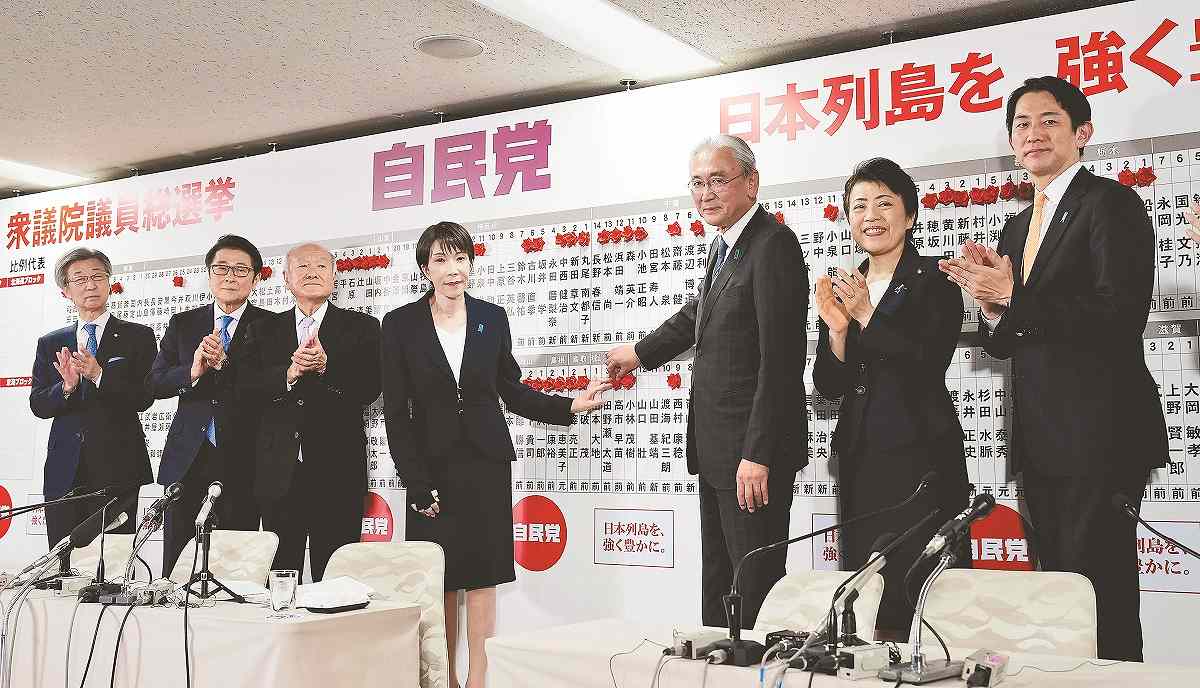
February 11, 2026
Tokyo – Sunday’s lower house elections presented a rare situation – the Liberal Democratic Party had to cede 14 lower house seats to other parties because it did not have enough candidates to fill all the seats it won in the proportional representation section.
Of the 176 seats in the proportional representation section, the Liberal Democratic Party ended the election with 67 seats, an increase of eight from the last general election in 2024. The Liberal Democratic Party actually received enough votes for 81 proportional representation seats, but its number of candidates was lower than this number. As a result, 14 seats were transferred to other parties.
The Liberal Democratic Party has a total of 319 candidates in the proportional representation section, an increase of 34 candidates from the previous general election. However, many candidates who contested in both constituencies and proportional representation constituencies won their constituencies.
Therefore, there are not enough Liberal Democratic Party candidates to qualify as proportional representation winners in the four regions of Tokyo, Minami Kanto, Hokuriku Shinetsu, and Chugoku.
Under the Public Office Election Act, excess seats from the Liberal Democratic Party were ceded to other parties. Six people joined the centrist reform alliance; two each from the Japan Innovation Party, the National Democratic Party and the Future Team; and one each from the Three Provinces Shinsengumi and the Reiwa Shinsengumi.
A proportional representation candidate shortage usually occurs when a party achieves a landslide victory in a constituency.
In the 2005 general election, when the House of Representatives was dissolved over whether the postal service should be privatized, the Liberal Democrats won 77 seats in the proportional representation section, the most under the current electoral system.
At that time, one seat in the Tokyo Proportional Representation bloc was given to the Social Democrats.
A senior Liberal Democratic Party member expressed mixed feelings about recent events, saying: “When the House of Representatives was dissolved, I never thought we would win such a big victory.”
Team Mirai significantly increased the number of seats in the lower house and had to cede two proportional representation seats to the Kinki group – one to CRA and the other to JIP.
This is because the two candidates of the Future Team ran for both constituency and proportional representation parts at the same time and did not obtain 10% of the valid votes in their respective constituencies. Therefore, they are not eligible to succeed in elections under proportional representation.
The CRA secured a total of 7 proportional representation seats from the Liberal Democrats and Team Future, giving a total of 42 seats across the entire proportional representation field. This is far lower than the 64 seats won by the Constitutional Democratic Party and the Komeito Party in the proportional representation part of the last general election.
There are 28 Komeito candidates in the CRA, and the top positions on its proportional representation candidate list are all occupied by Komeito members. As a result, all Komeito candidates won seats.