The Tamesis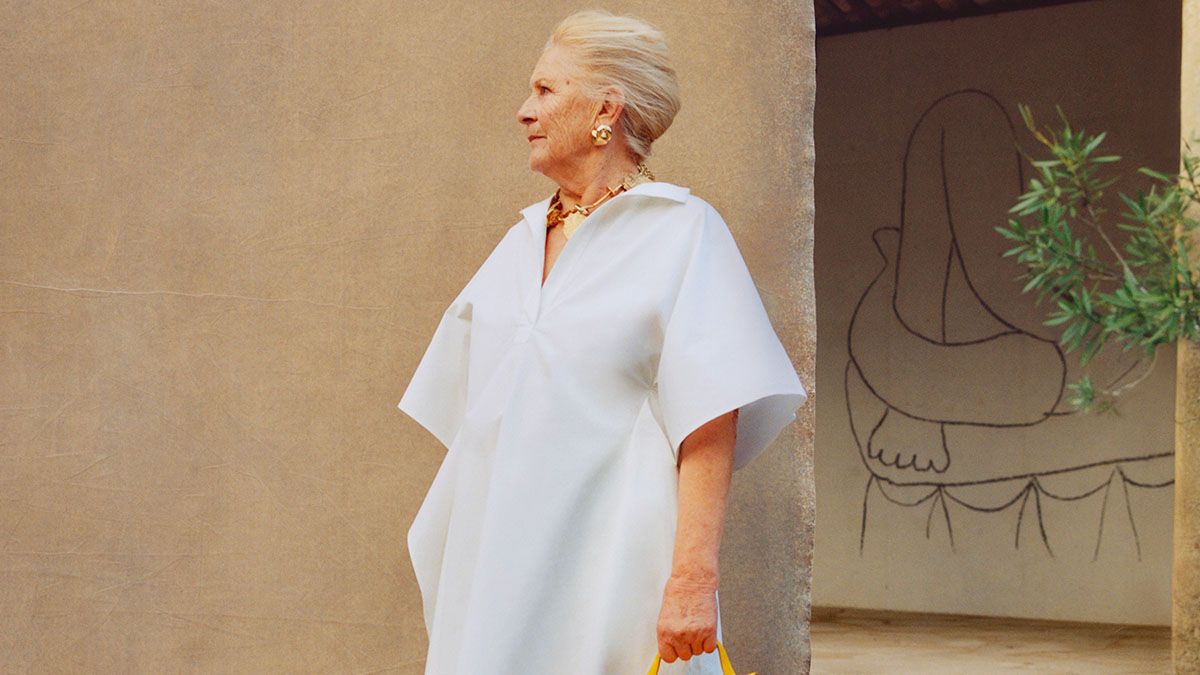
When Simon Porte Jacquemus teased the announcement of his first brand ambassador, attention turned to obvious candidates among his A-list inner circle, like Dua Lipa or Blackpink’s Jennie. But when the announcement came out, the designer replaced the celebrity with something even harder to replicate: his personal history. The brand’s first ambassador was his grandmother Liline.
“She was my inspiration before Jacquemus came along,” Jacquemus wrote on Instagram announcing the move. “Her strength, her grace, her authenticity…she shaped the way I saw women and how I imagined this brand.”
“The casting of friends and family is a reminder that even in fashion’s most expressive moments, there are real people at the center,” said Stylus fashion trends editor Katie Devlin. “There’s a general feeling of distrust. Consumers are increasingly tired of glossy perfection, so if done right, home and community casting can feel like a breath of fresh air.”
As artificial intelligence accelerates replication, influencer culture reaches saturation, and global crises seep into consumer consciousness, the industry’s reliance on scale as a proxy for value is losing its appeal. In a market dominated by spectacle and increasingly disjointed displays of wealth, amplification alone is no longer enough. Distinctions are being realigned around things that cannot be automated or replicated, and personal history has become a point of differentiation for today’s creative directors. So far for Fall/Winter 2026, we’ve seen designers pay tribute to family members, mentors, craftsmen and models who have shaped them and their careers.
Ahead of the recent Dior Haute Couture debut for Spring 2026, creative director Jonathan Anderson invited his design “hero” John Galliano, Dior’s creative director from 1997 to 2011, to the studio for a preview. As an invitation to the fashion show, guests received a small bouquet of cyclamen tied with black ribbon, a nod to the bouquet Galliano had brought for the visit. “These are the most beautiful flowers I have ever seen,” Anderson wrote on Instagram, explaining that he hopes everyone receives the same gesture that marked the beginning of the series. In an industry that tends to sever creative lineage rather than reference it, this recognition and respect for his predecessor is rare.
Anderson also invited Paulette Boncoure, an atelier artisan who started working at Dior in 1947, to participate in the show, a decision that was widely welcomed online. “Finally someone who deserves to be recognized for her hard work and passion. She deserves more attention than the influencers,” one user commented on Instagram. After the show, Dior held a fashion show and invited primary school children to visit and draw the works. “My dream for Dior Haute Couture was more than just a fashion show,” Anderson wrote in a post about schoolchildren that has received more than 125,000 likes. “I hope it can be shared with everyone.”