The Tamesis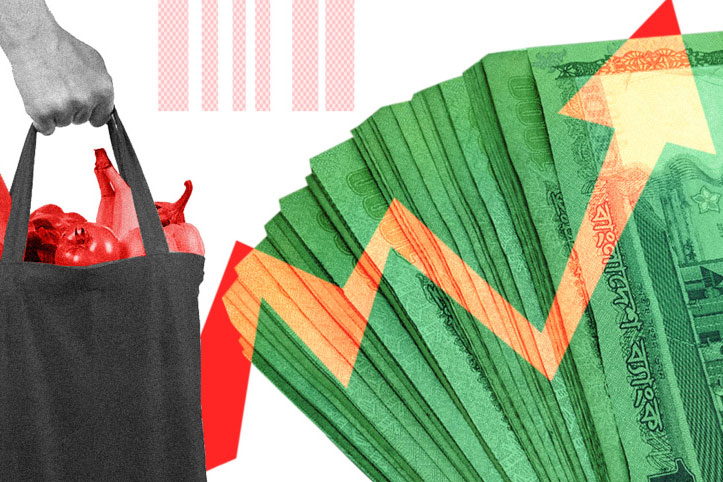
February 4, 2026
Dhaka – In the run-up to national elections, political parties in Bangladesh have made a series of promises to voters such as job creation for young people, increased funding for health and education, support for families, social protection and price reductions. These promises are attractive at a time when citizens face long-term economic hardship. In most cases, however, these commitments are not accompanied by detailed, fully costed financial plans explaining how they will be financed. What is the timeline for implementation? How much extra will it cost? How much revenue will be lost if various cuts are made? What are the implications for budget deficits and government debt? In the absence of detailed proposals within a specific fiscal framework, these commitments remain broad economic aspirations.
The lack of fiscal details is problematic on several fronts. Elected governments will face the growing challenge of creating fiscal space in an economy already stretched to its limits. The room for maneuver has narrowed sharply due to weak revenue mobilization, rising public debt and rising contingent liabilities. But demands on public funds are high, from development spending and social protection to debt servicing and institutional reforms. How the next government manages this fiscal balancing bill will largely determine the country’s economic trajectory in the post-election period.
At the heart of this challenge is the alarmingly low tax-to-GDP ratio. Bangladesh’s tax efforts have hit an all-time low, making it one of the worst-performing countries globally. In fiscal year 2025, the tax-to-GDP ratio was 6.8%, down from 7.38% in fiscal 2024. In the first half of fiscal year 2026 (July-December), the state tax department recorded a tax revenue shortfall of Tk 46,000 crore. This reflects deep structural weaknesses in the income system. Revenue targets have been repeatedly missed for more than a decade, damaging the budget’s credibility. This forces the government to rely on external and domestic borrowing. As a result, fiscal policy has become increasingly reactive rather than strategic.
Expenditure pressures will intensify sharply in the coming years. Governments face mounting financial obligations that cannot be postponed any longer. Bangladesh Electricity Development Board needs to clear over Tk 20,000 crore in unpaid bills mainly owed to power producers. The government has also promised to inject Tk 20,000 crore in capital into Sammilito Islami Bank as part of efforts to stabilize the banking sector. These fiscal burdens may limit government policy options.
Another challenge is the implementation of the recommendations of the Pay Commission established by the interim government. The proposal includes a 100% to 142% salary increase for government employees. While adjusting wages makes sense after years of high inflation, the fiscal impact is huge. Implementing these recommendations without adequate preparation could crowd out development spending and exacerbate fiscal deficits.
External vulnerabilities exacerbate these domestic pressures. Although foreign exchange reserves have recovered from US$20.49 billion on July 31, 2024 to US$28.68 billion on January 29, 2026, they are still not enough to easily meet the growing import bills and foreign debt obligations. Although remittances increased by as much as 17.07% from July to November in FY2026, the increase was lower than that in July-November of FY25. Recent export revenue trends are showing worrying signs, with exports growing at just 0.62% in July-November FY26, compared to 9.76% in the same period in FY25. The country’s external debt reached $112 billion in September 2025, reflecting years of heavy reliance on foreign borrowing to finance infrastructure and budget deficits. Repaying this debt will put increasing pressure on public finances, especially as concessional financing becomes more scarce after graduating from the least developed country category in November this year.
Domestic borrowing has become a double-edged sword. To address ongoing revenue shortfalls, governments are increasingly relying on the banking system. While this provided short-term relief, it also exacerbated domestic debt. Reduced liquidity in the banking system increases borrowing costs for businesses. Net credit to the government sector increased by 32.19% between December 2024 and December 2025.
Another aspect of fiscal management is public expenditure. Political parties also need to focus on public spending when making economic commitments. Although annual development plan (ADP) allocations are not necessarily at optimal levels due to resource constraints, ADP implementation rates have declined since fiscal year 2022. From July to November in fiscal year 2026, the ADP execution rate was 11.5% of the original budget allocation, the lowest in the past 10 years.
Improving the efficiency and quality of public spending is also critical to creating fiscal space. Waste and low-priority spending coexist with chronic underfunding of key sectors such as health, education and social care. A culture of fiscal discipline should replace power politics. Misuse of public resources, such as tax-free luxury cars and exorbitant benefits for MPs and ministers, undermines public trust. Recent reports of plans to build large luxury apartments for ministers have only deepened concerns. Especially at a time when governments lack sufficient resources to carry out emergency development activities. When hospitals lack basic equipment, school classrooms are overcrowded, social safety nets are strained, and queues for low-priced essentials under the government’s Open Market Sales (OMS) scheme are getting longer, such spending is economically untenable and morally shameful.
The incoming administration must make austerity a top priority for leadership in fiscal consolidation. Strengthening accountability mechanisms is critical to improving spending efficiency. Parliamentary oversight of public funds must be strengthened, with regular sharing of budget execution data helping to ensure value for money and prevent misappropriation. Medium-term financial planning should form the basis for annual budget preparation. Often, budgets focus on the short term and ignore future liabilities and risks.
The success of the new government will depend on how effectively it manages this complex fiscal transition. Restoring fiscal space involves more than just balancing the budget. The new government should redefine the social contract between the state and its people. A fair and efficient tax system and public spending clearly benefits people and helps rebuild trust and legitimacy.
Dr. Fahmida Khatun is an economist and executive director of the Center for Policy Dialogue (CPD).
The views expressed in this article are solely those of the author.
The views expressed in this article are solely those of the author.