The Tamesis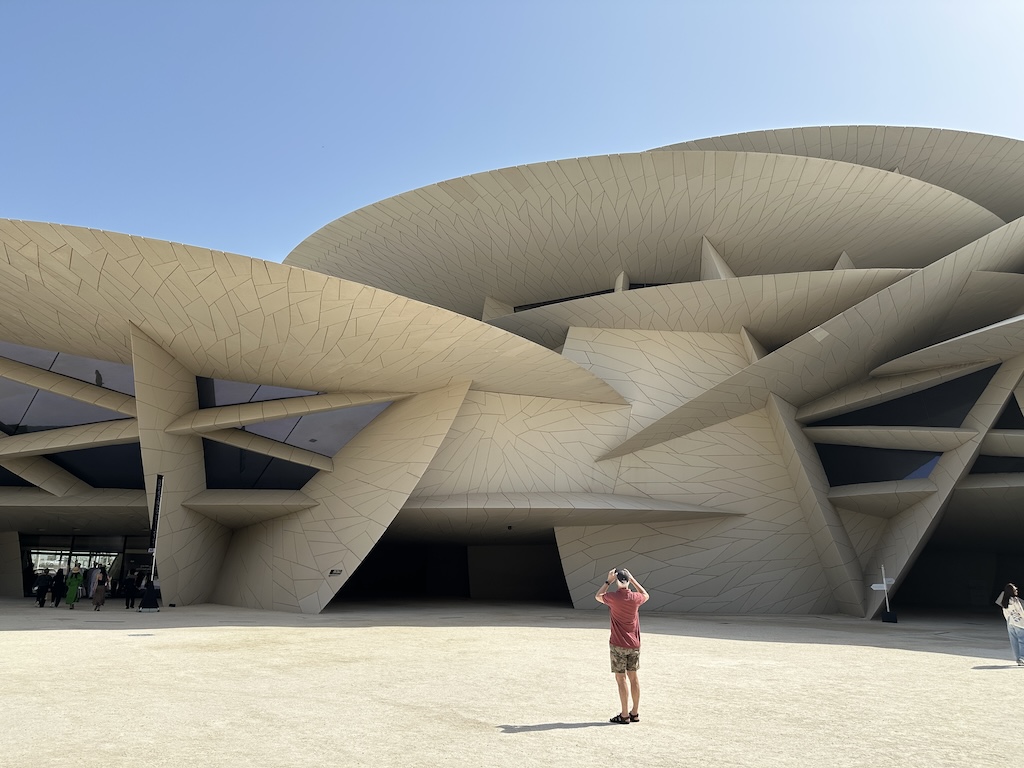
The first Art Basel in Doha arrives with a lot of anticipation: new collectors, wary galleries looking to drum up institutional interest, and a city briefly reorganizing around the show’s schedule. What was distinctive about this week was not just the fair, but how Doha’s museums clearly used the moment to demonstrate depth.
The strongest exhibitions don’t crowd the calendar with kitsch or pander to Western tastes, but rather focus on history, structure and sustained attention. If you only see a few exhibitions, start with two staples: “Empire of Light: Visions and Voices of Afghanistan” at the Museum of Islamic Art, and two exhibitions by I.M. Pei that portray the city as an object worthy of study in its own right.
Related articles
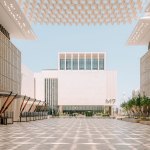
At the Museum of Islamic Art, Empire of Light: Visions and Voices of Afghanistan does something increasingly rare in international exhibition-making: it treats its subject neither as tragic nor as abstract. Rather, it builds a long-term, grounded view of Afghanistan as a place where ideas, materials, and beliefs have been passed down for centuries. The exhibition spans over five thousand years, from objects from the pre-Islamic period through Islamic dynasties and imperial transformations to the modern period. Manuscripts, metalwork, ceramics, textiles, architectural fragments and scale models are not isolated masterpieces but evidence of continuity. You are reminded time and time again that Afghanistan’s art history did not stand still because of geopolitics, even as politics violently reshaped it.
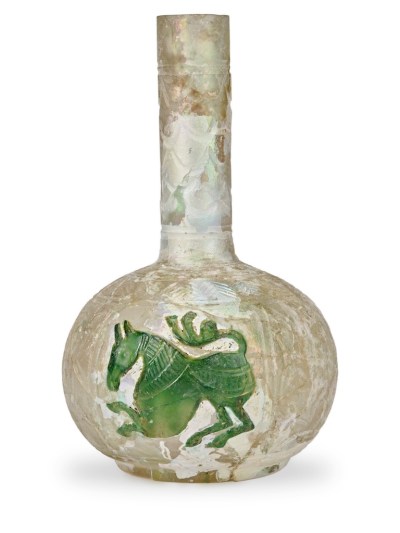
Bottle, Iran or Central Asia, Samanid period, 9th-10th century AD, colorless glass covered with green glass patches and wheel-cut decoration, Museum of Islamic Art, Doha.
Golden caterpillar
What makes the exhibition effective is its restraint. The gallery is not so much promoting the thesis as providing the space. A carved piece of wood or a carefully cut glass container can be considered both beautiful and heavy. The emergence of contemporary works does not require an explanation of everything that preceded them. The result is neither sentimental nor detached. It is sober, human, and persuasive.
On display during Art Basel Week, “Empire of Light” gives us a closer look at the show. It reminds visitors that cultural exchange existed long before the art market and was never dependent on brands.
Just a few steps away from the hotel, the Museum of Islamic Art hosts a second exhibition dedicated to the building itself: “I.M. Pei and the Making of the Museum of Islamic Art.” Rather than celebrating the genius of I.M. Pei in isolation, the show takes viewers through the architect’s creative process and how he grapples with a fundamental question: What does Islamic architecture mean when it is not tied to a single region or period?
Drawings, models and archival materials trace Pei’s move from abstraction to form, ultimately reaching the geometric clarity that defines the museum. The building is like a deliberately shaped vessel, carrying a long and complex past.
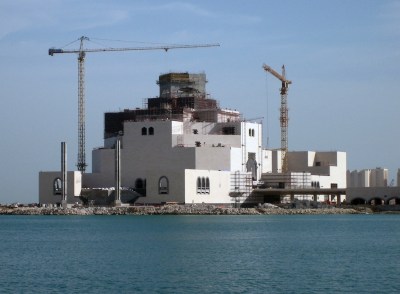
Museum of Islamic Art in Doha, Qatar, by architect I.M. Pei, 2007 Photo © Fabian Servagnat
This perspective is deepened in ALRIWAQ Art + Architecture, where “I.M. Pei: Life is Architecture” broadens the horizons. This retrospective situates Pei’s Doha project within the context of a global career that included Washington, Paris, Hong Kong and beyond. What is strongest about this exhibition is its emphasis on Pei’s patience—his willingness to let architecture slowly emerge from research, travel, and suspicion. Pei’s two exhibitions portray Doha as a city that is not a blank canvas for culture but was formed through thoughtful, often philosophical decisions about history and form.
Across town, the Arab Museum of Modern Art (Mathaf) takes on a different rhythm. Its anniversary lecture, “Resolution,” draws inspiration from the permanent collection to trace how modern and contemporary artists across the Arab world grapple with politics, displacement, and cultural heritage. The presentation does not reduce modern Arabic art to a lesson plan; Rather, it places works from different moments in conversation and trusts the viewer to draw boundaries. The works on display remind us that modernism in the region did not unfold in isolation, and that many of the issues fueling debate today – about identity, power and representation – have been circulating for decades.
At the National Museum of Qatar, the exhibition on view this week leans inwards. “Heritage of a Nation, Memory of a People: Fifty Years of Telling” marks the history of the museum itself, focusing on how national narratives have been assembled, revised, and sometimes contested. Set against the backdrop of Jean Nouvel’s dramatic architecture, the presentations feel intimate rather than monumental, emphasizing everyday life, memory and continuity rather than spectacle.
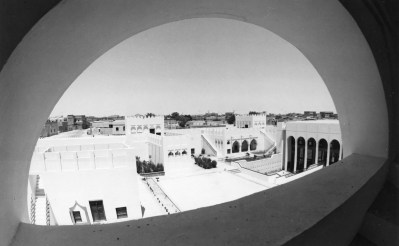
Excerpted from “A Nation’s Heritage, People’s Memory: A Fifty Years’ Story” at the National Museum of Qatar
©Mohammed Bu Hindi Al Bu Hindi
For visitors traveling between fairs and museums, the Rijksmuseum offers something grounding: a reminder that the culture here is not imported during the week but exists year-round.
if “Empire of Light” Tracing its long arc of history, the fire department operates closer to the present tense. The former civil defense building has become one of Doha’s most flexible exhibition spaces, hosting three solo exhibitions during Art Basel Week, each exploring contemporary experience from a different perspective. Exhibitions by Chung Seoyoung, Haroon Mirza and Ho Tzu Nyen occupy diverse fields, from quiet material interventions to immersive sound and video environments.
The strongest of the three may be “Ho Tzu Nyen: Hotel Aporia,” a multi-channel video installation that draws the viewer into a looping, unstable narrative. Ho’s work draws on film, archival materials and algorithmic processes to explore how history is constructed and distorted. Watching the installation unfold feels less like following a story than entering a system that is constantly rewriting itself. It is demanding yet deeply engaging, especially for viewers interested in how images shape political memory.
The first edition of Art Basel Qatar will inevitably be judged on sales figures and attendance. However, Doha’s museums don’t seem to care about this timeline. The exhibition on display this week makes a longer argument: Culture here is built through accumulation, study and patience.