The Tamesis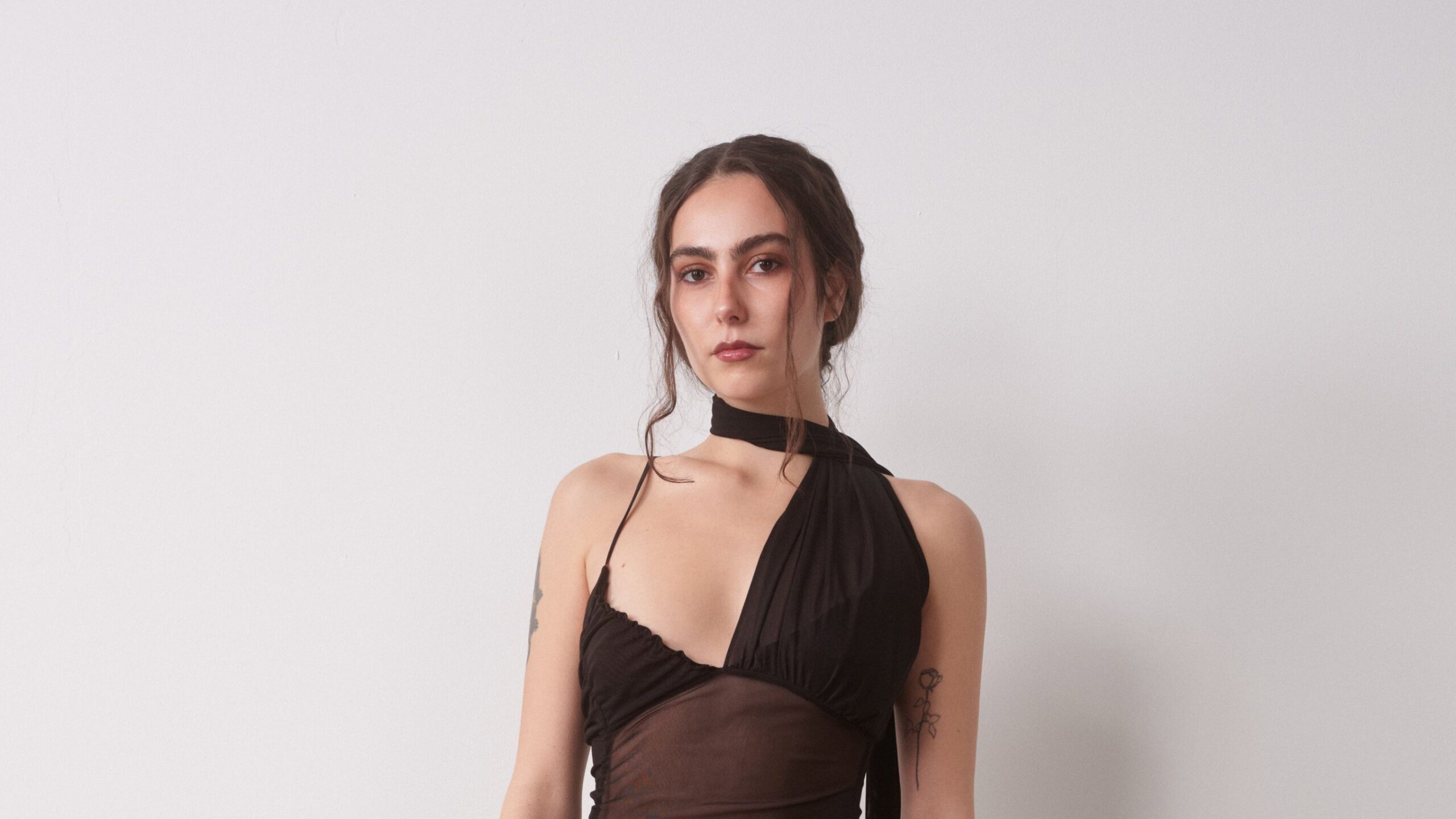
Fashion is always more than just clothing, especially when it conveys attitudes and emotions. That’s how Sezgin Kivrim, creative director of Sezgin, the Berlin-based label he runs with his friend Angelina Schwarzkopf, feels. So it’s no surprise when he recounts how delighted he was when a Japanese buyer commented, “I feel what you want to express with your collection.”
That is: unity, communication, joy. His new collection, titled “When the Sun Has Not Yet Reached Us,” was inspired by a family evening in Kurdistan. His family had planned to go out, but weather changes forced them to stay home. As a result, they spontaneously ate, sang and danced at home, and the originally dressed-up family gradually changed back to comfortable clothes.
“It’s a combination of more elegant and comfortable pieces,” Kivrim said of his new collection. For example, a pair of wide-leg knee-length dark trousers are paired with a large red knitted sweater embellished with the brand’s blue logo.
Knitwear is definitely one of Sezgin’s strengths, as evidenced by a small pale pink short-sleeved tank top, woven with horizontal red, blue and white threads – a carefully crafted piece that complements the entire look. Kivrim paired the model with a white T-shirt embroidered with a red heart that read “Her Bijiî,” which roughly translates to “Viva Kurdistan.” He completed the look with wide-leg, lightweight, sheer black mesh pants, illustrating the balancing act the brand is currently experimenting with: translating cultural references into modern fabrics and therefore into a contemporary aesthetic.
Sezgin’s breakthrough in German fashion was a striking oversized crocheted sweater emblazoned with the Kurdish flag. It is currently under renewed scrutiny due to the political situation among the Kurds, especially in Rojava. While the flag is no longer a central element in his current collection, Kivrim has incorporated the sun, a culturally significant symbol that recurs in his designs.
He is deeply committed to the balance between culture and fashion, probably because balance has always been a major topic in his life. Kifrim belongs to the Kurdish diaspora in Germany; he grew up in the southern German town of Ulm. For a long time he tried to appear as “German” as possible. For example, his parents raised him without teaching him Kurdish. It’s an identity conflict that many expats know all too well. He intuitively and skillfully translates personal balancing acts into fashion.
Kivrim showed 10 looks at a show in Berlin. One of the looks featured the aforementioned trousers: a slip dress made of black sheer fabric that could also be worn as a coat over the trousers. Another of Kivrim’s favorite pieces to mix and match is a light pink mesh top with pleated long sleeves. The outline of the big sun is embroidered with red thread. The model wore a white mini dress underneath. New to the range are floral print fabrics made from household deadstock. The use of floral patterns was inspired by her grandmother, who liked to wear similarly patterned clothes back home in Kurdistan. Kivrim manages to incorporate these elements into today’s Berlin, creating contemporary silhouettes such as slim-fitting high-waisted trousers with pleats.
The speech cleverly illustrates cultural connections: three women braid each other’s hair, symbolizing identity, dignity and defiance. Other models ate sunflower seeds together, while others drank tea. The purpose of Kivrim is to introduce Kurdish habits and culture to viewers who may not know much about them.
His aim was to create a collection that could be combined across seasons, which he achieved, for example, through legacy pieces that differed only in material. His commitment to dimensional diversity also influenced the design. Many items only come in two sizes, but are highly adaptable thanks to the waistband and ability to collect fabric. Not only was this practical, it was a further nod to his culture: “We always loaned and passed around a lot of clothes to each other. Clothes that didn’t fit were simply made to fit,” he explains. He plans to continue this approach with his next collection so that he can ultimately create a very large, cohesive collection where everything can be worn with everything else. Growing together, supporting each other – yes, the Japanese buyer is right: you can feel a deep empathy for fashion in these carefully considered pieces, which is why it resonates with people, no matter where they come from.