The Tamesis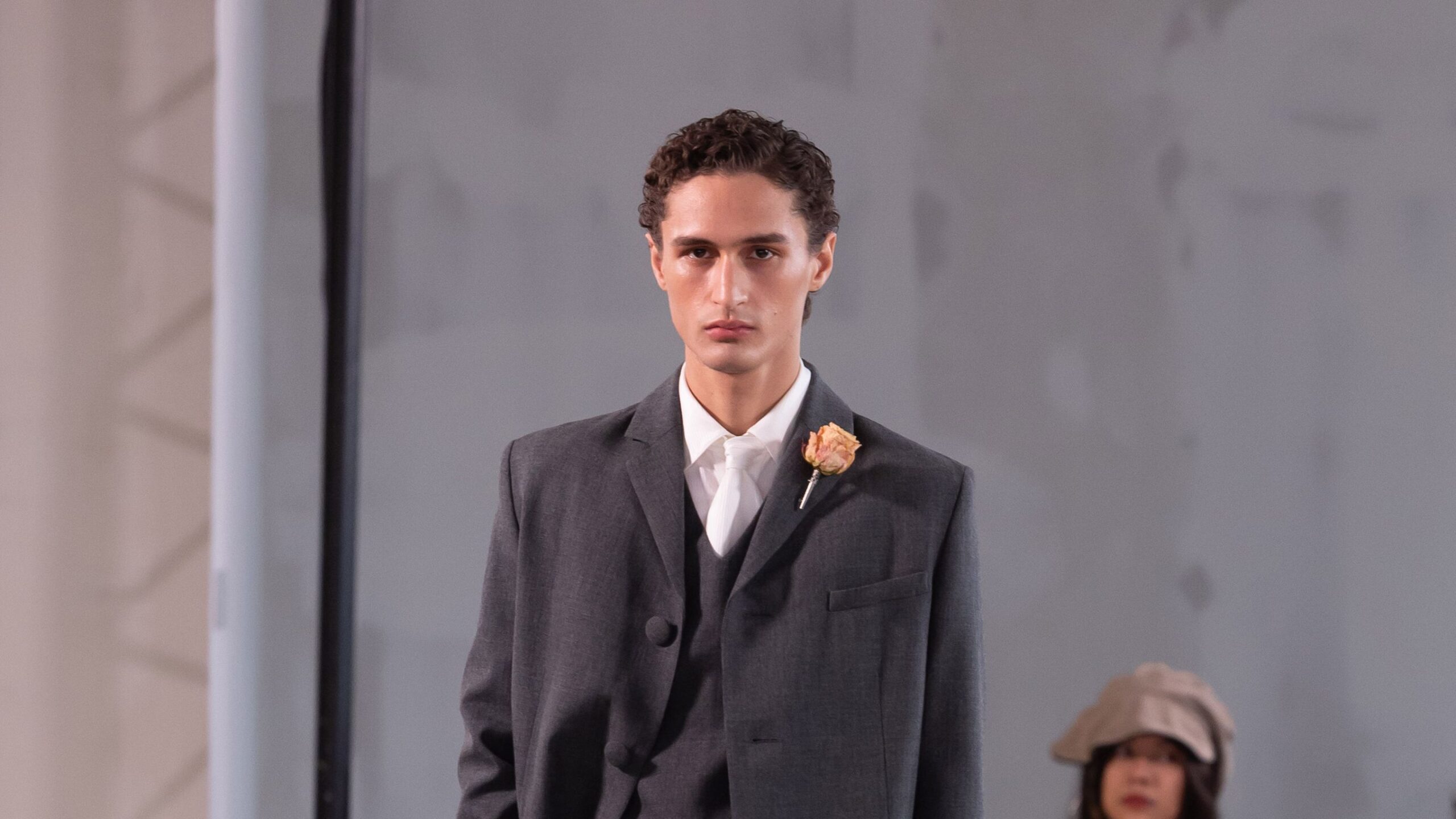
Marke’s signature poetry was evident even before we saw a stitch of clothing on the brand’s Fall 2026 runway show. Marke founder and designer Mario Keine decorated the runway with stacks of antique books, some of which were kept open, roses that had faded and aged into something new, flowers as old and fragile as the pages.
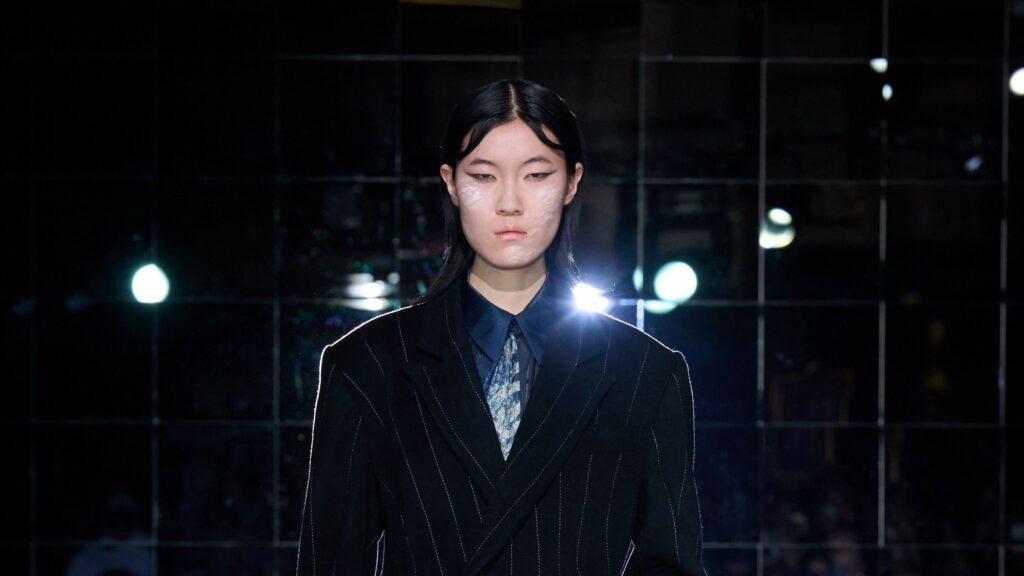
All of this created the perfect environment for his collection to move in a successful and ambitious direction. Cologne’s Keine is serious about his craft, and it shows. He made a name for himself by drawing on historical tailoring styles from the 18th and 19th centuries, including robes, vests and flowing shirts with romantically ruffled and askew collars, then adding a touch of subversion and slyness to the mix. Fall 2026 is no exception, emphasizing the stateliness of buttoned-up gray and black suits, pairing crisp jackets with roomy shorts and baggy trousers, and more buds on the edges worn as boutonnieres.
Shortly before the show, Keine was backstage quickly tying, retying, and retying the belt of a navy jacket while explaining his vision for the collection. “Every season, I start with the thing that I feel the strongest about,” he said. “I’ve been thinking about how we feel when we consume media now — the misinformation, the comments, everything on social media, and how it can be like a punch in the stomach. It makes me feel like 2026 will be like 17 Century before the Enlightenment, like back then, we needed to question and challenge everything. And,” he continued, “like we live in this neo-rococo world with the monetary elite and social media, it’s like the era before the French Revolution, and that’s where the references for the series come from.”
Although his starting point was the radical change fanatically instigated by centuries, Kane’s collection is both evolution and revolution. He may have borrowed from the glitz of the 18th century—the poet’s shirt, the flowers, the embellishments, the ornate fabrics—but there was a distinctly 21st-century vibe at work, too. Kane favors a cleaner, leaner distillation of tailoring codes that he describes as the core of the business, which brings anything historic firmly into the present day.
All in all, there are some great, well-thought-out clothes here that, while born of conceptual thoughts and impulses, are also highly desirable: a gray high-collar button-up slit over baggy trousers, for example, or a crisp cotton shirt cleverly embellished with a tie made of extra sleeves, button cuffs, and more.