The Tamesis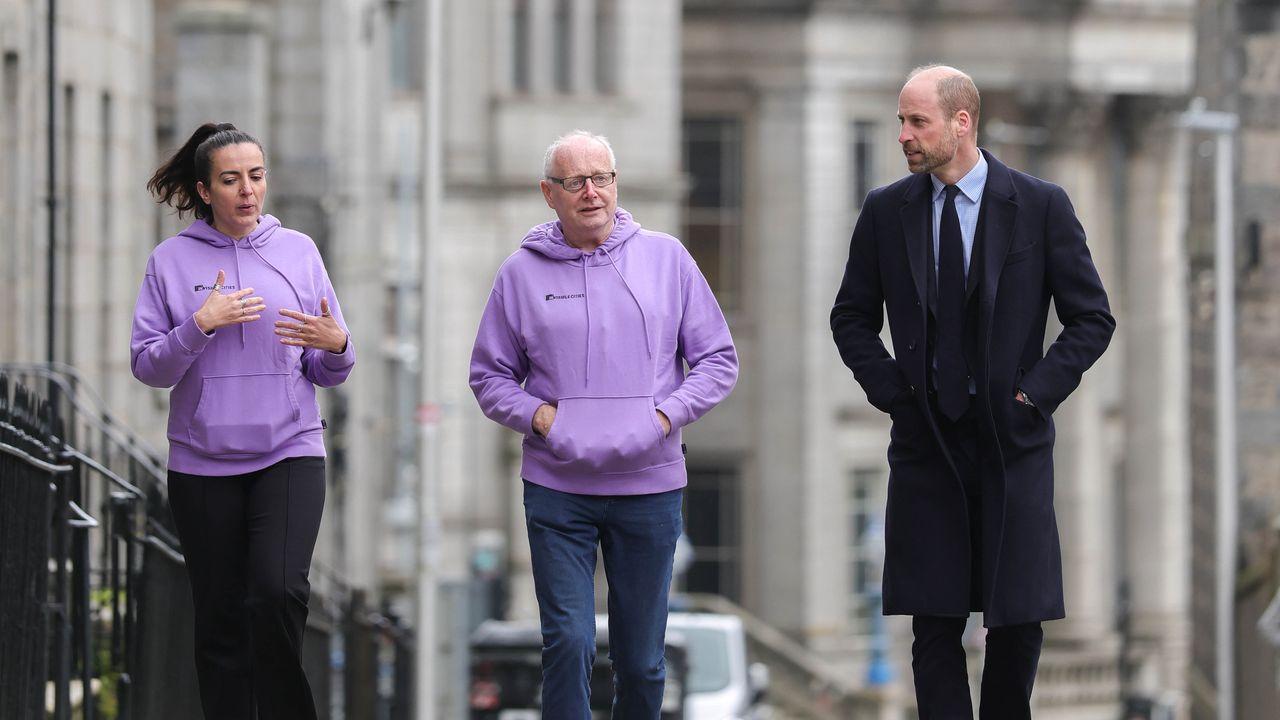
Moulaoui Guery spent many years as director of international partnership development during the Homeless World Cup, traveling around the world from Paris to Mexico, Poland and Chile, and saw first-hand how participating in the tournament changed players’ confidence and identity. “It sparked the idea that you could do something creative while supporting people,” she said. “It’s not about meeting an immediate need — you’re not providing food or shelter — but it’s about giving people a sense of purpose.” Yet she also kept coming back to a lingering question: How can one create equally meaningful connections with homeless people beyond an annual, structured event? How can ordinary people, from locals to tourists, learn about these stories in a natural and respectful way?
In 2014, Moulaoui Guery’s career was put on hold when she received a harrowing cancer diagnosis. “It made me realize how important traveling is to me,” she said. “My first thought was, does this mean I can’t travel anymore? The doctor said, ‘Of course not, you have to rest and heal.'” Her experience with serious illness made everything easier. “Like it does for a lot of people, it made me want to do my own thing, grow my own organization, and stop working for something else,” she continued. “It makes me braver.”
After successfully completing treatment, she asked herself what her true passion was. The answer is clear: travel, storytelling, and real relationships. She joined an incubator program to spark a creative spark and officially launched Invisible Cities in the summer of 2016.
From the beginning, she designed Invisible Cities in close collaboration with local homeless organizations, which provided training, guidance, and ongoing care to the tour guides. She explained that the assistance provided by these organizations is vital. “Our guides may still be addressing health issues, mental health challenges, family situations or housing instability. We always lead with partnership.”
A major turning point came after Invisible Cities was highlighted in a BBC television feature. By chance, someone from the Royal Foundation saw the clip and reached out. The foundation’s mission – to change the narrative around homelessness – aligns perfectly with the ethos of Invisible Cities. In March 2025, as part of the launch of the Aberdeen project, Prince William took part in a guided tour and stood side by side with Moulaoui Guery, meeting partner organizations and potential sponsors. “He asked a lot of questions,” Mulawi-Ghali said, “but always came back to ‘Well how do we support what’s going on?'” He took that responsibility very seriously. The team around him takes this very seriously. It’s just, ‘We’ve got your back.’ Don’t worry about the rest. We will do it. ‘”
Despite its high-profile recognition, Invisible Cities remains deeply personal at its core. Guides choose the stories they want to tell and the routes they want to walk. For Gail, my tour guide in Edinburgh, traveling about women was a natural choice. She first came to Invisible City through Sparkle Sisters, an event for homeless women that provides free bra fittings, haircuts, clothing and toiletries. Gary was one of the participants and gave a brief introduction to her own organization. “I was fascinated and wanted to be a part of it,” Gale said. After interviewing and taking part in a training scheme, she began writing her own account of women’s travels in Edinburgh. She has been working as a tour guide for three years, and like her colleagues, she has not only found work and an independent life, but also a way to express untold stories that center on women. “It’s completely different than anything I’ve done before,” she said. “It gave me independence and confidence.” Gayle was able to transition to independent living, but Moulaoui Guery is quick to point out that recruiting female guides remains a challenge.