The Tamesis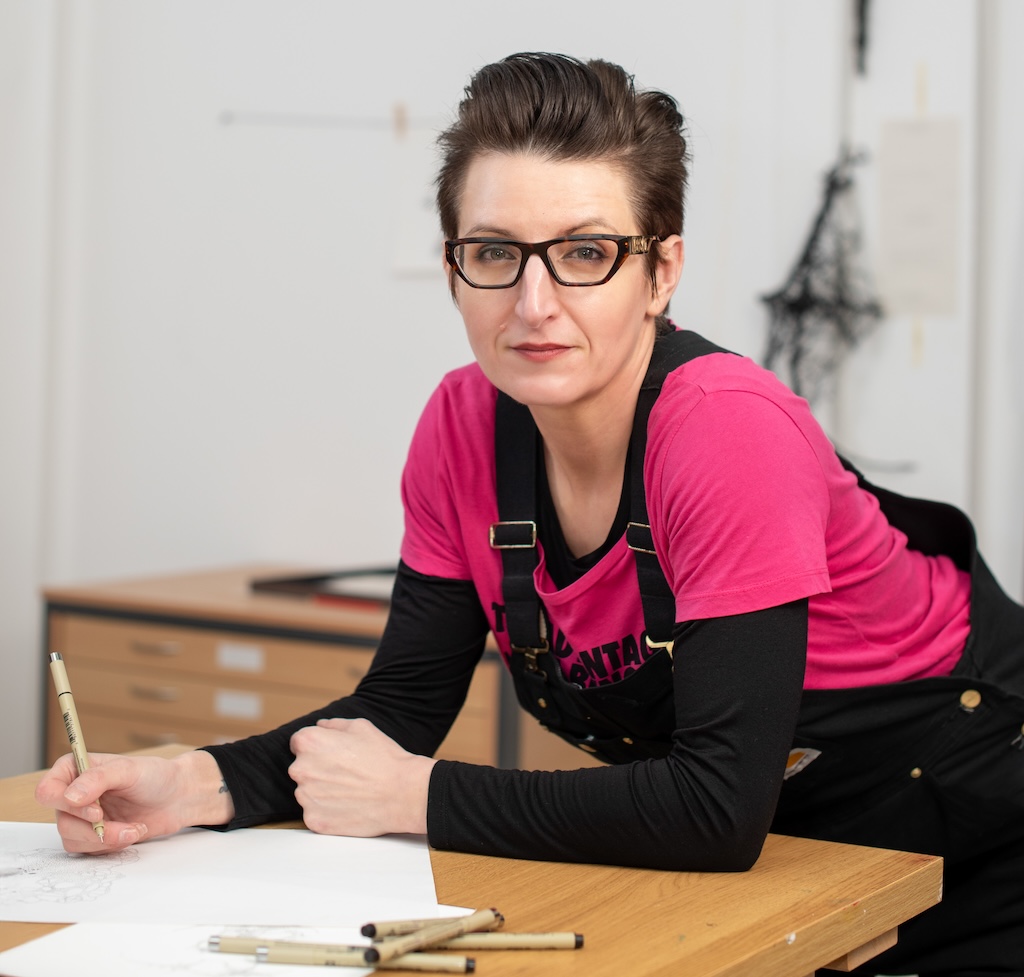
Victoria Helena has built a career that most artists could never imagine on their own. She worked in finance and studio management for two decades while maintaining her sculptural practice before founding her new artist-first financial advisory firm, Artist Money Matters, launching this month. The result is a rare fluidity in both the balance sheet and the psychological reality of making art. We talked to Helena about why artists avoid money conversations, the most common mistakes they make in contracts, and why financial literacy has become an economic justice issue in the arts.
Related articles

You describe yourself as an artist and a former CFO. This is not a common combination. How did this happen?
I’ve always been involved in both worlds. I grew up around money in a very practical way. My mother was a single parent and a bartender, and I watched her count cash at the end of every shift. Later, when I was in school, accounting ended up being my math credit and it just clicked. This is logical. Very peaceful. It all adds up.
In the meantime, I’ve been doing work. I trained as a sculptor and eventually completed an MFA at the Royal College of Art. As time went on, it became increasingly clear that artists kept asking me questions that they couldn’t get answers to elsewhere. Not just “How do I file my taxes,” but “Can I afford to say yes to this show?” or “Is this contract okay?” ” or “ Why do I feel like I’m drowning even though my career seems successful. “
Is this why Money Matters for Artists?
Yes. It started informally a few years ago. Friends, classmates, colleagues. By the time I graduated from RCA, I had basically become the person everyone asked before signing anything. Artist Money Matters was born out of this need. In an arts economy that is unstable, opaque, and often extractive, artists are asked to make increasingly risky financial decisions. However, they are expected to do so without independent, informed support.
Many artists get angry about talking about money. Why do you think this is?
There is a deep psychological component to it. Money is tied to shame, fear, and identity, especially for artists. We are taught the myth of the starving artist early on, and we are also told that caring about money somehow compromises authenticity. This creates a double bind. You should be vulnerable at work but silent about your own survival.
When I start working with someone, the first thing we often talk about isn’t numbers at all. It’s their relationship with money. Their family’s relationship with money. attitudes of their peer groups. Once you understand this, the actual conversation becomes much easier.
What do you think are the most common mistakes artists make when starting out in their careers?
Not sure what they can ask for. This can be seen everywhere. in the contract. in the budget. In the institutional invitation. Artists are often offered opportunities for prestige or career advancement, but the financial terms are vague or unrealistic. If you don’t know how much it will actually cost to complete your work, it’s easy to agree to something that puts you quietly into debt.
Payment terms and intellectual property are the two first things I tell artists to consider every time. If payment terms are clear and written down, you won’t have to worry about when you’ll get paid. If they’re not clear, that’s already a problem.
You’ve worked with everyone from emerging artists to large established studios. How does this change your approach?
The principles are the same, but the scale is different. I’ve worked with individual artists who were just getting established, as well as with sophisticated studios operating internationally. In recent years, these have included artists and studios like Random International, whose practice operates across institutions and large public commissions, and Radhika Khimji, who is experiencing a moment of rapid career acceleration.
Emerging artists need a foundation. The system lets them check in once a month instead of panicking every week. Mid-career artists often need help restructuring as their studio grows and revenue becomes more complex. Established studios usually come to me when something goes wrong and a reset is needed.
You see this work as a form of economic justice. Why?
Because financial ignorance is no accident. When people don’t understand money, they are more likely to be taken advantage of. Artists in particular are asked to take risks while others capture value. Artist Money Matters is intentionally structured as an independent, fee-for-service consultancy. No commission. There are no percentage cuts. There are no incentives tied to sales. Independence is important.
When artists understand their financial realities, they are better able to protect their work, negotiate fairly, and build careers on their own terms. This shouldn’t be a privilege. It should be infrastructure.
You also published a book with the same name. How does it fit into this project?
This book reflects the way I work. Part one looks at the psychology of money. The second part introduces accounting basics in easy-to-understand language. The third is to place them in the real world. Contracts, negotiations, reciprocity, long-term planning.
Not everyone can afford a consultant, I know that very well. This book is designed for artists to pick up and use right away without feeling slighted or overwhelmed. It’s about giving people tools, not telling them what success should look like.
If an artist took away just one thing from your work, what would you want it to be?
This clarity is not the enemy of creativity. That’s what keeps you going. Art is a constant battle. If you want to work for decades, you need systems that support that ambition, not quietly undermine it.