The Tamesis
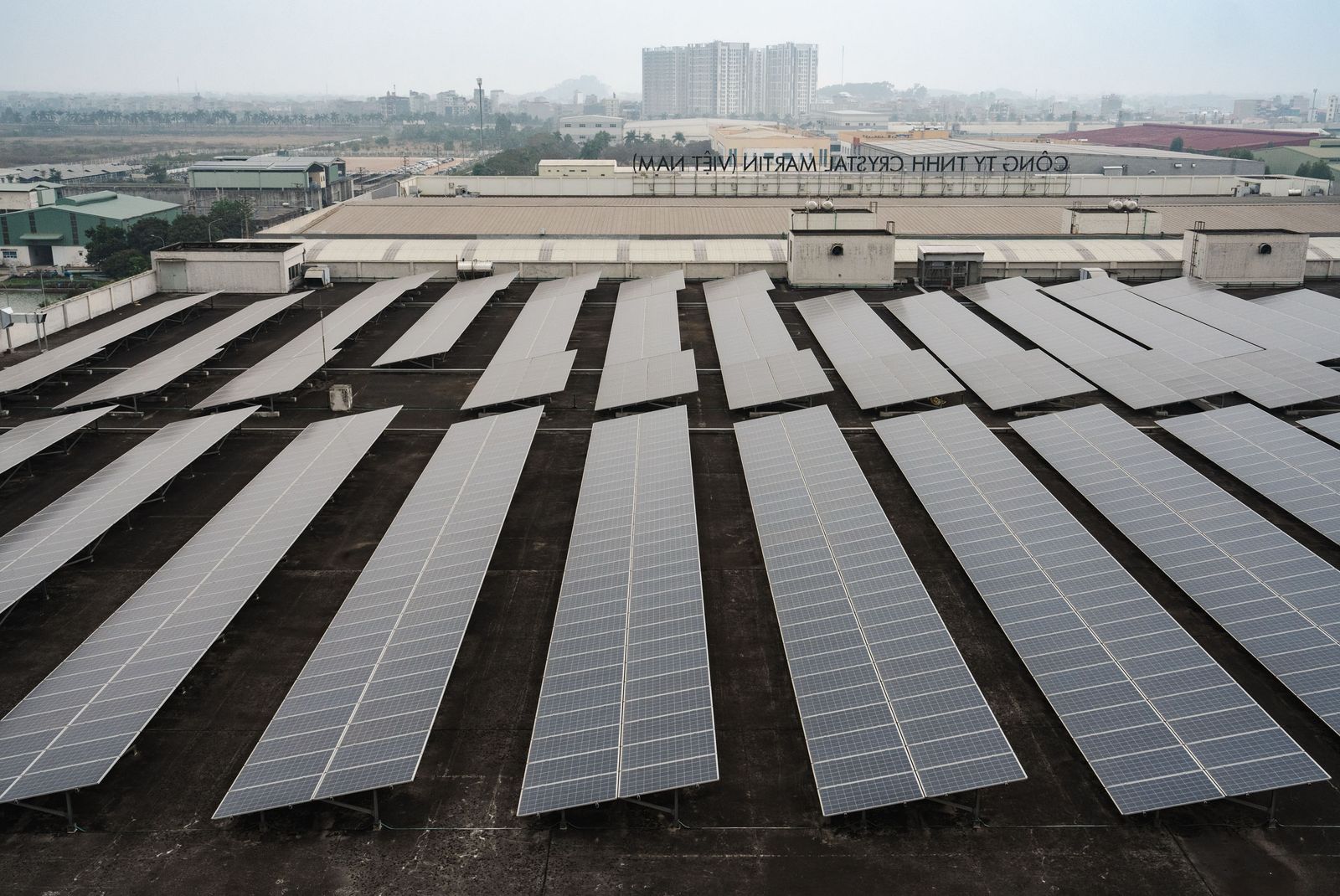
In Bac Giang province, just a few hours away, Crystal Martin is also investing heavily in decarbonization, under the guidance of H&M energy engineers. The company has been supplying H&M for 20 years and has 28 production sites in four countries. Last year, the supplier won the H&M Award for its outstanding achievements in energy efficiency. Some of the most effective improvements include applying smart controls to the chiller system, increasing fresh air intake during winter to reduce the overall power consumption of the chiller system, insulating the compressor, and converting the ventilation system to high-efficiency motors.
Despite clear signs of progress, there is still a long way to go. “There are challenges all around us,” Ernatur said. “Not everything can be solved with existing technology.”
Find favorable market conditions
Vietnam is the world’s third-largest textile manufacturing market, after China and Bangladesh. Although H&M did not disclose its output by market, H&M Group Production General Manager Karin Lind said that Vietnam is one of its “most important” markets, with 42 suppliers and 72 production units, with a total indirect workforce of more than 60,000 workers. This is largely due to the country’s extensive production capabilities, ranging from seamless underwear, sweatshirts and footwear to heavy knitwear, denim and accessories.
“Vietnam is a highly capable and very mature market with skilled workers and the government’s ambition to continue adding value to the ecosystem,” said regional country manager Jessica Vilhelmsson. “It also has untapped potential, especially if we can localize the production of fabrics and components, which will allow us to make decisions about styles and fabrics later and produce our products more precisely. It will also reduce costs, because importing fabrics means you don’t get the full duty-free benefits of the free trade agreement between the EU and Vietnam.”
Vilhelmsson has been leading H&M’s public affairs promotion efforts in Vietnam. At the end of 2024, H&M signed a direct power purchase agreement (DPPA) with Electric Power Engineering Consulting Joint Stock Company 2 (PECC2), hoping to secure renewable energy for its Vietnamese suppliers amid limited supply from the national grid. Hopefully Bunger will be one of the first beneficiaries.
“We believe that these agreements will be key to the production of renewable energy by private players through the national grid for our suppliers,” Vilhelmsson said. The company reached a similar successful agreement with Türkiye in 2024. “This is a prerequisite for electrification. We have to do these things in the right order.” It is also a priority for Vietnam, which aims to achieve net-zero energy by 2050, ideally with 30-60% of renewable energy coming from DPPA. Vilhelmsson said that by 2025, more than half (52%) of the electricity in H&M Vietnam’s supply chain will come from renewable energy.
Incentivize suppliers to invest in decarbonization
About 18 months ago I heard rumors that H&M was changing the way it negotiates prices, much to the chagrin of its suppliers. The rumors turned out to be early issues related to a new costing framework, which H&M says is key to its decarbonisation journey. H&M now no longer negotiates item by item, but instead negotiates 80% of orders in bulk, committing to order a certain number of orders six months in advance, even if the specific design and materials are decided closer to the time. The price is based on a formula developed by Linde’s team that takes into account material and component costs as well as general expenses, while limiting worker wages so negotiations don’t infringe on suppliers’ ability to pay fair wages. In theory, this means negotiated prices can also include larger costs beyond the scope of individual products, including decarbonisation investments.